The Pleiades Star Cluster Reveals Its Extensive Family Tree
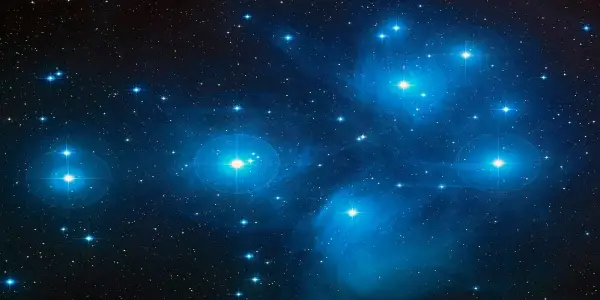
Recent astronomical research has unveiled that the renowned Pleiades star cluster, commonly referred to as the 'Seven Sisters,' is merely the luminous core of a vast network of stars that spans nearly 2,000 light-years.
In-depth analysis
New discoveries
Recent research into the Pleiades star cluster has unveiled significant insights into stellar evolution. By examining the rotation rates of its stars, scientists determined that younger stars rotate rapidly while older ones slow down due to magnetic braking. This innovative analysis identified previously unrecognized connections among stars, revealing their shared origins from a common molecular cloud.
Mission updates
The collaborative study utilized data from NASA's TESS and the European Space Agency's Gaia mission, merging diverse datasets to uncover the Greater Pleiades Complex. This integration has provided a clearer understanding of the cluster's structure and the relationships among its stars.
Who is affected
The findings impact astronomers and astrophysicists studying stellar formation and evolution, providing new methodologies to explore star clusters. Additionally, this research could influence our understanding of the Sun's origins, potentially reshaping theories about its formation and the dynamics of nearby stellar systems.
Next steps
Future research will focus on applying the methodologies developed in this study to other stellar associations. By doing so, astronomers aim to uncover additional networks of stars and enhance knowledge of their origins and evolutionary paths.
Did you know?
Why we should care
Understanding the Pleiades star cluster can deepen our appreciation for the cosmos and its influence on human culture. Its connections to ancient texts and modern symbols, like the Subaru logo, remind us of the stories we share across generations. Moreover, insights from this research may eventually inform our knowledge of solar origins, connecting us to the broader universe in profound, tangible ways.
The universe's unsolved mystery
Despite significant advancements in astronomy, the intricacies of star formation and evolution remain elusive. The Pleiades, once a tightly bound cluster, is now a puzzle scattered across the sky. As researchers delve into these cosmic relationships, each discovery raises new questions about the lifecycle of stars and their journeys through the galaxy, urging humanity to seek answers to the mysteries that surround us.
The person who looks at the stars
Maria Chen, a high school astronomy teacher in Tucson, often takes her students outside at night to gaze at the stars. The Pleiades cluster, in particular, captivates her class, sparking discussions about ancient myths and modern science. For Maria, these moments are about more than just constellations; they represent a connection to history and a gateway to scientific inquiry. When she shares the recent findings about the Pleiades, she sees her students' eyes light up with curiosity, transforming their understanding of the universe. Each star becomes a story, and each story invites them to explore further, blending their fascination with the cosmos and the intricate relationships that bind us all.
Potential Evidence of Dark Matter Emerges from...
Webb Telescope Reveals Unprecedented Cosmic...

Apple Introduces Emergency SOS via Satellite in...
The Pleiades Star Cluster Reveals Its Extensive...
Charlotte: The Lunar 3D Printer Poised to...

Top Black Friday Smartwatch Deals Worth...
NASA's Campaign to Monitor Interstellar Comet...

Boeing's Upcoming Starliner Mission Set for April...
Ancient Galaxies: A Chaotic Early Universe...
NASA and Blue Origin Successfully Launch Dual...

OnePlus 15 vs. Samsung Galaxy S25 Plus: A Clash...
Exploring the Composition of Cosmic Voids
Potential Alien Disclosure May Trigger Bitcoin...
NASA's ESCAPADE Probes Set for Unique Journey to...
X5.1 Solar Flare Triggers G4 Geomagnetic Storm...
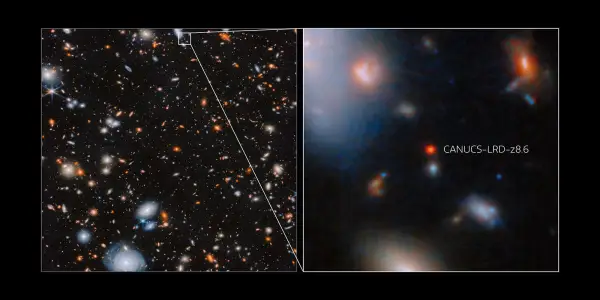
James Webb Telescope Identifies Rapidly Growing...

This Week In Space Podcast: Episode 187 Explores...

FULU Foundation Introduces Repair Bounty System...
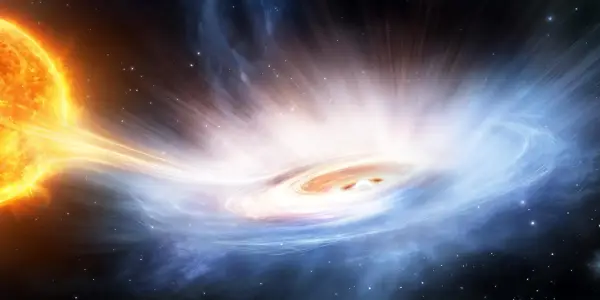
Unusual Wind from Neutron Star Challenges Space...
Portal Systems Aims to Revolutionize Spacecraft...
James Webb Space Telescope Discovers Ancient...
NASA's Artemis 3 Moon Mission Delayed to 2028 Due...
James Webb Space Telescope Captures Stunning...
Astronomers Uncover Evidence of Aging Stars...
ISS Crew Takes Precautions Against Radiation...
Astronomers Uncover a Rapid Star-Forming Galaxy...
China's Mars Orbiter Captures Image of...

Samsung's Galaxy S26 Ultra Set for Significant...
Mapping the Invisible: Astronomers Uncover Dark...

X-Men Return to Education in Upcoming Comic...
New Simulations Shed Light on the Enigmatic...
NASA and European Partners Prepare for...

Foundation Season 3 Hints at Deeper Asimov Themes...

Daily Roundup: November 10, 2025 – Advancements...

Urwerk Unveils Limited-Edition 100V 'LightSpeed'...
Astronauts aboard the ISS Capture Stunning Images...
India Successfully Launches CMS-03 Military...
James Webb Space Telescope May Have Detected the...
Rogue Moons: A New Frontier for Life Beyond Stars