Artemis II: NASA's Astronauts Approach the Moon on Historic Mission
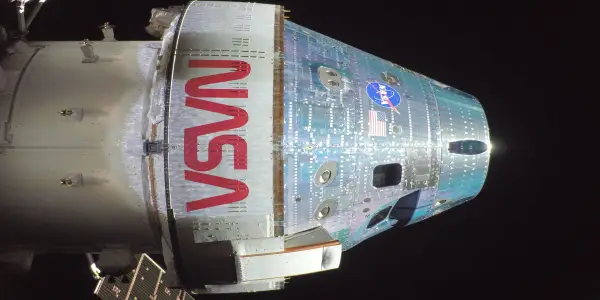
NASA's Artemis II mission progresses as astronauts venture closer to the moon, marking a significant step in lunar exploration.
In-depth analysis
New discoveries
The Artemis II mission is poised to enhance our understanding of lunar geography and potential resources. As the crew prepares for their lunar flyby, they aim to capture detailed images of the moon's surface, which could inform future landings and scientific studies. This mission marks a significant leap in preparing for sustainable lunar exploration.
Mission updates
On day three of the Artemis II mission, the Orion spacecraft surpassed the halfway mark to the moon, traveling over 200,000 miles from Earth. The crew engaged in health exercises and conducted vital emergency communication tests with NASA’s Deep Space Network.
Who is affected
The Artemis II mission impacts a broad audience, including space agencies, scientists, and educators worldwide. It fosters international collaboration and inspires future generations of engineers and researchers, emphasizing the importance of human exploration in space and its potential benefits for humanity.
Next steps
The crew is set to conduct a lunar flyby on Monday, passing within four miles of the moon's surface. This close encounter will provide critical data and imagery, further advancing NASA's goals for future lunar missions and exploration beyond Earth.
Did you know?
Why we should care
The Artemis II mission isn't just a journey to the moon; it symbolizes humanity's quest for exploration and innovation. As astronauts venture into the unknown, they pave the way for advancements that can impact daily life on Earth, from technology to environmental monitoring. The insights gained from lunar studies could lead to breakthroughs in sustainable practices, affecting everything from energy sources to climate resilience in our communities.
The universe's unsolved mystery
Despite centuries of study, the moon's origins remain a puzzle. Theories abound, but each lunar mission brings us closer to understanding not just our satellite's past but also the broader history of our solar system. The Artemis II mission, with its scientific objectives, could unlock clues that reshape our understanding of planetary formation.
The person who looks at the stars
Meet Eliana Torres, a high school science teacher in Albuquerque, New Mexico, who has inspired her students to reach for the stars. As she watches the Artemis II crew journey through space, she feels a profound connection to their mission. Eliana often tells her students that the moon is not just a distant rock, but a destination that represents possibility and hope. She integrates the mission into her curriculum, encouraging her students to dream big and consider careers in STEM. For Eliana, the astronauts’ journey is a beacon for young minds, showing them that exploration is not just for the privileged few, but an adventure open to everyone willing to wonder and work hard.
Expert Commentary
Unraveling the Mysteries of Mars: Recent...
Discovery of a Planet Formation Zone Beyond...
Unistellar eQuinox 2 Smart Telescope Sees...
Exploring Oregon's Premier Public Telescope...
Meteorite Fragment May Have Impacted Houston Home
Ancient Galaxies: A Chaotic Early Universe...

NASA Unveils New Images of Interstellar Comet...
Breakthrough in Milky Way Simulation Using AI...

European Space Agency Unveils Stunning Radar...

Astrophotographer Captures Stunning Image of...
Jupiter's Moons Io and Europa to Cast Shadows...

This Week In Space Podcast: Episode 187 Explores...

Childcare Crisis: Families Struggle as...
NASA's ESCAPADE Probes Set for Unique Journey to...
Mapping the Invisible: Astronomers Uncover Dark...
Unusual Wind from Neutron Star Challenges Space...
Assessing the Financial Impact of NASA's Apollo...
NASA and Blue Origin Successfully Launch Dual...

Astronomers Identify Three Earth-Sized Exoplanets...
Astronomers Capture Unprecedented Black Hole...
Apple Introduces Emergency SOS via Satellite in...
NASA Advances Artemis 2 Mission with Orion...
The Impact of Space Technology on Everyday Life

Astrophysicists Unveil Dark Universe Through...
Euclid Space Telescope Discovers Hidden Stars in...
Exploring the Composition of Cosmic Voids

OnePlus 15 vs. Samsung Galaxy S25 Plus: A Clash...
AI Reveals Over 800 New Cosmic Anomalies from...

The Pleiades Star Cluster Reveals Its Extensive...
NASA's Ambitious Timeline for Human Exploration...

X-Men Return to Education in Upcoming Comic...
Rogue Moons: A New Frontier for Life Beyond Stars
Russian Cosmonauts Conduct Extended Spacewalk to...
The Dwarf III Smart Telescope: A Compact Marvel...

FULU Foundation Introduces Repair Bounty System...

Lenovo's Legion Tab Gen 3 Sees Significant Black...
Blue Origin Faces Major Setback as New Glenn...
SpaceX Faces Challenges in Meeting NASA's 2027...