New Research Advocates Nuclear Solutions for Asteroid Threats
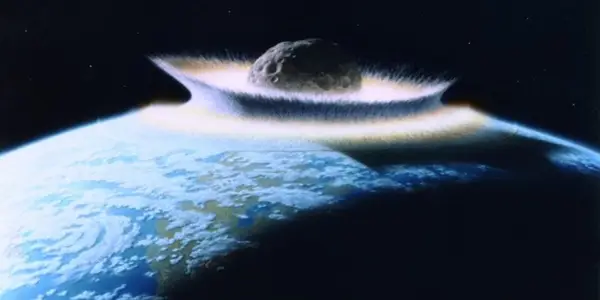
Chinese scientists propose innovative nuclear strategies for asteroid deflection, emphasizing safety and effectiveness in planetary defense.
In-depth analysis
New discoveries
Researchers from the China Academy of Launch Vehicle Technology have introduced a groundbreaking nuclear strategy for planetary defense against asteroids. Their study reveals that nuclear explosions may be the most effective method for either destroying or deflecting hazardous near-Earth objects, challenging traditional deflection techniques employed by agencies like NASA.
Mission updates
The study published in Space Science & Technology outlines two innovative nuclear defense strategies for asteroids. These include a direct-impact detonation and a pre-excavation method, both aimed at enhancing the effectiveness of deflection efforts.
Who is affected
The research impacts global space agencies and scientists dedicated to planetary defense. With approximately 1,700 known near-Earth asteroids posing potential threats, advancements in nuclear deflection techniques could significantly alter strategies for safeguarding Earth from future asteroid collisions.
Next steps
Further research and simulations are necessary to validate the proposed nuclear strategies. As monitoring of near-Earth objects continues, collaborative efforts among international space agencies will be critical in developing effective planetary defense mechanisms.
Did you know?
Why we should care
Asteroids may seem distant, but their potential to cause catastrophic damage on Earth makes this research critical. A nuclear strategy for asteroid deflection could be the difference between life and death for millions. With increasing space exploration and the discovery of more near-Earth objects, understanding how to protect our planet is essential for ensuring a safe future for generations to come.
The universe's unsolved mystery
The question of how to effectively neutralize a threatening asteroid remains largely unanswered, despite advances in technology. While current methods offer some promise, the complexity of celestial mechanics and the unpredictable nature of these objects present an ongoing challenge. Each potential threat highlights our limited understanding of not just asteroids, but our own vulnerability in the vast universe.
The person who looks at the stars
Meet Elena, a 12-year-old with a passion for astronomy. Every night, she sets up her telescope to gaze at the stars, dreaming of a future where she can help protect Earth from cosmic threats. After hearing about the proposed nuclear strategies for asteroid deflection, she shared her concerns with her classmates, sparking discussions about planetary defense in her school. For Elena, these challenges are more than academic; they symbolize her hope for a safer world. She aspires to become an astrophysicist, motivated by the idea that understanding the universe can lead to tangible solutions for humanity. Her enthusiasm reminds us that the next generation holds the key to tackling these cosmic mysteries and safeguarding our planet.
Expert Commentary
James Webb Space Telescope Captures Stunning...
SpaceX Faces Challenges in Meeting NASA's 2027...
Portal Systems Aims to Revolutionize Spacecraft...
Russian Cosmonauts Conduct Extended Spacewalk to...

Samsung's Galaxy S26 Ultra Set for Significant...

Jonathan Davies Urges England to Create New...

The Pleiades Star Cluster Reveals Its Extensive...
X5.1 Solar Flare Triggers G4 Geomagnetic Storm...

Jeff Bezos's AI Hardware Venture Takes Aim at...
Exploring the Composition of Cosmic Voids
NASA's X-59 Achieves Historic Supersonic Flight
NASA's Ambitious Timeline for Human Exploration...

Childcare Crisis: Families Struggle as...
Potential Evidence of Dark Matter Emerges from...
Collaboration Between Exoplanet Researchers and...

Astronomers Identify Three Earth-Sized Exoplanets...
China's Mars Orbiter Captures Image of...
Astronomers Uncover a Rapid Star-Forming Galaxy...

Satellite Imagery Highlights Hurricane Damage...
James Webb Telescope Identifies Rapidly Growing...
European Space Agency Unveils Stunning Radar...
Assessing the Financial Impact of NASA's Apollo...

Astronauts aboard the ISS Capture Stunning Images...
The Impact of Space Technology on Everyday Life
Rogue Moons: A New Frontier for Life Beyond Stars
Intense Solar Storm May Illuminate Skies Across...
James Webb Space Telescope Discovers Ancient...
Apple Introduces Emergency SOS via Satellite in...
Ancient Earth Chemistry Discovered Beneath Modern...

Samsung Unveils Unprecedented Black Friday Deal...
Astronomers Uncover Evidence of Aging Stars...
Congress Questions NASA's Facility Closures Amid...
Ancient Galaxies: A Chaotic Early Universe...
NASA's Campaign to Monitor Interstellar Comet...
Study Suggests the Universe's Expansion May Be...
Astrophotographer Captures Stunning Image of...
New Mexico Startup Unveils Ambitious Plan to...