Portal Systems Aims to Revolutionize Spacecraft Mobility with Solar Power
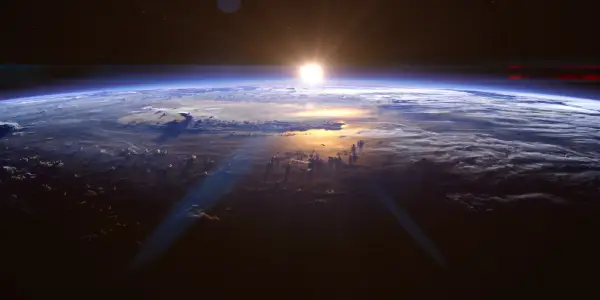
As the demand for satellite deployment and orbital maneuvering grows, Portal Systems proposes an innovative solar propulsion method to enhance spacecraft capabilities.
In-depth analysis
New discoveries
Portal Systems has unveiled its Supernova spacecraft, which incorporates a groundbreaking solar propulsion system that utilizes mirrors to concentrate sunlight. This innovative approach not only generates thrust but also enables the spacecraft to perform maintenance and debris removal tasks in low Earth orbit, marking a significant leap in spacecraft design.
Mission updates
Portal Systems is gearing up for the inaugural launch of its Supernova spacecraft, which aims to demonstrate its advanced maneuverability and maintenance capabilities in orbit.
Who is affected
The rise of Supernova's technology impacts satellite operators and space agencies, as well as industries reliant on satellite services. Increased efficiency in orbital maneuvers could enhance safety and reduce collision risks in the increasingly crowded space environment.
Next steps
Following the upcoming launch, Portal Systems will focus on evaluating Supernova's performance and refining its solar propulsion technology to ensure reliability and efficiency in future space operations.
Did you know?
Why we should care
As satellites increasingly crowd our skies, the potential for collisions rises, threatening not just space missions but also the technologies we rely on daily, like GPS and communications. Portal Systems' Supernova could revolutionize how we manage this congestion, ensuring safer and more efficient operations in orbit. This innovation impacts industries from telecommunications to agriculture, affecting everything from how we communicate to how we monitor our planet.
The universe's unsolved mystery
The challenge of maintaining a clean and navigable orbit remains one of space exploration's greatest puzzles. Each satellite launched adds to a growing web of potential hazards. How to effectively manage this debris, while advancing technology like solar propulsion, is a critical question that could shape future endeavors in space travel and exploration.
The person who looks at the stars
Lila Chen, an aspiring astronaut and recent aerospace engineering graduate, often finds herself stargazing from her rooftop in San Francisco. The twinkling lights remind her of the delicate balance between innovation and safety in space. Inspired by Portal Systems' mission, Lila dreams of being part of a future where orbiting satellites operate seamlessly, minimizing risks and maximizing benefits for Earth. As she studies the stars, Lila envisions herself one day contributing to the design of spacecraft that not only explore but also preserve the cosmos, sparking her passion for a safer and more sustainable space environment.
Unraveling the Mysteries of Mars: Recent...
Enhance Your Weather Preparedness with Weather...
Highlights of 2025 in Space Exploration: From...
China's Mars Orbiter Captures Image of...
Euclid Space Telescope Discovers Hidden Stars in...
NASA's X-59 Achieves Historic Supersonic Flight

Childcare Crisis: Families Struggle as...
X5.1 Solar Flare Triggers G4 Geomagnetic Storm...

Samsung's Galaxy S26 Ultra Set for Significant...
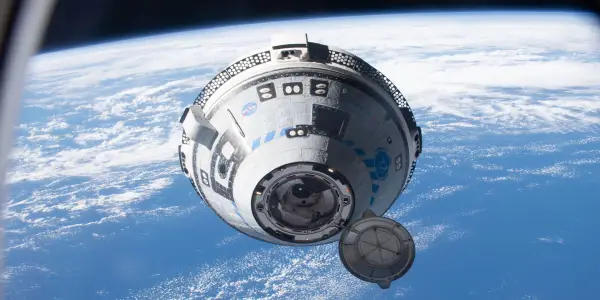
Boeing's Upcoming Starliner Mission Set for April...
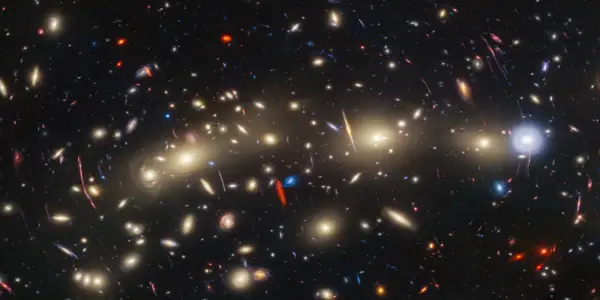
James Webb Space Telescope May Have Detected the...

Urwerk Unveils Limited-Edition 100V 'LightSpeed'...

Foundation Season 3 Hints at Deeper Asimov Themes...
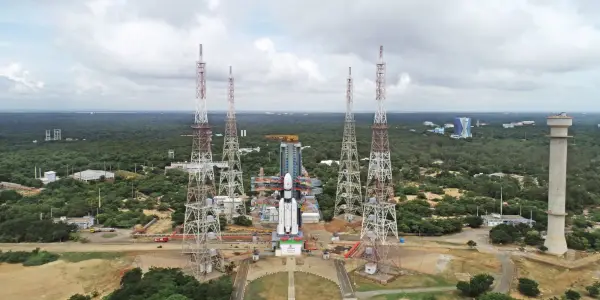
India Successfully Launches CMS-03 Military...
Recent Studies Explore Potential Exoplanet in...
The Pleiades Star Cluster Reveals Its Extensive...
Astronomers Converge in Phoenix for AAS 247: A...
NASA's ESCAPADE Probes Set for Unique Journey to...
Samsung Galaxy S26 Expected to Feature Enhanced...
Meteorite Fragment May Have Impacted Houston Home

OnePlus 15 vs. Samsung Galaxy S25 Plus: A Clash...
Intense Solar Storm May Illuminate Skies Across...
NASA Advances Artemis 2 Mission with Orion...
NASA's Artemis 3 Moon Mission Delayed to 2028 Due...
SabreSat: An Innovative Air-Breathing Satellite...
James Webb Telescope Identifies Rapidly Growing...
Ancient Galaxies: A Chaotic Early Universe...
Exploring the Composition of Cosmic Voids
Intense Solar Storms Could Ignite Life on...
AI Reveals Over 800 New Cosmic Anomalies from...
Assessing the Financial Impact of NASA's Apollo...

FULU Foundation Introduces Repair Bounty System...
Interstellar Comet 3I/ATLAS Approaches...
Astronomers Discover Ancient White Dwarf Actively...

New Research Suggests Dark Matter Influences...
Portal Systems Aims to Revolutionize Spacecraft...
Exploring Oregon's Premier Public Telescope...
SpaceX Faces Challenges in Meeting NASA's 2027...
NASA's Ambitious Timeline for Human Exploration...