FULU Foundation Introduces Repair Bounty System to Combat Consumer Hostility
The FULU Foundation aims to empower users through financial incentives for repairing consumer products, potentially transforming the landscape of tech repairs.
In-depth analysis
New discoveries
The FULU Foundation has unveiled a groundbreaking bounty system aimed at combating restrictive practices in consumer technology. This innovative approach rewards individuals for repairing devices hindered by digital rights management (DRM) restrictions, potentially transforming the landscape of product repair and empowering consumers to reclaim control over their technology.
Mission updates
FULU has successfully awarded bounties for repairs on devices like the bricked Nest thermostat and is currently offering rewards for issues with DRM-locked air purifiers and the Xbox Series gaming console.
Who is affected
Consumers frustrated by restrictive technology practices are directly impacted by FULU's initiative. This approach not only addresses their grievances but also encourages a culture of repair, potentially reducing e-waste and fostering sustainable practices in the tech industry.
Next steps
Moving forward, FULU plans to expand its bounty offerings and encourage more participation in the repair economy. The foundation aims to increase public awareness about consumer rights and the importance of sustainable technology practices.
Did you know?
Why we should care
The FULU Foundation's bounty system directly impacts consumers, empowering them to regain control over their products. By incentivizing repairs, this initiative not only reduces electronic waste but also challenges the profit-driven practices of major tech companies. Everyday users, often frustrated by unfixable devices, can now actively participate in a movement that promotes sustainability and economic fairness, making a tangible difference in their lives.
The universe's unsolved mystery
The challenge of balancing innovation and user rights remains unresolved. While technology advances at a rapid pace, the question of how to maintain user autonomy in an increasingly restrictive digital landscape continues to perplex consumers and advocates alike. The success of FULU may hinge on whether it can navigate these murky waters, setting a precedent for future initiatives aimed at reclaiming consumer power.
The person who looks at the stars
Meet Sarah Chen, a dedicated teacher in her mid-thirties who often finds solace in stargazing after long days of managing her classroom. With a passion for science and technology, she feels the weight of her students’ frustrations with broken devices. Sarah sees the FULU initiative as a beacon of hope, not just for herself but for her students who deserve the right to repair their gadgets. She dreams of a world where her students can learn to fix their own devices, fostering a spirit of innovation and self-reliance. For Sarah, this movement represents more than just repairs; it's about instilling confidence in the next generation to challenge corporate norms and embrace sustainability.

NASA Unveils New Images of Interstellar Comet...
Assessing the Financial Impact of NASA's Apollo...

Interstellar Comet 3I/ATLAS Approaches...

Unistellar eQuinox 2 Smart Telescope Sees...
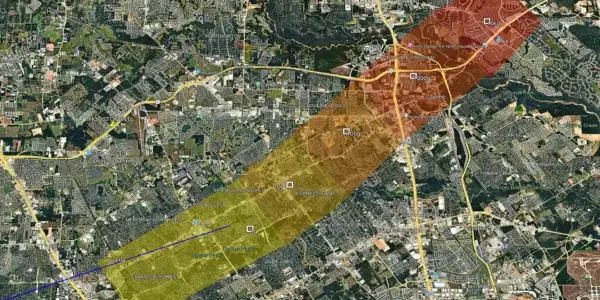
Meteorite Fragment May Have Impacted Houston Home
Samsung Unveils Unprecedented Black Friday Deal...

New Simulations Shed Light on the Enigmatic...
NASA Advances Artemis 2 Mission with Orion...
Breakthrough in Milky Way Simulation Using AI...
Enhance Your Weather Preparedness with Weather...

This Week In Space Podcast: Episode 187 Explores...

NASA and Blue Origin Successfully Launch Dual...
Unraveling the Mysteries of Mars: Recent...

Hubble Telescope Unveils Enigmatic Galaxy NGC 2775

Intense Solar Storms Could Ignite Life on...
Astronomers Converge in Phoenix for AAS 247: A...

Astronomers Identify Three Earth-Sized Exoplanets...

Study Suggests the Universe's Expansion May Be...

Deep Fission Proposes Underground Nuclear...

Astronomers Identify Potential Earth-Like...

Astronomers Capture Unprecedented Black Hole...
NASA and European Partners Prepare for...

Mapping the Invisible: Astronomers Uncover Dark...

Rogue Moons: A New Frontier for Life Beyond Stars

Young Canadian Astronomer Identifies Two...
OnePlus 15 vs. Samsung Galaxy S25 Plus: A Clash...

Urwerk Unveils Limited-Edition 100V 'LightSpeed'...

Foundation Season 3 Hints at Deeper Asimov Themes...

Webb Telescope Reveals Unprecedented Cosmic...
Congress Questions NASA's Facility Closures Amid...
Jeff Bezos's AI Hardware Venture Takes Aim at...
Highlights of 2025 in Space Exploration: From...
Blue Origin Faces Major Setback as New Glenn...

James Webb Telescope Identifies Rapidly Growing...

Astrophysicists Unveil Dark Universe Through...

Daily Roundup: November 10, 2025 – Advancements...

Satellite Imagery Highlights Hurricane Damage...

Exploring the Composition of Cosmic Voids

Astronomers Uncover a Rapid Star-Forming Galaxy...