Satellite Constellations Threaten Up to 96% of Astronomy Images, NASA Warns
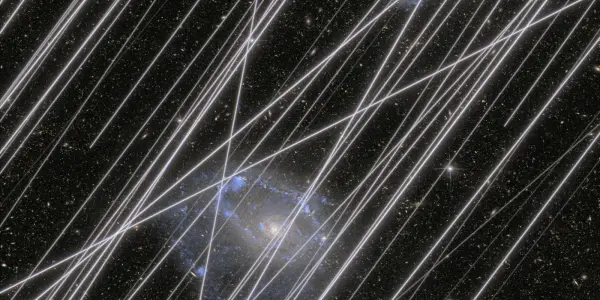
A recent NASA report published in Nature highlights that nearly 40% of all images captured by the Hubble Space Telescope could feature satellite streaks due to increasing satellite launches.
In-depth analysis
New discoveries
NASA's recent analysis highlights alarming potential disruptions to astronomical imaging due to the increasing number of satellite constellations. The report indicates that if all proposed satellites launch, the clutter in low Earth orbit could significantly hinder ground-based telescopes and some space observatories, threatening the quality of celestial observations.
Mission updates
The Vera C. Rubin Observatory is set to collect unprecedented amounts of data in its first year, yet NASA's findings suggest that up to 40% of its images may be affected by satellite interference.
Who is affected
The implications of satellite interference extend beyond professional astronomers to amateur stargazers, who may also find their observations compromised. The growing satellite presence poses challenges for anyone engaged in astronomical research or casual observation.
Next steps
To address these issues, stakeholders must explore regulatory measures and technical solutions, such as painting satellites darker colors. However, the timeline for implementing these strategies remains unclear amid rising satellite launches.
Did you know?
Why we should care
The surge in satellite constellations directly affects our understanding of the universe. As images from telescopes become distorted, scientists may miss crucial discoveries about our galaxy and beyond. This not only impacts professional astronomers but also amateur stargazers and educators who rely on clear visuals to inspire curiosity in future generations. The clearer the night sky, the brighter the hope for new knowledge.
The universe's unsolved mystery
The increasing clutter of satellites in low Earth orbit represents a profound challenge to our quest for knowledge. As more objects fill the sky, the risk of losing vital astronomical data grows. This dilemma raises questions about our priorities in space exploration: Are we advancing our scientific understanding, or are we obstructing it with our own technological ambitions?
The person who looks at the stars
Meet Clara, a high school science teacher from a small town in Texas. Every week, she gathers her students for stargazing nights, using a modest telescope to explore the cosmos. Clara's passion for astronomy ignites a sense of wonder in her students, many of whom dream of becoming scientists. However, with the looming threat of satellite interference, Clara worries that the beauty of the night sky may be lost to future generations. She feels a deep responsibility to advocate for clearer skies, knowing that the awe of discovery is a powerful tool for education. Clara's connection to the stars isn’t just about science; it’s about nurturing curiosity and imagination in young minds.
Innovative Portable Reflecting Telescope...
Enhance Your Weather Preparedness with Weather...
Highlights of 2025 in Space Exploration: From...
China's Mars Orbiter Captures Image of...
Exploring Alternatives to the Meta Quest 3 Elite...
NASA's X-59 Achieves Historic Supersonic Flight

Childcare Crisis: Families Struggle as...
X5.1 Solar Flare Triggers G4 Geomagnetic Storm...

Samsung's Galaxy S26 Ultra Set for Significant...
Jupiter's Moons Io and Europa to Cast Shadows...
Boeing's Upcoming Starliner Mission Set for April...
Ancient Galaxies: A Chaotic Early Universe...

Foundation Season 3 Hints at Deeper Asimov Themes...
India Successfully Launches CMS-03 Military...
Recent Studies Explore Potential Exoplanet in...
The Pleiades Star Cluster Reveals Its Extensive...
Astronomers Converge in Phoenix for AAS 247: A...
Breakthrough in Milky Way Simulation Using AI...

Urwerk Unveils Limited-Edition 100V 'LightSpeed'...
Meteorite Fragment May Have Impacted Houston Home
SpaceX Faces Challenges in Meeting NASA's 2027...
Intense Solar Storm May Illuminate Skies Across...
NASA Advances Artemis 2 Mission with Orion...
NASA's Artemis 3 Moon Mission Delayed to 2028 Due...
SabreSat: An Innovative Air-Breathing Satellite...
James Webb Telescope Identifies Rapidly Growing...
Samsung Galaxy S26 Expected to Feature Enhanced...
Exploring the Composition of Cosmic Voids
Intense Solar Storms Could Ignite Life on...
AI Reveals Over 800 New Cosmic Anomalies from...
Assessing the Financial Impact of NASA's Apollo...

FULU Foundation Introduces Repair Bounty System...
Interstellar Comet 3I/ATLAS Approaches...
Astronomers Discover Ancient White Dwarf Actively...
New Research Suggests Dark Matter Influences...
Portal Systems Aims to Revolutionize Spacecraft...
Artemis 2 Astronauts Safely Return After Historic...
OnePlus 15 vs. Samsung Galaxy S25 Plus: A Clash...
NASA Unveils New Images of Interstellar Comet...