2026 Poised to be Pivotal for India's Solar Mission Aditya-L1
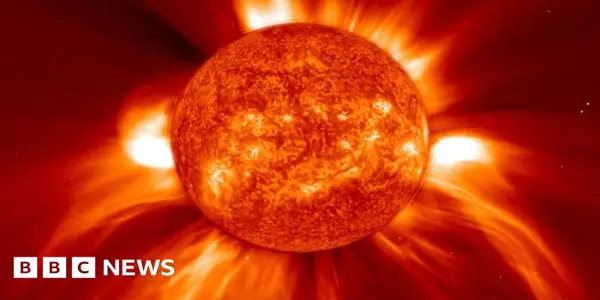
In 2026, India's Aditya-L1 solar mission will observe the Sun at its peak activity, promising groundbreaking insights into solar storms and coronal mass ejec...
In-depth analysis
New discoveries
India's Aditya-L1 mission is poised to unveil critical insights into solar phenomena, particularly during the Sun's peak activity phase in 2026. This mission aims to enhance understanding of coronal mass ejections (CMEs), which can significantly impact Earth's infrastructure. Continuous monitoring will provide valuable data on solar dynamics, establishing benchmarks for future solar activity predictions.
Mission updates
The Aditya-L1 mission, launched in September 2023, is actively analyzing solar activity, including a notable CME event that occurred shortly after its launch. Collaborations with NASA are underway to interpret this data.
Who is affected
The effects of solar activity, particularly CMEs, extend to various sectors, including satellite communications and power grids. Events like the 2022 Quebec power outage and disruptions in European air traffic control highlight the potential risks to millions of people reliant on these technologies.
Next steps
As the mission advances, scientists will continue to analyze data from Aditya-L1 to refine predictions of solar activity. This ongoing research will inform strategies to mitigate the impact of solar storms on Earth's technological systems.
Did you know?
Why we should care
The Aditya-L1 mission is crucial for anyone relying on technology, as it could prevent widespread disruptions caused by solar storms. These storms can affect GPS systems, satellite communications, and even power grids, potentially impacting daily life—think of a sudden blackout or a delayed flight due to solar interference. Understanding and monitoring solar activity not only safeguards our infrastructure but also enhances our ability to adapt to natural phenomena.
The universe's unsolved mystery
Solar activity remains one of the universe's great enigmas. While scientists have identified patterns in solar cycles, the precise mechanisms that govern these phenomena—like the transition from quiet to stormy solar periods—are still elusive. The Aditya-L1 mission aims to shed light on these processes, potentially unlocking secrets that could reshape our understanding of solar dynamics and their influence on Earth.
The person who looks at the stars
For 12-year-old Anika, stargazing is more than just a hobby; it's a gateway to dreams. Living in a small village in India, she often climbs the rooftop to catch a glimpse of the vast sky. Aditya-L1 ignites her curiosity, sparking her ambition to become an astrophysicist. The mission's potential to reveal the Sun's secrets fascinates her, as she imagines a future where her work could protect communities from solar storms. Anika sees herself not just as a spectator of the cosmos but as a key player in understanding its mysteries, showcasing how space exploration inspires the next generation to dream big.
Unraveling the Mysteries of Mars: Recent...

Enhance Your Weather Preparedness with Weather...
Highlights of 2025 in Space Exploration: From...

China's Mars Orbiter Captures Image of...
Euclid Space Telescope Discovers Hidden Stars in...
NASA's X-59 Achieves Historic Supersonic Flight

Childcare Crisis: Families Struggle as...
X5.1 Solar Flare Triggers G4 Geomagnetic Storm...

Samsung's Galaxy S26 Ultra Set for Significant...
Boeing's Upcoming Starliner Mission Set for April...
James Webb Space Telescope May Have Detected the...

Urwerk Unveils Limited-Edition 100V 'LightSpeed'...

Foundation Season 3 Hints at Deeper Asimov Themes...
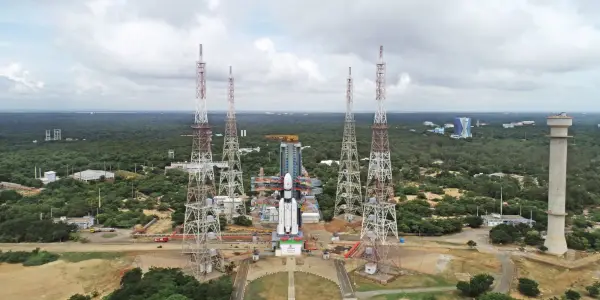
India Successfully Launches CMS-03 Military...
Recent Studies Explore Potential Exoplanet in...
The Pleiades Star Cluster Reveals Its Extensive...
Astronomers Converge in Phoenix for AAS 247: A...
Breakthrough in Milky Way Simulation Using AI...

Samsung Galaxy S26 Expected to Feature Enhanced...
Meteorite Fragment May Have Impacted Houston Home

OnePlus 15 vs. Samsung Galaxy S25 Plus: A Clash...
Intense Solar Storm May Illuminate Skies Across...
NASA Advances Artemis 2 Mission with Orion...
NASA's Artemis 3 Moon Mission Delayed to 2028 Due...
SabreSat: An Innovative Air-Breathing Satellite...
James Webb Telescope Identifies Rapidly Growing...
Ancient Galaxies: A Chaotic Early Universe...
Exploring the Composition of Cosmic Voids
Intense Solar Storms Could Ignite Life on...
AI Reveals Over 800 New Cosmic Anomalies from...
Assessing the Financial Impact of NASA's Apollo...

FULU Foundation Introduces Repair Bounty System...
Interstellar Comet 3I/ATLAS Approaches...
Astronomers Discover Ancient White Dwarf Actively...
New Research Suggests Dark Matter Influences...

Portal Systems Aims to Revolutionize Spacecraft...
Exploring Oregon's Premier Public Telescope...
SpaceX Faces Challenges in Meeting NASA's 2027...
NASA's Ambitious Timeline for Human Exploration...