NASA's Pandora Telescope Launches, Paving the Way for Early-Career Scientists
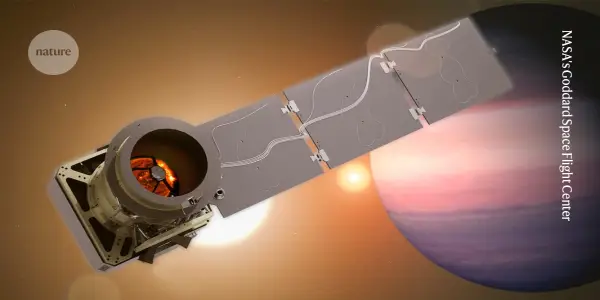
NASA's Pandora telescope has launched aboard a SpaceX Falcon 9, marking a milestone for early-career scientists and paving the way for targeted exoplanet res...
In-depth analysis
New discoveries
Pandora, NASA's latest telescope, embarks on a mission to delve into the complexities of exoplanets and their host stars. By focusing on specific scientific inquiries, this innovative approach aims to provide deeper insights into celestial bodies, enhancing our understanding of the universe's composition and behavior, particularly within the context of the Pioneers Program.
Mission updates
Following its successful launch, Pandora is now operational and poised to begin its observations of targeted exoplanets. The mission's focus will be on analyzing chemical signatures to advance knowledge in the field of astronomy.
Who is affected
The successful deployment of Pandora has significant implications for early-career researchers in the space sector. With over half of the mission's leading scientists and engineers being in the early stages of their careers, this initiative provides them with invaluable experience and opportunities for professional growth.
Next steps
Moving forward, the team will engage in meticulous analyses of selected stars and their exoplanets. This careful targeting is essential to ensure that observations yield the most relevant scientific data, driving further discoveries in astronomy.
Did you know?
Why we should care
The launch of NASA's Pandora telescope is a leap forward in our understanding of exoplanets, which could host life beyond Earth. This mission impacts everyday life by informing our knowledge of the universe and potentially guiding future explorations for habitable worlds. As scientists decode the atmospheres of distant planets, we might one day find answers to profound questions about life beyond our own, influencing everything from scientific education to how we perceive our place in the cosmos.
The universe's unsolved mystery
Despite advancements in technology, the existence of life beyond Earth remains an enigma. Pandora's mission to analyze exoplanets may bring us closer to answering this age-old question. The hunt for biosignatures in distant atmospheres pushes the boundaries of our understanding and challenges the very nature of life itself. As we search for signs of life, we also confront the philosophical implications of our solitude in the vast universe.
The person who looks at the stars
Ben Hord, a passionate postdoctoral fellow, embodies the spirit of discovery at NASA. His journey with the Pandora mission began as a part-time student, evolving into a pivotal role where his insights directly shape scientific inquiries. Each night, Ben gazes at the stars, not just as distant points of light, but as potential worlds waiting to be explored. His connection to the mission is deeply personal; it represents years of commitment and dreams of understanding the cosmos. As he collaborates with a team of early-career scientists, their shared enthusiasm fuels a new era of exploration, where every decision could lead to groundbreaking discoveries. For Ben, every observation of a distant exoplanet is a step toward uncovering the mysteries of the universe, making each moment an emotional milestone in a career dedicated to the stars.
Interstellar Comet 3I/ATLAS Approaches...
India Successfully Launches CMS-03 Military...

Lenovo's Legion Tab Gen 3 Sees Significant Black...
Unusual Wind from Neutron Star Challenges Space...
Intense Solar Storm May Illuminate Skies Across...
Astronomers Capture Unprecedented Black Hole...

Enhance Your Weather Preparedness with Weather...
New Simulations Shed Light on the Enigmatic...
NASA's ESCAPADE Probes Set for Unique Journey to...
Young Canadian Astronomer Identifies Two...

Innovative Portable Reflecting Telescope...

FULU Foundation Introduces Repair Bounty System...
Unistellar eQuinox 2 Smart Telescope Sees...
Congress Questions NASA's Facility Closures Amid...
SabreSat: An Innovative Air-Breathing Satellite...
Study Suggests the Universe's Expansion May Be...
Hawaiian Students Honor Gemini North Telescope's...
SpaceX Achieves 150th Falcon 9 Launch with...

Jeff Bezos's AI Hardware Venture Takes Aim at...
James Webb Space Telescope Discovers Ancient...
X5.1 Solar Flare Triggers G4 Geomagnetic Storm...

Samsung Unveils Unprecedented Black Friday Deal...
Ancient Galaxies: A Chaotic Early Universe...
Astrophysicists Unveil Dark Universe Through...
Artemis 2 Astronauts Safely Return After Historic...

Satellite Imagery Reveals Extensive Damage Across...
Euclid Space Telescope Discovers Hidden Stars in...
Astrophotographer Captures Stunning Image of...
Blue Origin Faces Major Setback as New Glenn...

Urwerk Unveils Limited-Edition 100V 'LightSpeed'...

Exploring Alternatives to the Meta Quest 3 Elite...

OnePlus 15 vs. Samsung Galaxy S25 Plus: A Clash...
NASA's Ambitious Timeline for Human Exploration...
NASA Advances Artemis 2 Mission with Orion...
New Research Suggests Dark Matter Influences...
Italian Producer Plans Historic Film to Shoot in...

Discovery of a Planet Formation Zone Beyond...
Astronomers Uncover a Rapid Star-Forming Galaxy...