Astronomers Identify Potential Earth-Like Exoplanet, But Evidence Remains Elusive
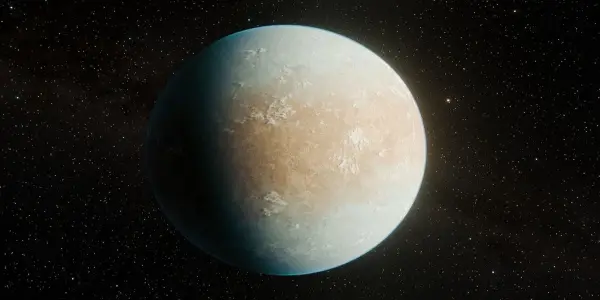
The exoplanet HD 137010 b has sparked excitement among astronomers as a possible Earth counterpart, yet its fleeting observation raises questions about its existence.
In-depth analysis
New discoveries
Astronomers have identified a potential exoplanet, HD 137010 b, which may closely resemble Earth. This discovery, stemming from data collected by the Kepler space telescope, highlights a brief dimming event of its host star, suggesting the presence of a rocky planet. However, the solitary detection raises questions about its classification and characteristics.
Mission updates
The Kepler mission, known for its groundbreaking work in exoplanet discovery, faced challenges that limited its ability to confirm HD 137010 b. Only one transit was observed, complicating the verification process and leaving the planet's status uncertain.
Who is affected
The implications of HD 137010 b's discovery resonate within the scientific community, particularly among astronomers focused on identifying Earth-like planets. The uncertainty surrounding this solitary detection may shift priorities and resources away from this promising candidate toward more reliable exoplanet targets.
Next steps
Future observations of HD 137010 b are crucial for confirming its existence, but current priorities lie with more solid candidates. Without additional data, the fate of this potential Earth analog remains in limbo, highlighting the challenges of exoplanet research.
Did you know?
Why we should care
The quest for Earth-like planets is more than a scientific pursuit; it touches on humanity's innate desire to understand our place in the universe. The potential existence of HD 137010 b, a nearby rocky exoplanet, raises questions about life beyond Earth and the future of our own planet. This discovery fuels our imagination and informs our search for new worlds that could one day support human life, making it a topic of genuine relevance for everyone.
The universe's unsolved mystery
HD 137010 b's solitary transit embodies a larger enigma in astronomy: how many more such worlds exist, hidden from our view? Each fleeting signal offers tantalizing possibilities, but it also highlights the limitations of our observational capabilities. As technology evolves, what other mysteries might we unravel in our search for life beyond our solar system?
The person who looks at the stars
Meet 12-year-old Elena Rodriguez, a budding astronomer from Tucson, Arizona. Ever since she received a telescope for her birthday, she has been captivated by the night sky, often dreaming of discovering a new planet. When she learned about HD 137010 b, Elena felt a spark of hope—what if this distant world could harbor life? For her, astronomy isn't just about stars and planets; it's about the profound connection between humanity and the cosmos. Elena often imagines a future where she might contribute to the search for extraterrestrial life, inspired by the citizen scientists who played a role in this latest discovery. Her passion illustrates how each new finding can ignite dreams in young minds, reminding us that every star holds the potential for countless stories yet to be told.
Breakthrough in Milky Way Simulation Using AI...

Urwerk Unveils Limited-Edition 100V 'LightSpeed'...
Deep Fission Proposes Underground Nuclear...
Italian Producer Plans Historic Film to Shoot in...

Satellite Imagery Highlights Hurricane Damage...
X5.1 Solar Flare Triggers G4 Geomagnetic Storm...

NASA's X-59 Achieves Historic Supersonic Flight


Samsung Unveils Unprecedented Black Friday Deal...
NASA's ESCAPADE Probes Set for Unique Journey to...
NASA's Campaign to Monitor Interstellar Comet...

Top Black Friday Smartwatch Deals Worth...

Childcare Crisis: Families Struggle as...
The Impact of Space Technology on Everyday Life
James Webb Telescope Identifies Rapidly Growing...
NASA and European Partners Prepare for...
NASA Unveils New Images of Interstellar Comet...
Recent Studies Explore Potential Exoplanet in...
Astronomers Capture Unprecedented Black Hole...

Astronomers Identify Three Earth-Sized Exoplanets...

FULU Foundation Introduces Repair Bounty System...
James Webb Space Telescope Discovers Ancient...
Meteorite Fragment May Have Impacted Houston Home

Innovative Portable Reflecting Telescope...
Jupiter's Moons Io and Europa to Cast Shadows...

Portal Systems Aims to Revolutionize Spacecraft...
Young Canadian Astronomer Identifies Two...
Unraveling the Mysteries of Mars: Recent...
SpaceX Faces Challenges in Meeting NASA's 2027...
Astronomers Uncover a Rapid Star-Forming Galaxy...

Samsung Galaxy S26 Expected to Feature Enhanced...
Astronomers Identify Potential Earth-Like...
ISS Crew Takes Precautions Against Radiation...

Exploring Alternatives to the Meta Quest 3 Elite...
Andromeda Galaxy's Impact on Its Satellite...

SpaceX Achieves 150th Falcon 9 Launch with...
The Dwarf III Smart Telescope: A Compact Marvel...
Ancient Galaxies: A Chaotic Early Universe...
New Mexico Startup Unveils Ambitious Plan to...