NASA Unveils Comprehensive Strategy for Lunar Base at Moon's South Pole
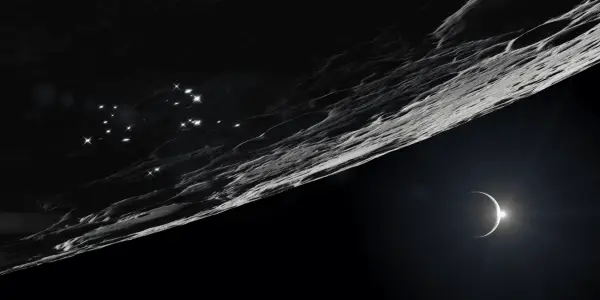
NASA's phased plan for a lunar base could commence this year, leveraging Blue Origin's technology for future human exploration.
In-depth analysis
New discoveries
NASA's lunar base initiative is poised to lead to groundbreaking advancements in space technology. The focus on robotic exploration will enable the testing of innovative systems such as mobility drones and advanced reactors, potentially revolutionizing how humans interact with the lunar environment and laying the groundwork for future exploration missions.
Mission updates
The first missions under NASA's lunar base plan are set to commence within the year, with an emphasis on robotic testing and experimentation. This proactive approach aims to accelerate the timeline for establishing a sustainable presence on the Moon.
Who is affected
The lunar base project will impact a wide array of stakeholders, including government space agencies, private sector partners like Blue Origin, and the scientific community. These groups will collaborate to develop technologies that not only support lunar exploration but also enhance broader space research initiatives.
Next steps
Following the initial robotic phase, NASA will advance to constructing semi-permanent infrastructure on the Moon. This will involve delivering essential cargo and establishing communication systems to support ongoing missions and human habitation.
Did you know?
Why we should care
Establishing a lunar base could revolutionize our approach to space travel and scientific research. For everyday people, this means advancements in technology, medicine, and materials science developed for lunar conditions may eventually enhance life on Earth. From improved communication systems to innovations in renewable energy, the benefits of this lunar endeavor could ripple through our daily lives, making them safer and more efficient.
The universe's unsolved mystery
The Moon's south pole remains one of the most enigmatic locations in our solar system. It harbors permanently shadowed craters that might contain water ice, potentially holding clues to the history of water in the solar system. Understanding these secrets could not only illuminate our past but also provide critical resources for future space exploration and the potential for life beyond Earth.
The person who looks at the stars
Meet Eliza Chen, a high school science teacher in a small town, who inspires her students to dream big. Each night, she takes her telescope to the local park, sharing the wonders of the cosmos with anyone who will listen. The lunar base project fills her with hope; she imagines her students one day walking on the Moon, making discoveries that could change humanity's understanding of the universe. For Eliza, each mission is not just a step for science, but a leap toward a future where her students might contribute to humanity’s next chapter in space exploration. Her passion fuels a belief that the stars are not just distant points of light, but destinations waiting to be reached.
Expert Commentary
SabreSat: An Innovative Air-Breathing Satellite...

European Space Agency Unveils Stunning Radar...

Exploring Alternatives to the Meta Quest 3 Elite...
Rogue Moons: A New Frontier for Life Beyond Stars
James Webb Space Telescope Captures Stunning...

Samsung Unveils Unprecedented Black Friday Deal...

OnePlus 15 vs. Samsung Galaxy S25 Plus: A Clash...
Young Canadian Astronomer Identifies Two...

Deep Fission Proposes Underground Nuclear...
Exploring the Composition of Cosmic Voids

Satellite Imagery Reveals Extensive Damage Across...
Astronomers Discover Ancient White Dwarf Actively...
X5.1 Solar Flare Triggers G4 Geomagnetic Storm...
Portal Systems Aims to Revolutionize Spacecraft...
NASA's Artemis 3 Moon Mission Delayed to 2028 Due...

Top Black Friday Smartwatch Deals Worth...
Hubble Telescope Unveils Enigmatic Galaxy NGC 2775
Collaboration Between Exoplanet Researchers and...
Astrophotographer Captures Stunning Image of...

X-Men Return to Education in Upcoming Comic...

Astronauts aboard the ISS Capture Stunning Images...
ISS Crew Takes Precautions Against Radiation...
Potential Evidence of Dark Matter Emerges from...
Astronomers Identify Potential Earth-Like...
NASA's Campaign to Monitor Interstellar Comet...
Astronomers Converge in Phoenix for AAS 247: A...
Breakthrough in Milky Way Simulation Using AI...
Apple Introduces Emergency SOS via Satellite in...
Astronomers Uncover a Rapid Star-Forming Galaxy...
James Webb Space Telescope Discovers Ancient...

Samsung Galaxy S26 Expected to Feature Enhanced...
Assessing the Financial Impact of NASA's Apollo...
Blue Origin Faces Major Setback as New Glenn...
New Research Suggests Dark Matter Influences...
Webb Telescope Reveals Unprecedented Cosmic...
Astronomers Capture Unprecedented Black Hole...
James Webb Telescope Identifies Rapidly Growing...