NASA's $4 Billion Roman Space Telescope Set for Launch in Florida
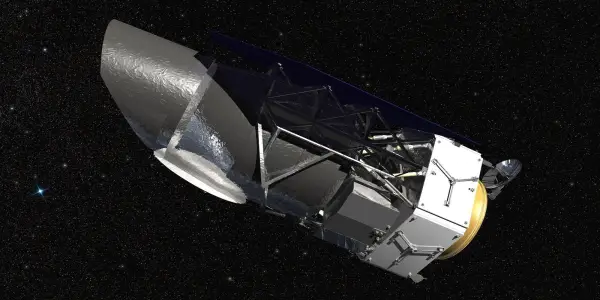
NASA's Roman Space Telescope, a successor to Hubble, is en route to Florida, promising to revolutionize our understanding of the universe.
In-depth analysis
New discoveries
The Roman Space Telescope is set to revolutionize our understanding of the universe by capturing panoramic images of the cosmos. This innovative technology will enhance the search for exoplanets, particularly smaller ones in expansive orbits, and could lead to the discovery of thousands of new worlds, enriching our knowledge of planetary formation.
Mission updates
The Roman Space Telescope has successfully transitioned from the Goddard Space Flight Center to the Kennedy Space Center, where preparations for its September launch are underway. This marks a significant milestone in the mission's timeline.
Who is affected
Astronomers and researchers worldwide will benefit from the Roman Space Telescope's capabilities, as it aims to unveil new insights into dark energy and cosmic evolution. The findings may also impact educational institutions and inspire future generations of scientists.
Next steps
Following the launch, the Roman Space Telescope will begin its survey of the galaxy, focusing on approximately 100 million stars. This initial phase will lay the groundwork for groundbreaking discoveries in exoplanet research and cosmic phenomena.
Did you know?
Why we should care
The launch of the Roman Space Telescope could reshape our understanding of the universe, impacting everything from scientific research to technology development. As it identifies new exoplanets and explores dark energy, it may lead to breakthroughs that affect our grasp of planetary formation and cosmic evolution. Such discoveries have the potential to inform future space missions, educational initiatives, and even inspire new generations of scientists.
The universe's unsolved mystery
The pursuit of understanding dark energy remains one of the universe's greatest enigmas. Despite constituting about 68% of the cosmos, its nature eludes scientists. The Roman Space Telescope could provide crucial insights, potentially revealing how this mysterious force drives the universe's accelerated expansion and reshaping our comprehension of fundamental physics.
The person who looks at the stars
Meet Clara Jennings, a middle school science teacher in rural Pennsylvania, who finds solace in the night sky. For Clara, the Roman Space Telescope represents more than just a scientific instrument; it embodies hope for her students. Each night, she encourages her class to dream about what lies beyond Earth, igniting a passion for astronomy. Clara believes that the discoveries made by the telescope could inspire young minds to pursue STEM careers, bridging the gap between curiosity and knowledge. As she prepares her lesson plans around the telescope's launch, she imagines the excitement in her classroom when they discuss the potential for new Earth-like planets. Clara's connection to the stars is not just about exploration; it's about nurturing the next generation of thinkers who will continue to ask questions and seek answers about the universe.
Expert Commentary
Astronomers Uncover a Rapid Star-Forming Galaxy...
Intense Solar Storms Could Ignite Life on...
Ancient Galaxies: A Chaotic Early Universe...
James Webb Telescope Identifies Rapidly Growing...
Astronomers Identify Three Earth-Sized Exoplanets...

European Space Agency Unveils Stunning Radar...
James Webb Space Telescope Sheds Light on Early...
ISS Crew Takes Precautions Against Radiation...
NASA's Artemis 3 Moon Mission Delayed to 2028 Due...

Daily Roundup: November 10, 2025 – Advancements...
China's Mars Orbiter Captures Image of...

Satellite Imagery Reveals Extensive Damage Across...
Astrophotographer Captures Stunning Image of...
Highlights of 2025 in Space Exploration: From...
SpaceX Set to Launch NASA's Pandora Exoplanet...
NASA's Ambitious Timeline for Human Exploration...
Potential Alien Disclosure May Trigger Bitcoin...
Astronomers Discover Ancient White Dwarf Actively...
Webb Telescope Reveals Unprecedented Cosmic...
Enhance Your Weather Preparedness with Weather...
Euclid Space Telescope Discovers Hidden Stars in...
Italian Producer Plans Historic Film to Shoot in...
X5.1 Solar Flare Triggers G4 Geomagnetic Storm...
Astronomers Identify Potential Earth-Like...
NASA's ESCAPADE Probes Set for Unique Journey to...
Astronomers Converge in Phoenix for AAS 247: A...
Mapping the Invisible: Astronomers Uncover Dark...
Unraveling the Mysteries of Mars: Recent...
NASA's X-59 Achieves Historic Supersonic Flight

Foundation Season 3 Hints at Deeper Asimov Themes...
New Research Suggests Dark Matter Influences...
Russian Cosmonauts Conduct Extended Spacewalk to...

Childcare Crisis: Families Struggle as...
This Week In Space Podcast: Episode 187 Explores...

Samsung Unveils Unprecedented Black Friday Deal...
Andromeda Galaxy's Impact on Its Satellite...
Young Canadian Astronomer Identifies Two...
NASA and European Partners Prepare for...