Caltech's Deep Synoptic Array: A Revolutionary Leap in Radio Astronomy Launches in Nevada
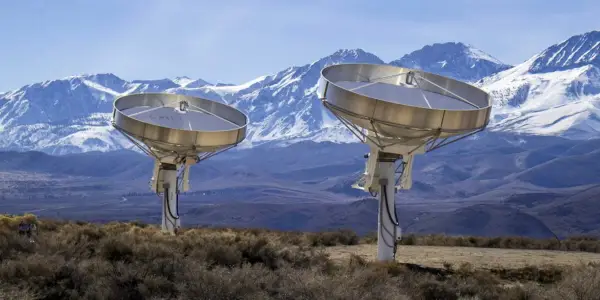
Caltech's Deep Synoptic Array promises to revolutionize radio astronomy with unprecedented speed and accessibility for researchers and enthusiasts alike.
In-depth analysis
New discoveries
The Deep Synoptic Array (DSA) is poised to revolutionize radio astronomy by potentially uncovering up to 1 billion new radio sources during its initial survey. This innovative system, designed to work at unprecedented speeds, could match the total discoveries of all existing radio telescopes in just one day, significantly enhancing our understanding of cosmic phenomena.
Mission updates
Caltech's DSA project is currently in the prototype testing phase, with initial trials conducted in California's Mojave Desert. The full array is expected to be operational by 2025, marking a significant advancement in observational capabilities.
Who is affected
The DSA's open-access model is set to benefit both professional astronomers and citizen scientists, fostering collaboration in the exploration of the universe. This democratization of data aims to engage a wider audience in astronomical research and discovery.
Next steps
As the DSA progresses toward completion, the focus will shift to finalizing construction and further testing. Continued funding and public engagement will be crucial in supporting the project's ambitious goals and ensuring its successful launch.
Did you know?
Why we should care
The Deep Synoptic Array represents a leap forward in our ability to explore the cosmos, which directly impacts our understanding of fundamental questions about existence. As it captures real-time radio emissions from pulsars and black holes, the findings could lead to breakthroughs in technology, energy, and even navigation systems. This initiative invites everyone, not just scientists, to engage with the universe, transforming abstract celestial phenomena into shared human knowledge.
The universe's unsolved mystery
The quest for understanding the vast unknowns of our universe continues to spark intrigue. With the DSA, researchers could finally decode the mysteries behind dark matter and dark energy—enigmatic forces that constitute most of our cosmos yet remain largely unexplained. This project may not just enhance our knowledge, but also redefine our place in the universe.
The person who looks at the stars
Meet Sofia Rivera, a high school science teacher in Las Vegas. Since childhood, Sofia has gazed at the night sky, dreaming of the stars and their secrets. With the DSA's real-time data, she envisions a new way to ignite curiosity in her students. They could explore cosmic events as they happen, connecting classroom lessons to actual discoveries. For Sofia, the DSA isn’t just a scientific tool; it’s a bridge between the universe and the next generation of explorers. Her hope is that by democratizing access to astronomical data, her students will not only learn about science but will be inspired to contribute to it, turning their own observations into meaningful discoveries.
Expert Commentary
Italian Producer Plans Historic Film to Shoot in...
Fintech Founder Champions Innovation Through...
Unistellar eQuinox 2 Smart Telescope Sees...
James Webb Space Telescope Captures Stunning...
Deep Fission Proposes Underground Nuclear...

Samsung Unveils Unprecedented Black Friday Deal...
Ancient Earth Chemistry Discovered Beneath Modern...
Breakthrough in Milky Way Simulation Using AI...
NASA's Ambitious Timeline for Human Exploration...
Discovery of a Planet Formation Zone Beyond...
Boeing's Upcoming Starliner Mission Set for April...
Hubble Telescope Unveils Enigmatic Galaxy NGC 2775
The Dwarf III Smart Telescope: A Compact Marvel...

Daily Roundup: November 10, 2025 – Advancements...
X5.1 Solar Flare Triggers G4 Geomagnetic Storm...
New Mexico Startup Unveils Ambitious Plan to...
Study Suggests the Universe's Expansion May Be...
James Webb Telescope Identifies Rapidly Growing...
Astronomers Uncover Evidence of Aging Stars...
SpaceX Achieves 150th Falcon 9 Launch with...
Webb Telescope Reveals Unprecedented Cosmic...
Euclid Space Telescope Discovers Hidden Stars in...
Hawaiian Students Honor Gemini North Telescope's...
Enhance Your Weather Preparedness with Weather...
Apple Introduces Emergency SOS via Satellite in...
NASA Considers Reopening Bidding for Artemis 3...
Astronomers Converge in Phoenix for AAS 247: A...
Innovative Portable Reflecting Telescope...
Exploring the Best Online Resources for Stunning...
Intense Solar Storm May Illuminate Skies Across...

X-Men Return to Education in Upcoming Comic...
Assessing the Financial Impact of NASA's Apollo...
Collaboration Between Exoplanet Researchers and...
NASA's Artemis 3 Moon Mission Delayed to 2028 Due...

Childcare Crisis: Families Struggle as...
India Successfully Launches CMS-03 Military...
Astronomers Capture Unprecedented Black Hole...
Young Canadian Astronomer Identifies Two...
China's Mars Orbiter Captures Image of...