SpaceX Set to Launch NASA's Pandora Exoplanet Mission on January 11
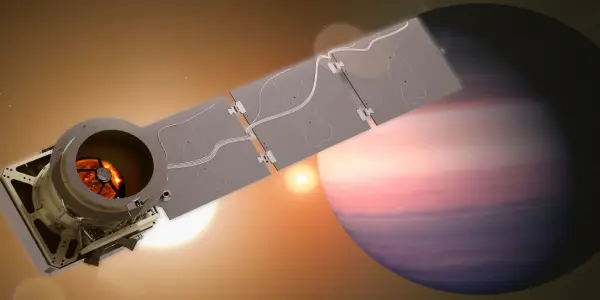
NASA's Pandora mission launches January 11 aboard a SpaceX Falcon 9, exploring six exoplanets with advanced technology to enhance our understanding of distan...
In-depth analysis
New discoveries
The Pandora satellite is set to revolutionize exoplanet research by investigating at least six known planets with its advanced 12-inch telescope. By monitoring transits across host stars, it aims to uncover atmospheric compositions, particularly focusing on elements and molecules, thereby enhancing our understanding of these distant worlds.
Mission updates
NASA's Pandora satellite is scheduled for launch on January 11, 2024, at 8:19 a.m. ET from Vandenberg Space Force Base. This mission will place Pandora into a sun-synchronous orbit, enabling continuous observation of its targets.
Who is affected
The mission impacts a wide range of stakeholders, including astronomers and researchers who rely on exoplanet data for studies of planetary atmospheres. Additionally, the scientific community will benefit from enhanced knowledge regarding potential habitability of these distant worlds.
Next steps
Following the launch, Pandora will begin its year-long mission, focusing on atmospheric analysis of selected exoplanets. Researchers will analyze the collected data to draw conclusions about the planets' compositions and potential for life.
Did you know?
Why we should care
Understanding exoplanets is not just a scientific endeavor; it has the potential to reshape our understanding of life beyond Earth. As Pandora analyzes distant worlds, the findings could influence future space missions, inform climate models on Earth, and even inspire new technologies. Each discovery might bring us a step closer to answering the profound question: Are we alone in the universe?
The universe's unsolved mystery
Despite advancements in astronomy, the universe still conceals countless secrets. The true nature of dark matter and dark energy remains elusive, challenging our fundamental understanding of physics. As Pandora examines exoplanetary atmospheres, it also highlights the vast unknowns in our universe, pushing researchers to seek answers that could redefine our place in the cosmos.
The person who looks at the stars
Meet Elena Vasquez, a 12-year-old aspiring astronomer from a small town in New Mexico. Inspired by her grandmother who once gazed at the stars with her, Elena dreams of discovering new worlds. With each NASA mission, her excitement grows; she sees Pandora's launch not just as a scientific milestone but as a personal connection to the universe. For Elena, every exoplanet offers a glimpse into the possibilities of life beyond Earth, igniting her passion for exploration and discovery. She often spends nights in her backyard, telescope in hand, hoping to catch a glimpse of the same stars Pandora will investigate, believing that one day, she too might contribute to unraveling the mysteries of the cosmos.

Samsung Galaxy S26 Expected to Feature Enhanced...

European Space Agency Unveils Stunning Radar...
James Webb Space Telescope Captures Stunning...
Hawaiian Students Honor Gemini North Telescope's...
The Pleiades Star Cluster Reveals Its Extensive...
Rogue Moons: A New Frontier for Life Beyond Stars
Congress Questions NASA's Facility Closures Amid...
Exploring Oregon's Premier Public Telescope...
Discovery of a Planet Formation Zone Beyond...
Innovative Portable Reflecting Telescope...
Astronomers Discover Ancient White Dwarf Actively...
China's Mars Orbiter Captures Image of...
Unusual Wind from Neutron Star Challenges Space...

Urwerk Unveils Limited-Edition 100V 'LightSpeed'...
NASA's Artemis 3 Moon Mission Delayed to 2028 Due...

Daily Roundup: November 10, 2025 – Advancements...

Exploring Alternatives to the Meta Quest 3 Elite...
Potential Alien Disclosure May Trigger Bitcoin...
Italian Producer Plans Historic Film to Shoot in...
Deep Fission Proposes Underground Nuclear...

This Week In Space Podcast: Episode 187 Explores...
James Webb Telescope Identifies Rapidly Growing...
New Research Suggests Dark Matter Influences...
SpaceX Faces Challenges in Meeting NASA's 2027...
Enhance Your Weather Preparedness with Weather...
Webb Telescope Reveals Unprecedented Cosmic...

Childcare Crisis: Families Struggle as...
Euclid Space Telescope Discovers Hidden Stars in...
New Mexico Startup Unveils Ambitious Plan to...
Exploring the Composition of Cosmic Voids
Unistellar eQuinox 2 Smart Telescope Sees...
James Webb Space Telescope Sheds Light on Early...

Foundation Season 3 Hints at Deeper Asimov Themes...
Ancient Galaxies: A Chaotic Early Universe...
Recent Studies Explore Potential Exoplanet in...
Astronomers Identify Potential Earth-Like...
Intense Solar Storm May Illuminate Skies Across...

NASA and Blue Origin Successfully Launch Dual...