Unusual Wind from Neutron Star Challenges Space Physics Understanding
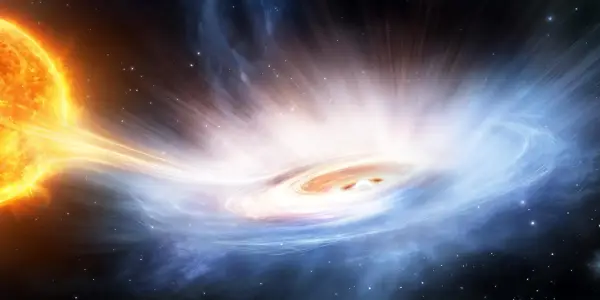
Observations from the XRISM mission have unveiled a slow, dense outflow from the neutron star GX13+1, contradicting existing theories about radiation-driven winds and suggesting new insights into cosmic processes.
In-depth analysis
New discoveries
XRISM found slow fog-like winds from neutron star GX13+1 instead of fast outflows—totally unexpected and changes how we understand accretion physics.
Mission updates
The XRISM mission captured this breakthrough during an intense radiation surge, proving its Resolve instrument works even better than hoped.
Who is affected
Astrophysicists studying galaxy evolution and star formation now need to rethink wind models—this challenges decades of assumptions.
Next steps
Scientists will compare neutron star winds with black hole data to understand why some outflows are fast while others creep along like fog.
Did you know?
Why we should care
Understanding the wind dynamics of neutron stars like GX13+1 can reshape how we perceive cosmic events. These findings impact our grasp of galactic evolution, influencing everything from star formation to the distribution of elements in space. The slow winds detected challenge long-held beliefs, suggesting that the universe operates on a more complex level, affecting not just distant celestial bodies but the very fabric of our cosmic neighborhood.
The universe's unsolved mystery
The peculiar behavior of GX13+1's winds poses a fundamental question: What governs the dynamics of neutron stars? This enigma invites deeper exploration into the interplay of gravitational and radiation forces, potentially revealing universal principles that govern all celestial systems. Addressing this mystery could unlock new insights into the lifecycle of stars and the evolution of galaxies.
The person who looks at the stars
Meet Clara, an aspiring astrophysicist who spends her evenings gazing at the night sky from her small town in Nebraska. For her, the stars are not just distant suns; they represent the possibility of understanding our universe. When she learned about the unexpected findings from GX13+1, Clara felt a spark of inspiration. This discovery reignited her passion for unraveling cosmic mysteries, reminding her that even established theories can be challenged. Clara dreams of contributing to future research that could further illuminate the complexities of neutron stars and their winds. Each time she peers through her telescope, she imagines helping to write the next chapter in the story of the universe, proving that curiosity and determination can lead to groundbreaking revelations.
Expert Commentary
As an astrophysicist, I find the XRISM observations of GX13+1 absolutely fascinating. The detection of a slow, fog-like wind challenges long-held assumptions about neutron star outflows, suggesting that our models of radiation-driven winds may need significant revision. What strikes me most is how this discovery highlights the diversity of accretion disc dynamics, showing that even compact objects can produce winds with vastly different speeds and structures. Understanding these winds is crucial, not just for neutron stars themselves, but for grasping their broader role in galaxy evolution and star formation. XRISM’s high-resolution data opens a new window into extreme astrophysical environments, and I’m eager to see how future missions like Athena will expand on these groundbreaking insights.
NASA and Blue Origin Successfully Launch Dual...

Enhance Your Weather Preparedness with Weather...
Mapping the Invisible: Astronomers Uncover Dark...
Astrophotographer Captures Stunning Image of...
Rogue Moons: A New Frontier for Life Beyond Stars
NASA's X-59 Achieves Historic Supersonic Flight

Childcare Crisis: Families Struggle as...
X5.1 Solar Flare Triggers G4 Geomagnetic Storm...

Unistellar eQuinox 2 Smart Telescope Sees...
James Webb Space Telescope May Have Detected the...
Jupiter's Moons Io and Europa to Cast Shadows...

Urwerk Unveils Limited-Edition 100V 'LightSpeed'...

Foundation Season 3 Hints at Deeper Asimov Themes...
New Research Suggests Dark Matter Influences...
Recent Studies Explore Potential Exoplanet in...
The Pleiades Star Cluster Reveals Its Extensive...
Astronomers Converge in Phoenix for AAS 247: A...
Breakthrough in Milky Way Simulation Using AI...

Samsung Galaxy S26 Expected to Feature Enhanced...
Meteorite Fragment May Have Impacted Houston Home
SpaceX Faces Challenges in Meeting NASA's 2027...

Intense Solar Storm May Illuminate Skies Across...
NASA Advances Artemis 2 Mission with Orion...

NASA's Artemis 3 Moon Mission Delayed to 2028 Due...
SabreSat: An Innovative Air-Breathing Satellite...
James Webb Telescope Identifies Rapidly Growing...
Ancient Galaxies: A Chaotic Early Universe...
Exploring the Composition of Cosmic Voids
Intense Solar Storms Could Ignite Life on...
AI Reveals Over 800 New Cosmic Anomalies from...
Assessing the Financial Impact of NASA's Apollo...

Interstellar Comet 3I/ATLAS Approaches...
Astronomers Discover Ancient White Dwarf Actively...
India Successfully Launches CMS-03 Military...
Portal Systems Aims to Revolutionize Spacecraft...
SpaceX Set to Launch NASA's Pandora Exoplanet...

OnePlus 15 vs. Samsung Galaxy S25 Plus: A Clash...
NASA's Ambitious Timeline for Human Exploration...