NASA's MAVEN Mars Orbiter Experiences Loss of Signal
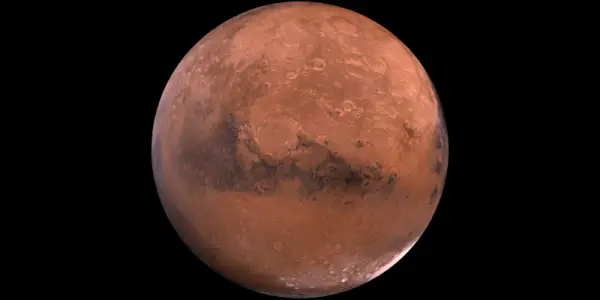
NASA's MAVEN spacecraft has not communicated with ground controllers since its orbit took it behind Mars on December 6, leading to concerns about its status.
In-depth analysis
New discoveries
Recent investigations into Mars' atmosphere by the MAVEN spacecraft have revealed critical insights into the planet's volatile evolution. These findings could reshape our understanding of Mars' climate history and its potential to support life, emphasizing the importance of continuing atmospheric studies to unravel the planet's mysteries.
Mission updates
As of now, MAVEN has not re-established communication with Earth since December 6. Ground teams are actively troubleshooting the communication loss, which was initially expected to be temporary.
Who is affected
The disruption in MAVEN's communication affects not only mission scientists but also broader Mars exploration efforts. Researchers relying on MAVEN's data for climate studies and future mission planning are particularly impacted, as the orbiter provides vital information about the Martian atmosphere.
Next steps
Ground controllers will continue to attempt to re-establish contact with MAVEN while assessing the need for a replacement spacecraft. The potential development of a Mars Telecommunications Orbiter could be reconsidered to enhance future mission communications.
Did you know?
Why we should care
The fate of MAVEN directly impacts our understanding of Mars and its potential for future exploration. Each day without communication jeopardizes our ability to gather vital data about the planet's atmosphere, which could influence plans for manned missions. The knowledge gained from MAVEN could inform technologies that benefit life on Earth, from climate modeling to enhanced communication systems.
The universe's unsolved mystery
The silence from MAVEN raises questions about the reliability of our interplanetary communication systems. As we push deeper into space exploration, the challenge of maintaining contact with distant missions becomes increasingly critical. Understanding the reasons behind this communication failure could lead to advancements that not only aid future missions but also enhance our connectivity here on Earth.
The person who looks at the stars
At a small observatory in Flagstaff, Arizona, 14-year-old Mia Torres gazes at the night sky, her dreams fueled by the mysteries of Mars. A passionate aspiring astronomer, she often shares her observations with friends, captivated by MAVEN's mission to unlock the secrets of the Martian atmosphere. The uncertainty surrounding MAVEN's communication troubles weighs on her, but it also ignites her determination. For Mia, the potential loss of data is more than just a technical setback; it's a personal call to advocate for future missions. She imagines a future where she could contribute to space exploration, inspired by the very challenges faced by MAVEN. Each star she studies reminds her that even in silence, there are stories waiting to be told.

New Simulations Shed Light on the Enigmatic...

Astronomers Converge in Phoenix for AAS 247: A...

James Webb Space Telescope May Have Detected the...

Hubble Telescope Unveils Enigmatic Galaxy NGC 2775

SabreSat: An Innovative Air-Breathing Satellite...

The Impact of Space Technology on Everyday Life

Study Suggests the Universe's Expansion May Be...

Unraveling the Mysteries of Mars: Recent...

FULU Foundation Introduces Repair Bounty System...


Meteorite Fragment May Have Impacted Houston Home
Discovery of a Planet Formation Zone Beyond...

Russian Cosmonauts Conduct Extended Spacewalk to...

Astronomers Capture Unprecedented Black Hole...

Unistellar eQuinox 2 Smart Telescope Sees...

Highlights of 2025 in Space Exploration: From...

New Mexico Startup Unveils Ambitious Plan to...

Breakthrough in Milky Way Simulation Using AI...

Astronomers Identify Three Earth-Sized Exoplanets...

Urwerk Unveils Limited-Edition 100V 'LightSpeed'...

Lenovo's Legion Tab Gen 3 Sees Significant Black...

Andromeda Galaxy's Impact on Its Satellite...

Daily Roundup: November 10, 2025 – Advancements...

The Dwarf III Smart Telescope: A Compact Marvel...

OnePlus 15 vs. Samsung Galaxy S25 Plus: A Clash...

Innovative Portable Reflecting Telescope...

Childcare Crisis: Families Struggle as...

Interstellar Comet 3I/ATLAS Approaches...

European Space Agency Unveils Stunning Radar...

Boeing's Upcoming Starliner Mission Set for April...
India Successfully Launches CMS-03 Military...

James Webb Space Telescope Captures Stunning...

Samsung Unveils Unprecedented Black Friday Deal...

NASA's Ambitious Timeline for Human Exploration...
Blue Origin Faces Major Setback as New Glenn...

Samsung's Galaxy S26 Ultra Set for Significant...

Jupiter's Moons Io and Europa to Cast Shadows...

James Webb Telescope Identifies Rapidly Growing...