Astronomers Identify Three Earth-Sized Exoplanets in Unusual Binary Star System
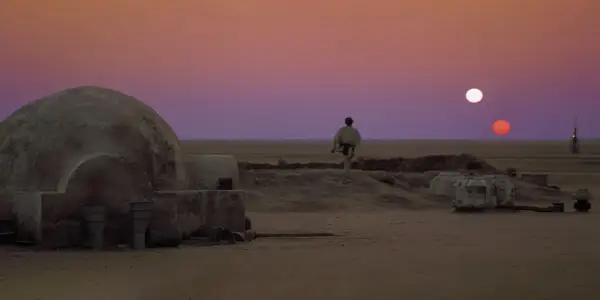
Utilizing NASA's TESS spacecraft, researchers have uncovered three Earth-sized exoplanets in a binary star system, challenging previous notions of planetary formation.
In-depth analysis
New discoveries
Astronomers have made a significant breakthrough by identifying three Earth-sized exoplanets in a binary star system about 100 light-years away. This finding challenges previous assumptions regarding the stability of planetary formations in such environments, revealing that complex planetary systems can exist even in gravitationally unstable conditions.
Mission updates
The Transiting Exoplanet Survey Satellite (TESS) has successfully identified these exoplanets, with subsequent observations conducted by the SPECULOOS network, which specializes in studying smaller planets around faint stars.
Who is affected
This discovery impacts the field of astronomy and astrophysics, particularly researchers studying planetary formation. It also has implications for our understanding of the potential for life on other planets, as it expands the types of environments where planets can exist.
Next steps
Future investigations will utilize the James Webb Space Telescope and advanced ground-based observatories to gather detailed data on the exoplanets' characteristics, including their masses, densities, and atmospheric compositions.
Did you know?
Why we should care
The identification of three Earth-sized exoplanets in a binary star system expands our understanding of where and how planets can form. This discovery could impact future space exploration and even the search for extraterrestrial life, as it suggests that habitable planets may exist in environments previously deemed unsuitable. For those fascinated by the cosmos, it brings the possibility of finding life closer to home.
The universe's unsolved mystery
Despite advancements in astrophysics, the enigma of how planets form in binary star systems remains largely unresolved. This discovery challenges the assumption that such systems are inhospitable to stable planets, igniting fresh inquiries into the dynamics of gravitational forces and planetary development. Understanding this could lead to profound revelations about our galaxy's architecture.
The person who looks at the stars
Lila Johnson, a 12-year-old budding astronomer in Seattle, dreams of becoming an astrophysicist. Every night, she sets up her telescope in the backyard, gazing at the stars that spark her imagination. Discovering that planets can exist in binary star systems fuels her passion, making her wonder about what secrets lie beyond our solar system. Lila connects deeply with the idea that complex life could thrive in places once thought uninhabitable, inspiring her to believe that the universe may hold surprises waiting for her to uncover. Each new discovery reinforces her resolve to contribute to our understanding of the cosmos, proving that the dreams of today’s children could shape the scientific breakthroughs of tomorrow.
James Webb Space Telescope Captures Stunning...
SpaceX Faces Challenges in Meeting NASA's 2027...
Portal Systems Aims to Revolutionize Spacecraft...
Russian Cosmonauts Conduct Extended Spacewalk to...

Samsung's Galaxy S26 Ultra Set for Significant...

Jonathan Davies Urges England to Create New...
The Pleiades Star Cluster Reveals Its Extensive...
X5.1 Solar Flare Triggers G4 Geomagnetic Storm...

Jeff Bezos's AI Hardware Venture Takes Aim at...
Exploring the Composition of Cosmic Voids
NASA's X-59 Achieves Historic Supersonic Flight
NASA's Ambitious Timeline for Human Exploration...

Childcare Crisis: Families Struggle as...
Potential Evidence of Dark Matter Emerges from...
Collaboration Between Exoplanet Researchers and...
Astronomers Identify Three Earth-Sized Exoplanets...
China's Mars Orbiter Captures Image of...
Astronomers Uncover a Rapid Star-Forming Galaxy...

Satellite Imagery Highlights Hurricane Damage...
James Webb Telescope Identifies Rapidly Growing...

European Space Agency Unveils Stunning Radar...
Assessing the Financial Impact of NASA's Apollo...

Astronauts aboard the ISS Capture Stunning Images...
The Impact of Space Technology on Everyday Life
Rogue Moons: A New Frontier for Life Beyond Stars
Intense Solar Storm May Illuminate Skies Across...
James Webb Space Telescope Discovers Ancient...
Apple Introduces Emergency SOS via Satellite in...
Ancient Earth Chemistry Discovered Beneath Modern...

Samsung Unveils Unprecedented Black Friday Deal...
Astronomers Uncover Evidence of Aging Stars...
Congress Questions NASA's Facility Closures Amid...
Ancient Galaxies: A Chaotic Early Universe...
NASA's Campaign to Monitor Interstellar Comet...
Study Suggests the Universe's Expansion May Be...
Astrophotographer Captures Stunning Image of...
India Successfully Launches CMS-03 Military...