First Direct Detection of Sugar in Interstellar Space Unveils Cosmic Ingredients for Life
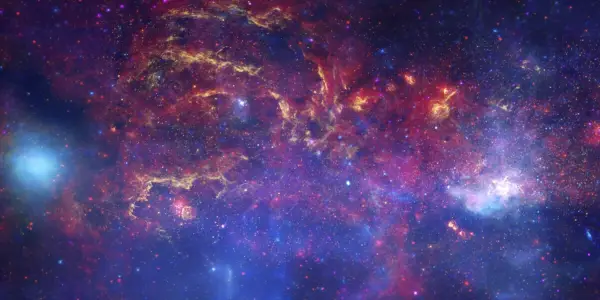
Astronomers have confirmed the presence of sugar in interstellar space, suggesting life’s building blocks existed before stars formed.
In-depth analysis
New discoveries
Astronomers have made a significant breakthrough by detecting erythrulose, a four-carbon sugar, in interstellar space. This discovery, published in Nature, confirms that complex organic molecules can exist in the cosmos, suggesting that essential life-building compounds may have formed long before stars and planets emerged.
Mission updates
The research team utilized advanced radio telescopes in Spain to analyze spectral data from a molecular cloud near the Milky Way's center, revealing an unprecedented concentration of sugar.
Who is affected
This discovery impacts the scientific community focused on astrobiology and the origins of life, as it provides new insights into the chemical processes that may lead to the formation of life-sustaining molecules in space.
Next steps
Future research will aim to identify larger sugars, such as ribose, in molecular clouds, further exploring the potential for life's building blocks to exist in the universe.
Did you know?
Why we should care
The discovery of sugar in interstellar space has profound implications for our understanding of life beyond Earth. It suggests that the building blocks of life might exist throughout the universe, potentially influencing where we search for extraterrestrial life. For those invested in science and exploration, this finding could redefine our approach to understanding life's origins, connecting us more deeply to the cosmos.
The universe's unsolved mystery
Despite significant advancements in astrobiology, the fundamental question remains: how did life originate? The discovery of sugar in interstellar clouds introduces new layers to this mystery, hinting at a cosmic recipe for life that might be dispersed across the universe. Each new finding invites deeper inquiry into the chemical processes that could foster life, yet many questions remain unanswered.
The person who looks at the stars
Maria Torres, a high school science teacher in a small town, often takes her students outside at night to gaze at the stars. For her, the recent discovery of sugar in interstellar space isn't just a scientific breakthrough; it’s a chance to ignite curiosity in her students. She imagines their faces lighting up as they connect the dots between the cosmos and the possibility of life beyond Earth. Maria encourages them to dream big, emphasizing that understanding life's origins can help them appreciate their own existence. This news fuels her passion, as she believes that such discoveries are vital in nurturing the next generation of scientists who might one day unlock more of the universe's secrets.
Expert Commentary
Interstellar Comet 3I/ATLAS Approaches...
Portal Systems Aims to Revolutionize Spacecraft...
NASA's Campaign to Monitor Interstellar Comet...

X-Men Return to Education in Upcoming Comic...
X5.1 Solar Flare Triggers G4 Geomagnetic Storm...
Italian Producer Plans Historic Film to Shoot in...
Astronomers Converge in Phoenix for AAS 247: A...
Exploring the Composition of Cosmic Voids
Astronomers Uncover a Rapid Star-Forming Galaxy...
NASA Considers Reopening Bidding for Artemis 3...
European Space Agency Unveils Stunning Radar...
Samsung Galaxy S26 Expected to Feature Enhanced...
Astrophotographer Captures Stunning Image of...
This Week In Space Podcast: Episode 187 Explores...
Andromeda Galaxy's Impact on Its Satellite...
Artemis 2 Astronauts Safely Return After Historic...
NASA's X-59 Achieves Historic Supersonic Flight

Satellite Imagery Highlights Hurricane Damage...
Breakthrough in Milky Way Simulation Using AI...
Astronauts aboard the ISS Capture Stunning Images...
Deep Fission Proposes Underground Nuclear...
Webb Telescope Reveals Unprecedented Cosmic...
ISS Crew Takes Precautions Against Radiation...
SabreSat: An Innovative Air-Breathing Satellite...
NASA's Ambitious Timeline for Human Exploration...
Intense Solar Storms Could Ignite Life on...
The Impact of Space Technology on Everyday Life
Astronomers Identify Ancient Water in...
NASA's Artemis 3 Moon Mission Delayed to 2028 Due...
The Pleiades Star Cluster Reveals Its Extensive...
Discovery of a Planet Formation Zone Beyond...
Astronomers Uncover Evidence of Aging Stars...
Fintech Founder Champions Innovation Through...
Potential Evidence of Dark Matter Emerges from...
NASA and European Partners Prepare for...
SpaceX Achieves 150th Falcon 9 Launch with...
Rogue Moons: A New Frontier for Life Beyond Stars
New Mexico Startup Unveils Ambitious Plan to...
NASA's ESCAPADE Probes Set for Unique Journey to...
Astronomers Identify Potential Earth-Like...