All Docking Ports at the ISS Are Full for the First Time in History
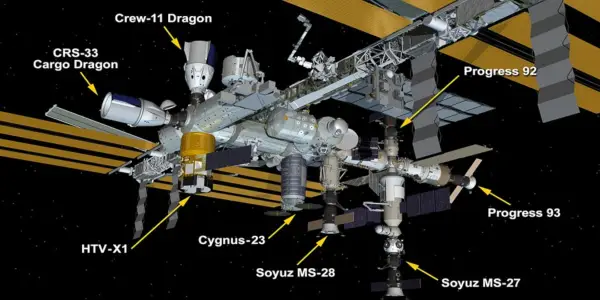
The International Space Station has reached full capacity with all eight docking ports occupied, marking a significant milestone in its operational history.
In-depth analysis
New discoveries
The International Space Station's unprecedented full occupancy of all eight docking ports has revealed new insights into the dynamics of space traffic management. This situation highlights the increasing complexity of international collaboration in space exploration, as multiple agencies work together to maximize the station's utility for scientific research and commercial endeavors.
Mission updates
NASA has confirmed the successful reattachment of Northrop Grumman's Cygnus XL spacecraft, allowing for the ISS to host a record number of eight spacecraft simultaneously, enhancing its operational capacity.
Who is affected
The full capacity of the ISS impacts astronauts and cosmonauts aboard the station, as well as mission planners and international space agencies. Increased traffic can lead to greater collaboration opportunities but also necessitates careful coordination to ensure safety and efficiency.
Next steps
As the Soyuz MS capsule prepares for its scheduled departure on December 8, mission planners will focus on managing the transition and ensuring the continued success of ongoing scientific operations aboard the ISS.
Did you know?
Why we should care
The full occupancy of the ISS’s docking ports signals a new era in space exploration, impacting not just scientists but everyday life on Earth. With more spacecraft facilitating research and collaboration, advancements in technology and medicine could emerge from this hub. As data and experiments flow from the ISS, innovations that affect healthcare, climate change solutions, and even materials science might soon find their way into our daily routines.
The universe's unsolved mystery
The ISS currently serves as a microcosm of international collaboration in space, yet it also highlights a lingering question: How do we sustain human life beyond Earth? As we witness growing traffic in low orbit, the challenge of interplanetary travel remains. What technologies and solutions are needed to support long-term human habitation on other celestial bodies?
The person who looks at the stars
Meet Elena, a high school science teacher in a small town who inspires her students by sharing the wonders of space. After hearing about the ISS's full docking capacity, she gathered her class for a stargazing night. Together, they observed the ISS gliding across the sky, igniting their imaginations about future careers in science and technology. For Elena, this moment was more than just a lesson; it symbolized hope and the importance of dreams. As her students pondered the vastness of the universe, they also grasped the significance of human connection and collaboration in exploring it. Each bright light in the sky became a reminder of their potential to contribute to humanity's journey among the stars.
SpaceX Achieves 150th Falcon 9 Launch with...
Unraveling the Mysteries of Mars: Recent...
James Webb Space Telescope Captures Stunning...
The Pleiades Star Cluster Reveals Its Extensive...
NASA's Artemis 3 Moon Mission Delayed to 2028 Due...
SpaceX Faces Challenges in Meeting NASA's 2027...

Foundation Season 3 Hints at Deeper Asimov Themes...

Samsung Unveils Unprecedented Black Friday Deal...
Russian Cosmonauts Conduct Extended Spacewalk to...
Highlights of 2025 in Space Exploration: From...

Samsung's Galaxy S26 Ultra Set for Significant...
Mapping the Invisible: Astronomers Uncover Dark...

Childcare Crisis: Families Struggle as...

China's Mars Orbiter Captures Image of...
NASA and Blue Origin Successfully Launch Dual...
The Dwarf III Smart Telescope: A Compact Marvel...

Exploring Alternatives to the Meta Quest 3 Elite...
NASA's ESCAPADE Probes Set for Unique Journey to...

NASA's Campaign to Monitor Interstellar Comet...
Portal Systems Aims to Revolutionize Spacecraft...

Satellite Imagery Reveals Extensive Damage Across...
Unistellar eQuinox 2 Smart Telescope Sees...
Study Suggests the Universe's Expansion May Be...
Meteorite Fragment May Have Impacted Houston Home
New Research Suggests Dark Matter Influences...

Daily Roundup: November 10, 2025 – Advancements...
Recent Studies Explore Potential Exoplanet in...
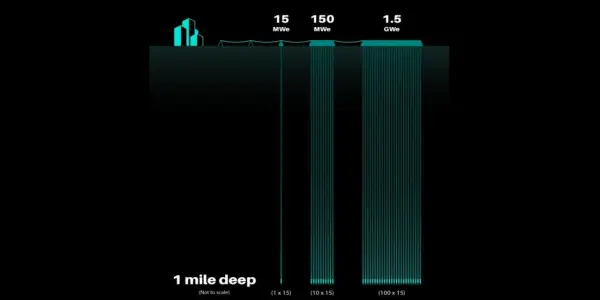
Deep Fission Proposes Underground Nuclear...
Discovery of a Planet Formation Zone Beyond...
Intense Solar Storms Could Ignite Life on...
James Webb Space Telescope May Have Detected the...
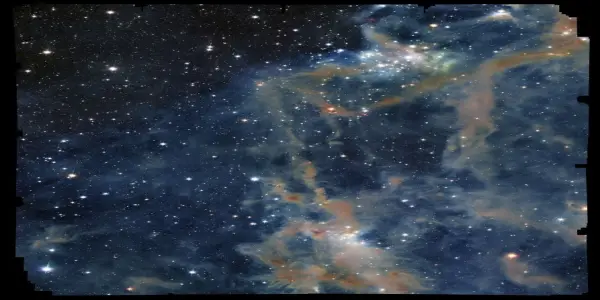
Euclid Space Telescope Discovers Hidden Stars in...
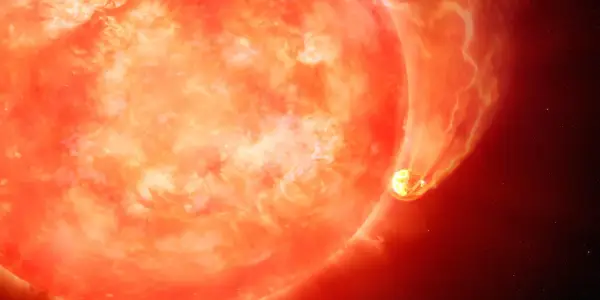
Astronomers Uncover Evidence of Aging Stars...
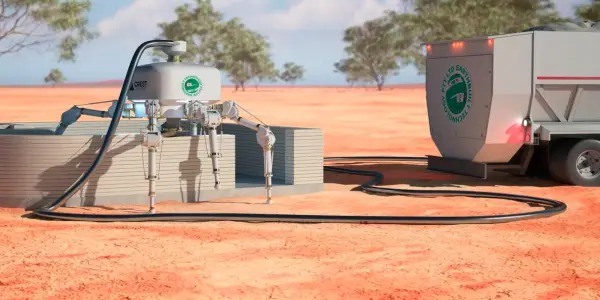
Charlotte: The Lunar 3D Printer Poised to...

Top Black Friday Smartwatch Deals Worth...
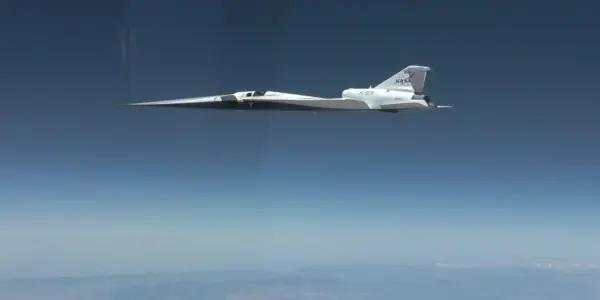
NASA's X-59 Achieves Historic Supersonic Flight
Astronomers Converge in Phoenix for AAS 247: A...
Astrophysicists Unveil Dark Universe Through...

Samsung Galaxy S26 Expected to Feature Enhanced...