NASA's ESCAPADE Probes Set for Unique Journey to Mars
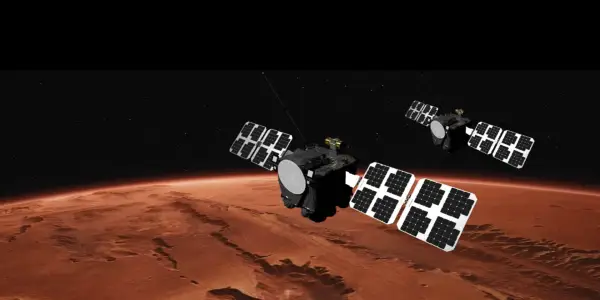
NASA's ESCAPADE probes embark on a unique journey to Mars, first stopping at a stable point beyond Earth to study space weather and advance exploration techn...
In-depth analysis
New discoveries
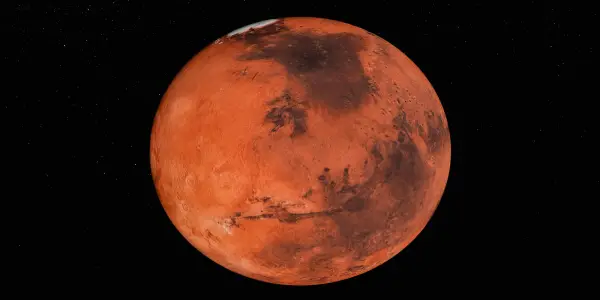
ESCAPADE's twin probes will study Mars' atmosphere like never before—two spacecraft working together to capture changes every two minutes instead of waiting hours. Game-changer for understanding why Mars dried up.
Mission updates
Blue Origin's New Glenn just pulled off its first Mars mission! The probes are taking the scenic route via L2, proving we can launch to Mars anytime, not just every 26 months.
Who is affected
Every future Mars mission just got more flexible. Planetary scientists finally get the high-res atmospheric data they've begged for. Astronauts? They'll thank these probes for space weather warnings.
Next steps
One year at L2 studying space weather, then Mars orbit insertion. Those "pearls on a string" will start singing by September. Patience, space nerds—good things come to those who wait.
Did you know?
Why we should care
The launch of NASA's ESCAPADE probes marks a pivotal moment in our understanding of space and its impact on Earth. As these probes study space weather at L2, their findings could improve satellite communications and enhance predictive models for solar storms. This directly affects everyday technologies we rely on, from GPS navigation to climate monitoring, highlighting the mission’s importance in safeguarding our connected lives.
The universe's unsolved mystery
The ESCAPADE mission probes a fundamental question: How does a planet like Mars transition from a potentially habitable environment to its current desolate state? By examining Mars' upper atmosphere and magnetic fields, scientists hope to unravel the processes that dictate planetary atmospheres, which could reveal insights into the histories of other celestial bodies, including Earth.
The person who looks at the stars
Meet Sarah, a high school astronomy teacher in Tucson. For her, the ESCAPADE mission is more than just a scientific endeavor; it’s a source of inspiration for her students. Each night, when she takes her class outside to gaze at the stars, she tells them stories of exploration and discovery. Sarah dreams of a day when her students might work on missions like ESCAPADE, pushing the boundaries of what we know about the universe. The mission not only fuels her passion but also ignites curiosity in the next generation, encouraging them to ponder their place in the cosmos and the potential for life beyond Earth.
Expert Commentary
This ESCAPADE mission is brilliantly clever! Using Lagrange Point 2 as a staging area completely bypasses the narrow Mars launch window. As someone fascinated by space logistics, I love this innovative thinking. The twin probes studying Mars' atmosphere in tandem will give us incredible data. NASA and Blue Origin teaming up? The future of exploration looks exciting!
Exploring Oregon's Premier Public Telescope...

Exploring Alternatives to the Meta Quest 3 Elite...
Astronomers Identify Potential Earth-Like...

Unusual Wind from Neutron Star Challenges Space...
Astronomers Uncover a Rapid Star-Forming Galaxy...
Intense Solar Storms Could Ignite Life on...
Hawaiian Students Honor Gemini North Telescope's...
Astronomers Capture Unprecedented Black Hole...

X-Men Return to Education in Upcoming Comic...
James Webb Space Telescope Discovers Ancient...
New Mexico Startup Unveils Ambitious Plan to...
Portal Systems Aims to Revolutionize Spacecraft...

Daily Roundup: November 10, 2025 – Advancements...
NASA's Artemis 3 Moon Mission Delayed to 2028 Due...

Satellite Imagery Highlights Hurricane Damage...

Deep Fission Proposes Underground Nuclear...

New Research Suggests Dark Matter Influences...

Astronomers Uncover Evidence of Aging Stars...

Urwerk Unveils Limited-Edition 100V 'LightSpeed'...
Artemis 2 Astronauts Safely Return After Historic...
Innovative Portable Reflecting Telescope...
The Dwarf III Smart Telescope: A Compact Marvel...
Ancient Galaxies: A Chaotic Early Universe...

Lenovo's Legion Tab Gen 3 Sees Significant Black...
NASA's Ambitious Timeline for Human Exploration...
Mapping the Invisible: Astronomers Uncover Dark...
Astronomers Converge in Phoenix for AAS 247: A...
Hubble Telescope Unveils Enigmatic Galaxy NGC 2775
Russian Cosmonauts Conduct Extended Spacewalk to...
Jupiter's Moons Io and Europa to Cast Shadows...

Satellite Imagery Reveals Extensive Damage Across...
Collaboration Between Exoplanet Researchers and...
China's Mars Orbiter Captures Image of...
James Webb Space Telescope May Have Detected the...
NASA's ESCAPADE Probes Set for Unique Journey to...
AI Reveals Over 800 New Cosmic Anomalies from...

Astronomers Discover Ancient White Dwarf Actively...
Andromeda Galaxy's Impact on Its Satellite...

FULU Foundation Introduces Repair Bounty System...