Artemis 2 Astronauts Safely Return After Historic Lunar Mission
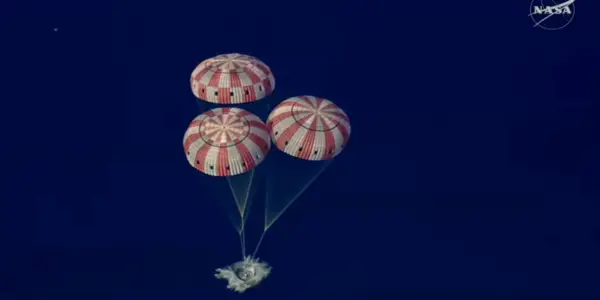
NASA's Artemis 2 mission concludes with the safe splashdown of the Orion spacecraft off San Diego, marking a significant achievement in space exploration.
In-depth analysis
New discoveries
Artemis 2 has yielded vital insights into the performance of the Orion spacecraft and the Space Launch System. The mission's successful crewed flight provided data on spacecraft operations during lunar orbit and re-entry, enhancing understanding of human factors in space travel and paving the way for future missions to the Moon and beyond.
Mission updates
The Artemis 2 mission has concluded successfully, with the Orion spacecraft, Integrity, safely returning to Earth after a ten-day journey. The mission provided crucial data for future lunar explorations and validated key technologies.
Who is affected
The successful Artemis 2 mission impacts various stakeholders, including NASA, the Canadian Space Agency, and the broader space exploration community. It boosts confidence among astronauts, engineers, and researchers involved in future lunar and Mars missions, reinforcing international collaboration in space endeavors.
Next steps
Following Artemis 2, NASA will analyze mission data to refine technologies for upcoming lunar missions. The agency aims to build on this success to further advance its Artemis program, ultimately working toward sustainable human presence on the Moon.
Did you know?
Why we should care
The success of Artemis 2 brings humanity closer to a sustainable presence on the Moon, which could revolutionize our understanding of space and resources. This mission's advancements in technology not only inspire future generations but also have practical implications for Earth, such as improved satellite communications and advancements in materials science. The quest for lunar exploration could eventually lead to innovations that benefit daily life, from energy solutions to medical breakthroughs.
The universe's unsolved mystery
Despite the advancements heralded by Artemis 2, one of space exploration's greatest puzzles remains unsolved: the origins of water on the Moon. Understanding how water formed and exists in lunar soil could unlock secrets about the Moon’s history and its potential as a resource for future missions, including human colonization and even travel to Mars.
The person who looks at the stars
Meet Ava Lopez, a 12-year-old aspiring astronaut from San Diego, who watched the Artemis 2 splashdown with wide eyes and a heart full of dreams. Inspired by her father, a retired aerospace engineer, she often gazes up at the night sky, imagining the possibilities that lie beyond Earth. For Ava, the successful mission isn't just a scientific milestone; it's a beacon of hope. She dreams of one day walking on the Moon, contributing to humanity’s quest for knowledge. Ava's excitement reflects a generation's curiosity and desire to explore, reminding us that each mission paves the way for future explorers and dreamers, making the cosmos feel a little closer and a lot more attainable.
Expert Commentary
Italian Producer Plans Historic Film to Shoot in...
Fintech Founder Champions Innovation Through...

Unistellar eQuinox 2 Smart Telescope Sees...
James Webb Space Telescope Captures Stunning...

Deep Fission Proposes Underground Nuclear...

Samsung Unveils Unprecedented Black Friday Deal...

Ancient Earth Chemistry Discovered Beneath Modern...
Breakthrough in Milky Way Simulation Using AI...
NASA's Ambitious Timeline for Human Exploration...
Discovery of a Planet Formation Zone Beyond...
Boeing's Upcoming Starliner Mission Set for April...
Hubble Telescope Unveils Enigmatic Galaxy NGC 2775
The Dwarf III Smart Telescope: A Compact Marvel...

Daily Roundup: November 10, 2025 – Advancements...
X5.1 Solar Flare Triggers G4 Geomagnetic Storm...
New Mexico Startup Unveils Ambitious Plan to...

Study Suggests the Universe's Expansion May Be...

James Webb Telescope Identifies Rapidly Growing...

Astronomers Uncover Evidence of Aging Stars...
SpaceX Achieves 150th Falcon 9 Launch with...

Webb Telescope Reveals Unprecedented Cosmic...
Euclid Space Telescope Discovers Hidden Stars in...
Hawaiian Students Honor Gemini North Telescope's...

Enhance Your Weather Preparedness with Weather...

Apple Introduces Emergency SOS via Satellite in...
NASA Considers Reopening Bidding for Artemis 3...

Astronomers Converge in Phoenix for AAS 247: A...

Innovative Portable Reflecting Telescope...

Exploring the Best Online Resources for Stunning...
Intense Solar Storm May Illuminate Skies Across...

X-Men Return to Education in Upcoming Comic...
Assessing the Financial Impact of NASA's Apollo...

Collaboration Between Exoplanet Researchers and...
NASA's Artemis 3 Moon Mission Delayed to 2028 Due...

Childcare Crisis: Families Struggle as...
India Successfully Launches CMS-03 Military...
Astronomers Capture Unprecedented Black Hole...
Young Canadian Astronomer Identifies Two...

China's Mars Orbiter Captures Image of...