NASA Considers Reopening Bidding for Artemis 3 Lunar Landing Contract Amid SpaceX Delays
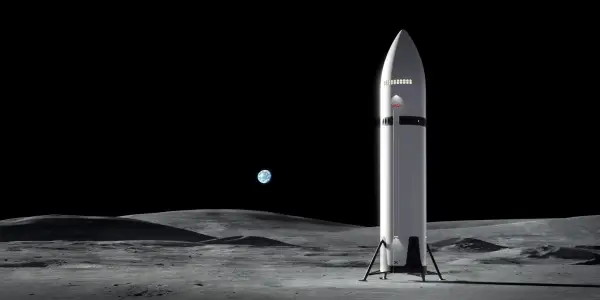
NASA's acting administrator Sean Duffy indicated that the agency may seek new bidders for the Artemis 3 lunar landing contract, citing concerns over SpaceX's progress.
In-depth analysis
New discoveries
Recent assessments by NASA have revealed significant delays in SpaceX's Starship development, prompting the agency to consider alternative partnerships for the Artemis 3 mission. This shift underscores the importance of timely technological advancements in the competitive landscape of lunar exploration, particularly as nations like China accelerate their own space programs.
Mission updates
The Artemis 3 mission has experienced multiple delays, with its launch date now tentatively set for September 2026, following earlier projections of late 2025. NASA is also contemplating a potential launch in 2027 as it addresses ongoing challenges.
Who is affected
The evolving situation impacts various stakeholders, including SpaceX, which risks losing its pivotal role in lunar missions, and Blue Origin, which is also striving to secure its place in NASA's lunar exploration plans. Additionally, the urgency surrounding U.S. lunar initiatives affects national interests amid rising competition from China.
Next steps
NASA plans to reevaluate its contractual agreements with SpaceX and explore options with other competitors. This strategic reassessment aims to ensure the successful execution of the Artemis program while addressing the technological hurdles that have emerged.
Did you know?
Why we should care
The outcome of NASA's partnership with SpaceX directly impacts future lunar exploration and potential advancements in technology that affect everyday life. From improved satellite communications to innovations in materials and engineering, the benefits of successful space missions can ripple into various sectors, enhancing everything from telecommunications to healthcare. As space exploration expands, so does its capacity to inspire new generations and solve pressing Earthly challenges.
The universe's unsolved mystery
The puzzling delays in the Artemis 3 mission highlight a broader conundrum in space exploration: how to balance ambition with technological readiness. As nations race to establish a foothold on the Moon, the underlying question remains—what are the limits of current technology in achieving these audacious goals? The answers could redefine our understanding of not just space travel, but the very nature of human ingenuity.
The person who looks at the stars
Meet Clara, a high school science teacher in Houston, who dreams of inspiring her students to reach for the stars. Every night, she sets up a telescope in her backyard, sharing the wonders of the universe with her family. Clara sees NASA's Artemis program as a beacon of hope and progress, igniting curiosity and ambition in young minds. She believes that the challenges faced by agencies like NASA and companies like SpaceX are not just technical hurdles, but stories of perseverance and innovation that her students can learn from. As she encourages her students to imagine their futures in space exploration, Clara feels a personal connection to the unfolding drama of the Artemis missions—reminding her that each delay or success is a step towards a future where humanity's reach extends beyond Earth.
James Webb Space Telescope Captures Stunning...
SpaceX Faces Challenges in Meeting NASA's 2027...
Portal Systems Aims to Revolutionize Spacecraft...
Russian Cosmonauts Conduct Extended Spacewalk to...

Samsung's Galaxy S26 Ultra Set for Significant...

Jonathan Davies Urges England to Create New...

The Pleiades Star Cluster Reveals Its Extensive...
X5.1 Solar Flare Triggers G4 Geomagnetic Storm...

Jeff Bezos's AI Hardware Venture Takes Aim at...

Exploring the Composition of Cosmic Voids
NASA's X-59 Achieves Historic Supersonic Flight
NASA's Ambitious Timeline for Human Exploration...

Childcare Crisis: Families Struggle as...
Potential Evidence of Dark Matter Emerges from...
Collaboration Between Exoplanet Researchers and...

Astronomers Identify Three Earth-Sized Exoplanets...

China's Mars Orbiter Captures Image of...

Astronomers Uncover a Rapid Star-Forming Galaxy...

Satellite Imagery Highlights Hurricane Damage...

James Webb Telescope Identifies Rapidly Growing...

European Space Agency Unveils Stunning Radar...
Assessing the Financial Impact of NASA's Apollo...

Astronauts aboard the ISS Capture Stunning Images...
The Impact of Space Technology on Everyday Life

Rogue Moons: A New Frontier for Life Beyond Stars

Intense Solar Storm May Illuminate Skies Across...

James Webb Space Telescope Discovers Ancient...

Apple Introduces Emergency SOS via Satellite in...
Boeing's Upcoming Starliner Mission Set for April...

Samsung Unveils Unprecedented Black Friday Deal...

Astronomers Uncover Evidence of Aging Stars...

Innovative Portable Reflecting Telescope...

Ancient Galaxies: A Chaotic Early Universe...

NASA's Campaign to Monitor Interstellar Comet...
Study Suggests the Universe's Expansion May Be...
Astrophotographer Captures Stunning Image of...
India Successfully Launches CMS-03 Military...