Chinese Spaceplane Shenlong Deploys Unknown Object in Orbit, Sparking Curiosity
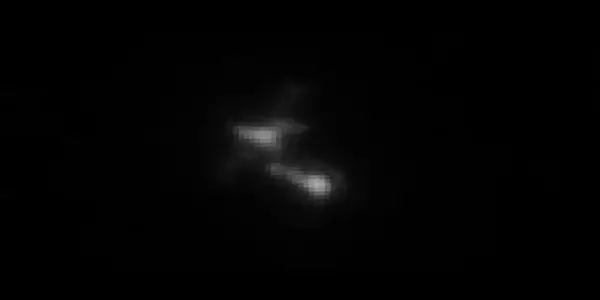
China's Shenlong spaceplane launched in February has released an unidentified object, raising questions about its capabilities and future missions.
In-depth analysis
New discoveries
The recent deployment of an unidentified object by China's Shenlong spaceplane marks a significant milestone in space exploration. Detected by Leo Labs, this event raises questions about the object’s purpose and the advanced capabilities of the spaceplane, which has been progressively extending its operational duration and experimenting with various orbital maneuvers.
Mission updates
The Shenlong spaceplane's fourth mission, initiated on February 7, has successfully deployed an object into orbit, confirming its operational proficiency. This latest achievement builds on previous missions that showcased the vehicle's growing capabilities.
Who is affected
The developments surrounding the Shenlong spaceplane have implications for global space security, particularly affecting military and civilian sectors in China and the United States. Analysts speculate about the potential military applications of the spaceplane, which could influence international relations and defense strategies.
Next steps
As experts analyze the implications of the recent deployment, attention will focus on upcoming missions of the Shenlong spaceplane. Continued monitoring and research are essential to understand the evolving landscape of space technology and its impact on global security.
Did you know?
Why we should care
The deployment of an unidentified object by China's Shenlong spaceplane raises critical questions about the future of space security and international relations. As nations increasingly rely on advanced space technology for military and civilian purposes, the implications could affect global communication, satellite navigation, and even environmental monitoring. For everyday life, this means the technology that powers our smartphones, GPS, and weather forecasts may be influenced by developments in space that we seldom think about.
The universe's unsolved mystery
The Shenlong spaceplane's recent activities underscore the broader enigma of what lies beyond Earth’s atmosphere. Despite advances in space exploration, many questions remain unanswered about the nature of objects being deployed into orbit, their purposes, and the potential for unforeseen consequences. This mystery invites us to ponder our relationship with space and the unknowns that continue to challenge our understanding of the universe.
The person who looks at the stars
Maria Chen, an aspiring astrophysicist from a small town in Oregon, has always been captivated by the night sky. As a child, she would lie on her roof, tracing constellations and dreaming of uncovering cosmic secrets. The recent news about the Shenlong spaceplane stirs her passion, reminding her of the potential for discovery. For Maria, the unknown object deployed into orbit isn't just a technical curiosity; it represents humanity's relentless pursuit of knowledge and the hope that one day, she might contribute to the understanding of such missions. Each new development in space exploration fuels her determination to study the stars and perhaps unravel the mysteries they hold, inspiring the next generation of explorers to reach for the cosmos.
Expert Commentary
Astronomers Capture Unprecedented Black Hole...
Assessing the Financial Impact of NASA's Apollo...
Unraveling the Mysteries of Mars: Recent...
Webb Telescope Reveals Unprecedented Cosmic...

New Research Suggests Dark Matter Influences...
ISS Crew Takes Precautions Against Radiation...
NASA and European Partners Prepare for...
Unistellar eQuinox 2 Smart Telescope Sees...
NASA and Blue Origin Successfully Launch Dual...
India Successfully Launches CMS-03 Military...
Portal Systems Aims to Revolutionize Spacecraft...

Samsung's Galaxy S26 Ultra Set for Significant...
Recent Studies Explore Potential Exoplanet in...
NASA's ESCAPADE Probes Set for Unique Journey to...
James Webb Space Telescope May Have Detected the...
Enhance Your Weather Preparedness with Weather...
James Webb Space Telescope Discovers Ancient...
SpaceX Achieves 150th Falcon 9 Launch with...
Astronomers Identify Potential Earth-Like...
Highlights of 2025 in Space Exploration: From...
New Simulations Shed Light on the Enigmatic...
NASA's Artemis 3 Moon Mission Delayed to 2028 Due...

Childcare Crisis: Families Struggle as...

Daily Roundup: November 10, 2025 – Advancements...
NASA's X-59 Achieves Historic Supersonic Flight
Meteorite Fragment May Have Impacted Houston Home
Deep Fission Proposes Underground Nuclear...
SpaceX Achieves Major Milestone with Launch of...
Collaboration Between Exoplanet Researchers and...
Ancient Galaxies: A Chaotic Early Universe...
Breakthrough in Milky Way Simulation Using AI...
Potential Alien Disclosure May Trigger Bitcoin...

Satellite Imagery Reveals Extensive Damage Across...
Apple Introduces Emergency SOS via Satellite in...

European Space Agency Unveils Stunning Radar...

Rogue Moons: A New Frontier for Life Beyond Stars
Intense Solar Storm May Illuminate Skies Across...
Andromeda Galaxy's Impact on Its Satellite...
Study Suggests the Universe's Expansion May Be...