Discovery of a Planet Formation Zone Beyond Jupiter Sheds Light on Solar System's Origins
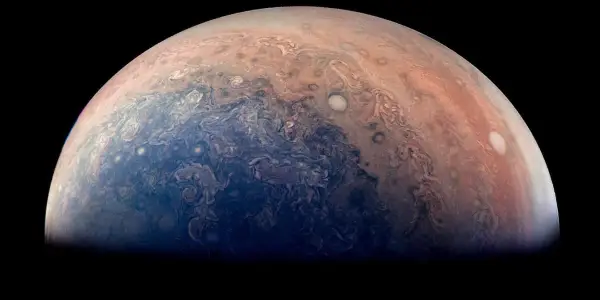
Recent research reveals a region beyond Jupiter that may have been crucial in forming rocky materials essential for the solar system.
In-depth analysis
New discoveries
Recent research reveals that a region beyond Jupiter significantly contributed to the formation of rocky materials in the solar system. This study identifies a planet-forming area that existed for two million years, generating diverse planetesimals, the essential building blocks for planets. These findings highlight the non-uniformity of planet formation across different solar system regions.
Mission updates
Researchers from the Max Planck Institute utilized advanced computer simulations to model the dynamics within the protoplanetary disk. Their work has shed light on how varying conditions influenced the formation of distinct types of planetesimals.
Who is affected
The implications of these findings extend to planetary scientists and astronomers seeking to understand the solar system's origins. Insights gained from the research could influence future studies on the formation and evolution of Earth and its neighboring planets.
Next steps
Further investigations will focus on the complexities of planetesimal formation and the environmental factors that shaped them. Ongoing research aims to deepen understanding of the solar system's early history and the processes that led to the development of celestial bodies.
Did you know?
Why we should care
Understanding the factors that shaped our solar system offers insights into the origins of Earth and the conditions that allowed life to flourish. The dynamics of planet formation have direct implications for exoplanet research, influencing how scientists seek out habitable worlds beyond our solar system. This knowledge enriches our perspective on humanity's place in the cosmos.
The universe's unsolved mystery
Despite significant advancements in our understanding of planet formation, questions remain about the precise conditions that lead to diverse planetary systems. Why do some planets become gas giants while others are rocky? The answers could redefine our theories of planetary development and guide the search for life beyond Earth, highlighting the intricate balance of cosmic forces.
The person who looks at the stars
Meet Maya, an aspiring astronomer from a small town in Arizona. Every night, she sets up her telescope on the roof and gazes at the stars, captivated by the stories they hold. The recent discovery of planetesimals beyond Jupiter ignites her passion, as she dreams of uncovering the secrets of our solar system's formation. For Maya, each celestial body represents a puzzle piece in understanding her existence. She feels a profound connection to the cosmos, envisioning the origins of Earth and the potential for life elsewhere. This research fuels her ambition to contribute to the field, inspiring her to pursue studies at a renowned university. Maya's journey reflects how scientific discoveries can bridge the gap between the distant universe and personal aspirations.
Expert Commentary
Unraveling the Mysteries of Mars: Recent...
Enhance Your Weather Preparedness with Weather...
Highlights of 2025 in Space Exploration: From...

China's Mars Orbiter Captures Image of...
Euclid Space Telescope Discovers Hidden Stars in...
NASA's X-59 Achieves Historic Supersonic Flight

Childcare Crisis: Families Struggle as...
X5.1 Solar Flare Triggers G4 Geomagnetic Storm...

Samsung's Galaxy S26 Ultra Set for Significant...

Boeing's Upcoming Starliner Mission Set for April...
James Webb Space Telescope May Have Detected the...

Urwerk Unveils Limited-Edition 100V 'LightSpeed'...

Foundation Season 3 Hints at Deeper Asimov Themes...
India Successfully Launches CMS-03 Military...
Recent Studies Explore Potential Exoplanet in...
The Pleiades Star Cluster Reveals Its Extensive...
Astronomers Converge in Phoenix for AAS 247: A...
NASA's ESCAPADE Probes Set for Unique Journey to...

Samsung Galaxy S26 Expected to Feature Enhanced...
Meteorite Fragment May Have Impacted Houston Home

OnePlus 15 vs. Samsung Galaxy S25 Plus: A Clash...
Intense Solar Storm May Illuminate Skies Across...
NASA Advances Artemis 2 Mission with Orion...
NASA's Artemis 3 Moon Mission Delayed to 2028 Due...
SabreSat: An Innovative Air-Breathing Satellite...
James Webb Telescope Identifies Rapidly Growing...
Ancient Galaxies: A Chaotic Early Universe...
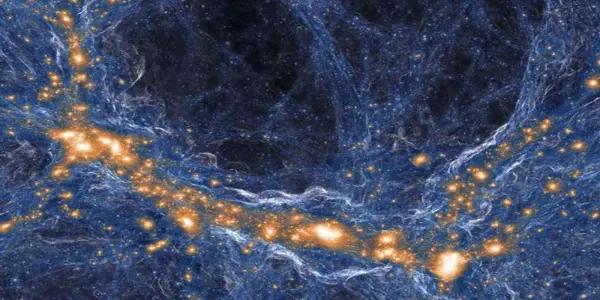
Exploring the Composition of Cosmic Voids
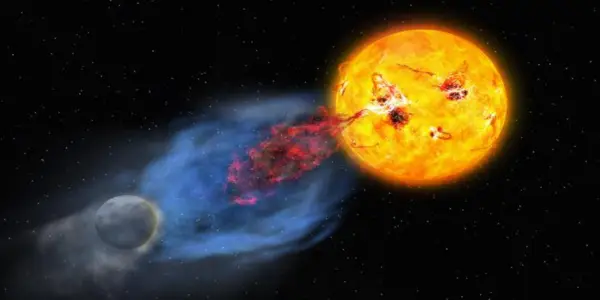
Intense Solar Storms Could Ignite Life on...
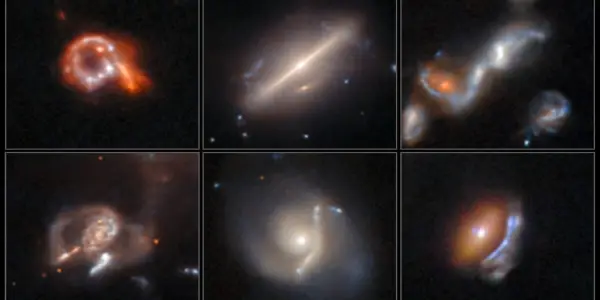
AI Reveals Over 800 New Cosmic Anomalies from...
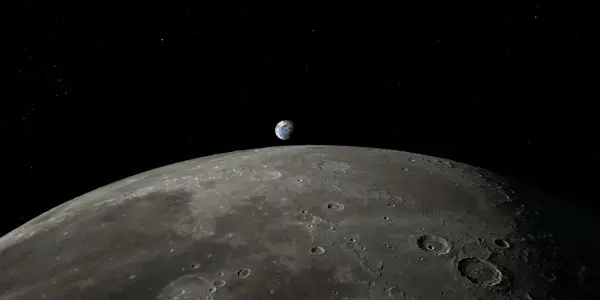
Assessing the Financial Impact of NASA's Apollo...

FULU Foundation Introduces Repair Bounty System...
Interstellar Comet 3I/ATLAS Approaches...
Astronomers Discover Ancient White Dwarf Actively...
New Research Suggests Dark Matter Influences...
Portal Systems Aims to Revolutionize Spacecraft...
Exploring Oregon's Premier Public Telescope...
SpaceX Faces Challenges in Meeting NASA's 2027...
NASA's Ambitious Timeline for Human Exploration...