Approval of Reflect Orbital's Eärendil-1 Satellite Raises Concerns Among Astronomers
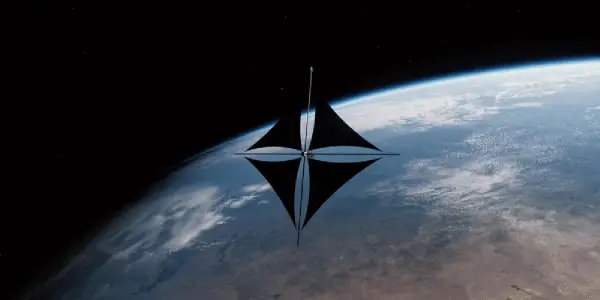
The FCC's recent backing of a satellite designed to reflect sunlight has sparked alarm over potential light pollution and regulatory gaps.
In-depth analysis
New discoveries
Reflect Orbital's Eärendil-1 satellite represents a novel approach to energy solutions, utilizing a large mirror to reflect sunlight onto targeted areas. This innovative technology could revolutionize how solar power is harnessed for various applications, but it also raises critical questions about its impact on the night sky and astronomical research.
Mission updates
The FCC has approved the Eärendil-1 satellite, marking a significant milestone for Reflect Orbital. This test satellite is designed to deploy a mirror that enhances illumination, potentially transforming energy access for specific sectors.
Who is affected
Astronomers and environmentalists are particularly concerned about the implications of Eärendil-1. The satellite's bright reflections could interfere with astronomical observations and disrupt wildlife that relies on natural light cycles, prompting widespread debate within the scientific community.
Next steps
Reflect Orbital plans to engage with scientists and regulators to address concerns regarding light pollution. Ongoing discussions about international regulatory frameworks will be essential to ensure responsible satellite deployment and mitigate environmental impacts.
Did you know?
Why we should care
The approval of the Eärendil-1 satellite could revolutionize how we access sunlight for energy and construction, potentially improving efficiency in various industries. However, it also jeopardizes our night skies, affecting both astronomy and the natural rhythms of wildlife. For urban dwellers, this could mean a brighter environment, but at the cost of stargazing and ecological balance, impacting daily life in unforeseen ways.
The universe's unsolved mystery
As the night sky becomes increasingly cluttered with artificial light, the question looms: how much of our celestial heritage are we willing to compromise for convenience? The challenge lies not just in managing satellite technology but understanding the broader implications of disrupting the universe's natural beauty, a mystery that extends beyond science into the realm of human experience and connection.
The person who looks at the stars
Meet Elena Torres, a high school science teacher in a small town who spends her evenings stargazing with her students. For her, the night sky is not just a backdrop; it’s a canvas of inspiration. She encourages her students to dream and explore, but the approval of Eärendil-1 fills her with dread. How will they witness the awe of a meteor shower or the majesty of distant galaxies if the light pollution increases? Elena fears that future generations may grow up without the magic of a clear night sky, losing a vital connection to the universe. Her advocacy for preserving dark skies reflects a broader concern that the wonders of our cosmos must be protected, not just for science, but for the human spirit.
Expert Commentary
NASA Unveils New Images of Interstellar Comet...
Assessing the Financial Impact of NASA's Apollo...
Interstellar Comet 3I/ATLAS Approaches...


Unistellar eQuinox 2 Smart Telescope Sees...
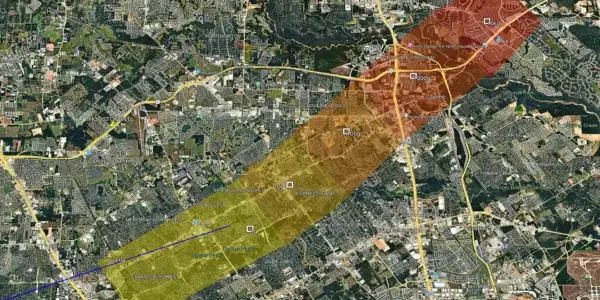
Meteorite Fragment May Have Impacted Houston Home

Samsung Unveils Unprecedented Black Friday Deal...
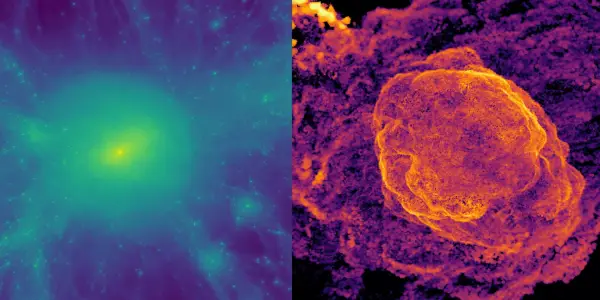
New Simulations Shed Light on the Enigmatic...

FULU Foundation Introduces Repair Bounty System...
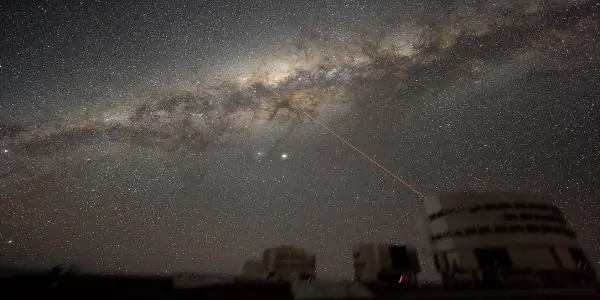
Breakthrough in Milky Way Simulation Using AI...
Enhance Your Weather Preparedness with Weather...

This Week In Space Podcast: Episode 187 Explores...

NASA and Blue Origin Successfully Launch Dual...

Unraveling the Mysteries of Mars: Recent...
Hubble Telescope Unveils Enigmatic Galaxy NGC 2775
Intense Solar Storms Could Ignite Life on...
Astronomers Converge in Phoenix for AAS 247: A...

Astronomers Identify Three Earth-Sized Exoplanets...
Study Suggests the Universe's Expansion May Be...
Deep Fission Proposes Underground Nuclear...
Astronomers Identify Potential Earth-Like...
Astronomers Capture Unprecedented Black Hole...
NASA and European Partners Prepare for...
Mapping the Invisible: Astronomers Uncover Dark...
Rogue Moons: A New Frontier for Life Beyond Stars

Young Canadian Astronomer Identifies Two...

OnePlus 15 vs. Samsung Galaxy S25 Plus: A Clash...

Urwerk Unveils Limited-Edition 100V 'LightSpeed'...

Foundation Season 3 Hints at Deeper Asimov Themes...
Webb Telescope Reveals Unprecedented Cosmic...
Congress Questions NASA's Facility Closures Amid...

Jeff Bezos's AI Hardware Venture Takes Aim at...
Highlights of 2025 in Space Exploration: From...
Blue Origin Faces Major Setback as New Glenn...
James Webb Telescope Identifies Rapidly Growing...
Astrophysicists Unveil Dark Universe Through...

Daily Roundup: November 10, 2025 – Advancements...

Satellite Imagery Highlights Hurricane Damage...
Exploring the Composition of Cosmic Voids

Astronomers Uncover a Rapid Star-Forming Galaxy...