NASA's $4 Billion Nancy Grace Roman Space Telescope Set to Explore Cosmic Voids
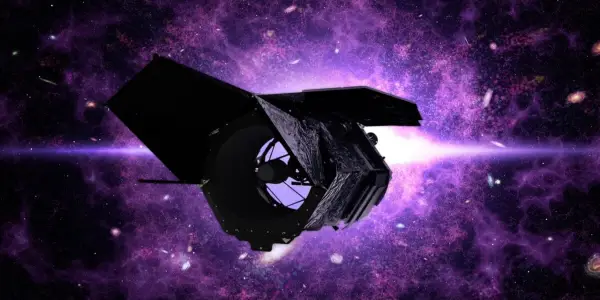
The upcoming Nancy Grace Roman Space Telescope aims to investigate vast regions of space to better understand dark energy and its effects on the universe.
In-depth analysis
New discoveries
The Nancy Grace Roman Space Telescope is poised to revolutionize our understanding of dark energy and cosmic structures. By targeting vast, seemingly empty regions of space, it aims to uncover tens of thousands of cosmic voids, enhancing insights into the universe's expansion and the fundamental forces at play.
Mission updates
The Roman telescope is on schedule for launch, alleviating previous budget concerns. Its advanced observational capabilities are expected to significantly surpass those of the Hubble Space Telescope, promising a wealth of new data.
Who is affected
Astrophysicists and researchers globally stand to benefit from the Roman telescope's mission. Its ability to analyze faint galaxies and cosmic voids will provide critical data for understanding dark energy, impacting theories about the universe's expansion and structure.
Next steps
As final preparations continue in Maryland, the scientific community is focused on the launch timeline. Researchers are eager to begin utilizing the telescope's capabilities to explore cosmic phenomena and further investigate the properties of dark energy.
Did you know?
Why we should care
The Nancy Grace Roman Space Telescope's mission goes beyond mere scientific curiosity; it holds the potential to revolutionize our understanding of the universe. By investigating dark energy and cosmic voids, it may uncover fundamental truths about the fabric of reality. For everyday life, this research could influence technology, inspire future innovations, and reshape our perception of humanity's place in the cosmos.
The universe's unsolved mystery
Dark energy remains one of the universe's most perplexing enigmas, shaping the cosmos while eluding direct observation. As researchers delve into its mysteries, the Roman telescope's findings may shift paradigms in astrophysics, prompting us to reconsider established theories. The implications extend beyond academia, possibly affecting how society understands existence itself.
The person who looks at the stars
Meet Clara, a 12-year-old aspiring astronomer from a small town. Every night, she gazes up at the stars, dreaming of what lies beyond her planet. With her telescope, she captures fleeting moments of cosmic beauty, marveling at the vastness of space. Clara's fascination deepens with news of the Roman telescope, as she imagines how its discoveries could one day answer questions she's pondered in her backyard. For Clara, the mission symbolizes hope—a chance for humanity to unveil the universe’s secrets and inspire generations to explore the stars. Her dreams are intertwined with the telescope's journey, reflecting the collective curiosity that drives scientific exploration.
NASA Unveils New Images of Interstellar Comet...
Assessing the Financial Impact of NASA's Apollo...
Interstellar Comet 3I/ATLAS Approaches...

Unistellar eQuinox 2 Smart Telescope Sees...
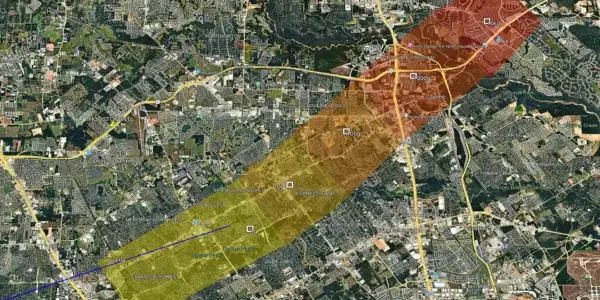
Meteorite Fragment May Have Impacted Houston Home

Samsung Unveils Unprecedented Black Friday Deal...
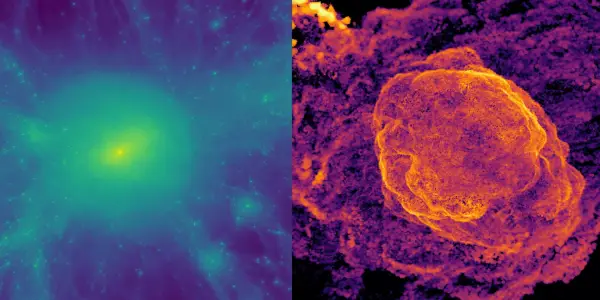
New Simulations Shed Light on the Enigmatic...
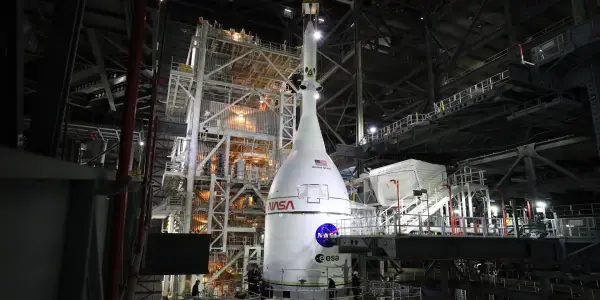
NASA Advances Artemis 2 Mission with Orion...
Breakthrough in Milky Way Simulation Using AI...

Enhance Your Weather Preparedness with Weather...
This Week In Space Podcast: Episode 187 Explores...
NASA and Blue Origin Successfully Launch Dual...
Unraveling the Mysteries of Mars: Recent...
Hubble Telescope Unveils Enigmatic Galaxy NGC 2775
Intense Solar Storms Could Ignite Life on...
Astronomers Converge in Phoenix for AAS 247: A...
Astronomers Identify Three Earth-Sized Exoplanets...
Study Suggests the Universe's Expansion May Be...

Deep Fission Proposes Underground Nuclear...
Astronomers Identify Potential Earth-Like...
Astronomers Capture Unprecedented Black Hole...
NASA and European Partners Prepare for...
Mapping the Invisible: Astronomers Uncover Dark...
Rogue Moons: A New Frontier for Life Beyond Stars
Young Canadian Astronomer Identifies Two...

OnePlus 15 vs. Samsung Galaxy S25 Plus: A Clash...

Urwerk Unveils Limited-Edition 100V 'LightSpeed'...

Foundation Season 3 Hints at Deeper Asimov Themes...
Webb Telescope Reveals Unprecedented Cosmic...
Congress Questions NASA's Facility Closures Amid...

Jeff Bezos's AI Hardware Venture Takes Aim at...
Highlights of 2025 in Space Exploration: From...
Blue Origin Faces Major Setback as New Glenn...
James Webb Telescope Identifies Rapidly Growing...
Astrophysicists Unveil Dark Universe Through...

Daily Roundup: November 10, 2025 – Advancements...

Satellite Imagery Highlights Hurricane Damage...
Exploring the Composition of Cosmic Voids
Astronomers Uncover a Rapid Star-Forming Galaxy...