New Paranal Solar Telescope Enhances Exoplanet Research Capabilities
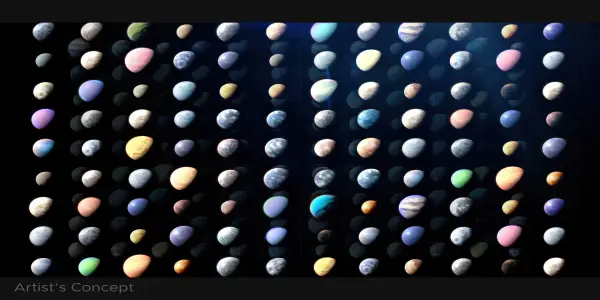
The Paranal solar ESPRESSO Telescope is now operational at ESO's Paranal site, promising to improve exoplanet detection and characterization.
In-depth analysis
New discoveries
The Paranal solar ESPRESSO Telescope (PoET) has the potential to revolutionize exoplanet research by providing enhanced solar observations. Its advanced capabilities will help astronomers better understand the intricate relationship between solar phenomena and the habitability of distant worlds, particularly Earth-like exoplanets orbiting Sun-like stars.
Mission updates
PoET successfully achieved its 'first light' in early April, confirming its systems are operational. The team is currently focused on calibrating the telescope to optimize its performance for future observations.
Who is affected
The scientific community, particularly astronomers and researchers focused on exoplanet studies, will benefit significantly from PoET's capabilities. Additionally, this advancement may influence broader fields such as astrobiology and planetary science, impacting our understanding of life's potential beyond Earth.
Next steps
The team will continue to calibrate PoET and refine its observational techniques. Future efforts will focus on integrating data from the telescope with the ESPRESSO spectrograph to enhance exoplanet detection and characterization.
Did you know?
Why we should care
The launch of the Paranal solar ESPRESSO Telescope (PoET) directly impacts our understanding of potential life beyond Earth. By enhancing the detection of Earth-like exoplanets, PoET paves the way for future discoveries that could redefine our place in the universe. For everyday people, this means that the dreams of finding habitable worlds may soon shift from science fiction to potential reality, influencing everything from scientific education to the exploration of new frontiers.
The universe's unsolved mystery
Despite the remarkable progress in identifying exoplanets, the question of how many might actually support life remains unanswered. As PoET embarks on its mission to clarify this, it highlights the broader enigma of planetary habitability. Understanding the delicate balance of conditions necessary for life expands our perspective on the universe and ignites curiosity about what truly lies beyond our solar system.
The person who looks at the stars
Meet Clara, a 28-year-old science teacher from a small town in Oregon. Each night, she sets up her telescope in her backyard, inspiring her students to gaze at the stars and ponder their place in the cosmos. With the launch of PoET, Clara feels a renewed sense of hope and excitement. The possibility of discovering exoplanets that could harbor life resonates deeply with her, fueling her passion for teaching and connecting her students to the wonders of space. Clara often shares stories about the latest astronomical discoveries, igniting a spark of curiosity in her classroom. The advancements made by PoET represent not just a leap in scientific understanding, but also a bridge for Clara and her students to dream bigger and engage with the universe in a meaningful way.
Expert Commentary
Unraveling the Mysteries of Mars: Recent...
Discovery of a Planet Formation Zone Beyond...
Unistellar eQuinox 2 Smart Telescope Sees...
Exploring Oregon's Premier Public Telescope...
Meteorite Fragment May Have Impacted Houston Home
Ancient Galaxies: A Chaotic Early Universe...
NASA Unveils New Images of Interstellar Comet...
Breakthrough in Milky Way Simulation Using AI...
European Space Agency Unveils Stunning Radar...

Astrophotographer Captures Stunning Image of...
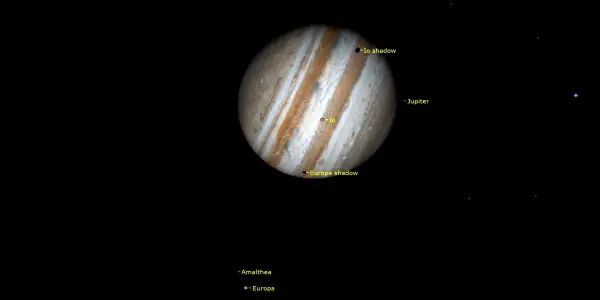
Jupiter's Moons Io and Europa to Cast Shadows...
This Week In Space Podcast: Episode 187 Explores...
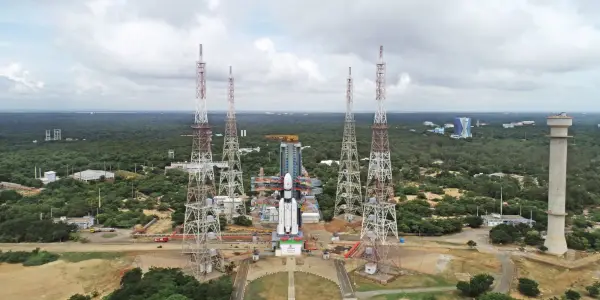
India Successfully Launches CMS-03 Military...
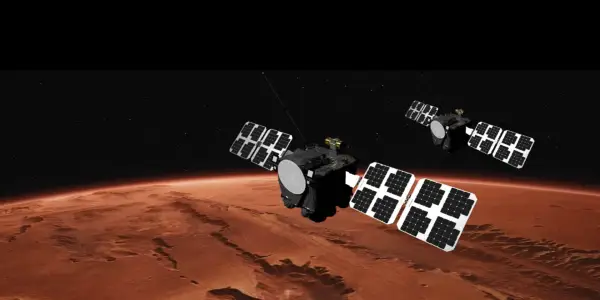
NASA's ESCAPADE Probes Set for Unique Journey to...
Mapping the Invisible: Astronomers Uncover Dark...
Unusual Wind from Neutron Star Challenges Space...
Assessing the Financial Impact of NASA's Apollo...
NASA and Blue Origin Successfully Launch Dual...
Astronomers Identify Three Earth-Sized Exoplanets...
Astronomers Capture Unprecedented Black Hole...
Apple Introduces Emergency SOS via Satellite in...
NASA Advances Artemis 2 Mission with Orion...
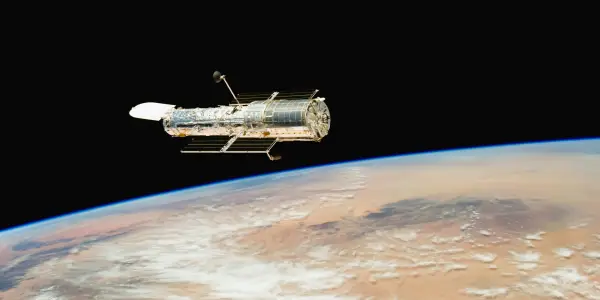
The Impact of Space Technology on Everyday Life
Astrophysicists Unveil Dark Universe Through...
Euclid Space Telescope Discovers Hidden Stars in...
Exploring the Composition of Cosmic Voids

OnePlus 15 vs. Samsung Galaxy S25 Plus: A Clash...
AI Reveals Over 800 New Cosmic Anomalies from...
The Pleiades Star Cluster Reveals Its Extensive...
NASA's Ambitious Timeline for Human Exploration...

X-Men Return to Education in Upcoming Comic...
Rogue Moons: A New Frontier for Life Beyond Stars
Russian Cosmonauts Conduct Extended Spacewalk to...
The Dwarf III Smart Telescope: A Compact Marvel...

FULU Foundation Introduces Repair Bounty System...

Lenovo's Legion Tab Gen 3 Sees Significant Black...
Blue Origin Faces Major Setback as New Glenn...
SpaceX Faces Challenges in Meeting NASA's 2027...