Unraveling the Ultraviolet Enigma of Young Stars
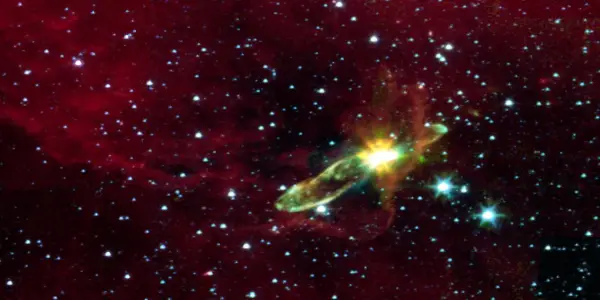
Recent observations from the James Webb Space Telescope have uncovered unexpected ultraviolet radiation in the vicinity of protostars, challenging existing theories of star formation.
In-depth analysis
New discoveries
Recent observations from the James Webb Space Telescope have revealed an unexpected phenomenon in star formation. Five young protostars in the Ophiuchus molecular cloud are emitting ultraviolet radiation, challenging prior assumptions that such objects are too cold and dim to produce this light. This discovery suggests a more complex interaction between protostars and their environments.
Mission updates
The James Webb Space Telescope continues to provide groundbreaking insights into star formation, with its Mid-Infrared Instrument revealing crucial spectral signatures of molecular hydrogen and ultraviolet radiation interactions in the Ophiuchus region.
Who is affected
The findings impact astrophysicists and researchers focused on star formation, as they will need to reconsider existing models that have historically underestimated the role of ultraviolet radiation in the development of protostars and the chemical processes involved.
Next steps
Future research will aim to refine star formation models by incorporating the newly identified significance of ultraviolet radiation. Continued observations will enhance understanding of molecular outflows and the conditions necessary for planetary system formation.
Did you know?
Why we should care
Understanding star formation directly impacts our grasp of the universe and, by extension, our own origins. The intricate processes that lead to star birth influence the formation of planets and, potentially, life itself. As researchers uncover how ultraviolet radiation affects these nascent stars, we gain insights that may redefine our knowledge of cosmic evolution and the conditions necessary for life, making this research relevant to every one of us.
The universe's unsolved mystery
The emergence of UV radiation from protostars presents a perplexing challenge to existing astrophysical models. This anomaly raises questions about the fundamental processes that govern star formation. If protostars can generate their own UV light, what other hidden mechanisms might exist in the cosmos, waiting to be discovered? The universe's complexity appears far more intricate than previously believed.
The person who looks at the stars
Meet Maya, a 12-year-old aspiring astronomer who often spends her nights gazing at the stars from her backyard in rural Arizona. The recent findings about protostars capture her imagination, as she dreams of what lies beyond. Maya finds wonder in the idea that the very stars she admires are more dynamic and complex than she ever imagined. For her, these discoveries are not just scientific breakthroughs; they inspire her future. She dreams of contributing to the field, imagining a world where her research could unlock the mysteries of how stars—and perhaps life—form in the universe. Maya's passion reminds us that the quest for knowledge about our cosmos is a universal journey, one that starts with curiosity and wonder.
Portal Systems Aims to Revolutionize Spacecraft...
Meteorite Fragment May Have Impacted Houston Home

Enhance Your Weather Preparedness with Weather...
James Webb Telescope Identifies Rapidly Growing...
Unusual Wind from Neutron Star Challenges Space...
SabreSat: An Innovative Air-Breathing Satellite...
Interstellar Comet 3I/ATLAS Approaches...
X5.1 Solar Flare Triggers G4 Geomagnetic Storm...
China's Mars Orbiter Captures Image of...
NASA Advances Artemis 2 Mission with Orion...
Unraveling the Mysteries of Mars: Recent...
ISS Crew Takes Precautions Against Radiation...
Intense Solar Storm May Illuminate Skies Across...
Astronauts aboard the ISS Capture Stunning Images...
Ancient Galaxies: A Chaotic Early Universe...
Deep Fission Proposes Underground Nuclear...

FULU Foundation Introduces Repair Bounty System...
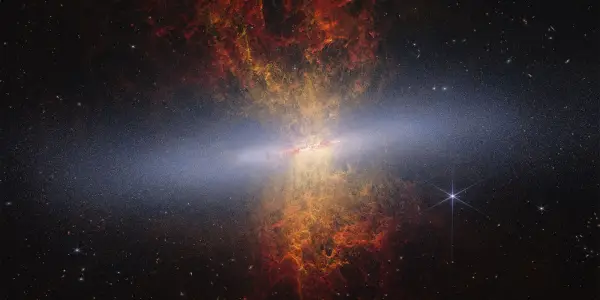
James Webb Space Telescope Captures Stunning...
This Week In Space Podcast: Episode 187 Explores...
Assessing the Financial Impact of NASA's Apollo...
India Successfully Launches CMS-03 Military...
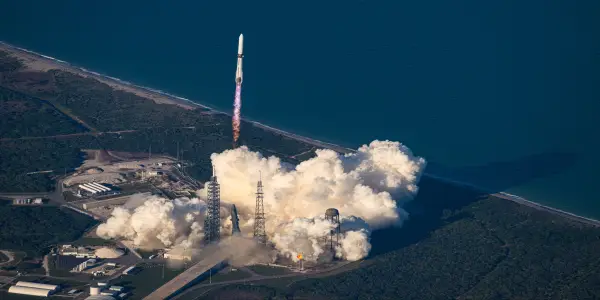
NASA and Blue Origin Successfully Launch Dual...
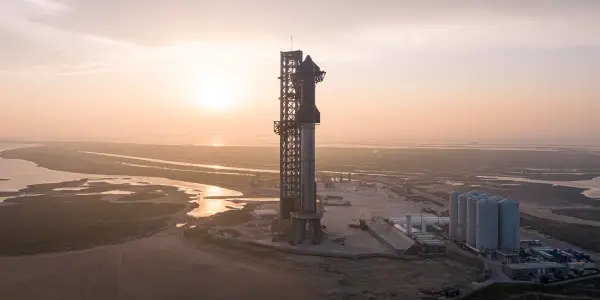
NASA's Artemis 3 Moon Mission Delayed to 2028 Due...
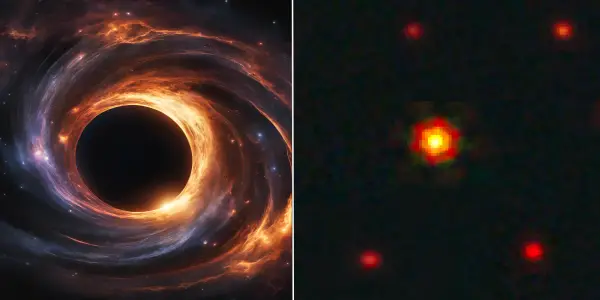
James Webb Space Telescope Discovers Ancient...
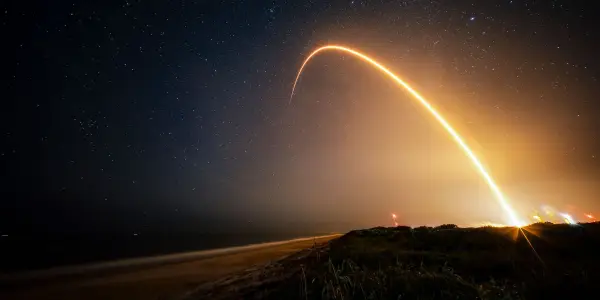
SpaceX Achieves 150th Falcon 9 Launch with...
Recent Studies Explore Potential Exoplanet in...
Highlights of 2025 in Space Exploration: From...
Italian Producer Plans Historic Film to Shoot in...
Astrophysicists Unveil Dark Universe Through...
European Space Agency Unveils Stunning Radar...
Astronomers Uncover a Rapid Star-Forming Galaxy...
Artemis 2 Astronauts Safely Return After Historic...
AI Reveals Over 800 New Cosmic Anomalies from...
James Webb Space Telescope Sheds Light on Early...

Childcare Crisis: Families Struggle as...
Astrophotographer Captures Stunning Image of...
Apple Introduces Emergency SOS via Satellite in...
New Simulations Shed Light on the Enigmatic...

Samsung Unveils Unprecedented Black Friday Deal...