Startup Aims to Save NASA's Swift Observatory from Imminent Demise
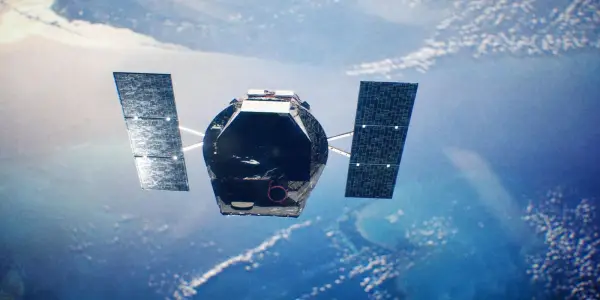
Katalyst Space's LINK spacecraft will launch from the Marshall Islands to rescue NASA's Swift Observatory, which faces imminent atmospheric reentry.
In-depth analysis
New discoveries
NASA's Swift Observatory has provided groundbreaking insights into cosmic phenomena, particularly gamma-ray bursts, since its launch over 20 years ago. With over 2,000 detected bursts, Swift has enhanced understanding of the universe's heavy elements, including gold and platinum, showcasing its critical role in astrophysical research and the ongoing quest for knowledge about the cosmos.
Mission updates
Katalyst Space Technologies is advancing rapidly in the development of LINK, a spacecraft designed to service the Swift Observatory. The mission is on track for launch aboard Northrop Grumman’s Pegasus XL rocket, reflecting the urgency to address Swift's declining orbit.
Who is affected
The potential loss of the Swift Observatory would impact not only NASA and its partners, including Penn State University, but also the global scientific community reliant on its unique capabilities. Researchers studying gamma-ray bursts and cosmic phenomena would face significant setbacks in their work.
Next steps
Following the launch of LINK, the mission will focus on rendezvousing with Swift and executing the orbital elevation. If successful, this could enable Swift to resume its scientific operations, marking a significant milestone in satellite servicing.
Did you know?
Why we should care
The fate of NASA's Swift Observatory impacts our understanding of the universe and our place within it. Swift has unlocked secrets about gamma-ray bursts and the creation of heavy elements, shaping fields from astrophysics to materials science. As it faces extinction, the mission to save it could redefine how we maintain and upgrade space technology, ultimately protecting the valuable data that informs everything from climate research to the origins of the cosmos.
The universe's unsolved mystery
The decline of Swift raises profound questions about humanity's ability to preserve knowledge in an ever-evolving technological landscape. As we venture deeper into space exploration, what happens to the invaluable data and insights gathered by aging instruments? Swift's potential loss serves as a stark reminder of our fleeting grasp on celestial knowledge and the fragility of our exploratory tools.
The person who looks at the stars
Meet Elena Torres, an aspiring astrophysicist from Tucson, who has spent countless nights gazing at the stars through her backyard telescope. Swift's discoveries ignited her passion for the cosmos, shaping her dreams of unraveling the universe's mysteries. As she follows the LINK mission, Elena feels a deep emotional connection to the observatory, which represents the hope of preserving the knowledge that inspires her. For her, saving Swift is not just about technology—it's about safeguarding the dreams of future generations of astronomers who will look to the stars and wonder. The mission's success could keep that spark alive, allowing her and others like her to continue exploring the universe's enigmas.
Expert Commentary

New Research Suggests Dark Matter Influences...

Jeff Bezos's AI Hardware Venture Takes Aim at...

Astronomers Identify Ancient Water in...
Study Suggests the Universe's Expansion May Be...

Daily Roundup: November 10, 2025 – Advancements...
Interstellar Comet 3I/ATLAS Approaches...
India Successfully Launches CMS-03 Military...

Unistellar eQuinox 2 Smart Telescope Sees...
Congress Questions NASA's Facility Closures Amid...

Boeing's Upcoming Starliner Mission Set for April...

NASA and Blue Origin Successfully Launch Dual...

Top Black Friday Smartwatch Deals Worth...
Recent Studies Explore Potential Exoplanet in...
Breakthrough in Milky Way Simulation Using AI...

NASA's Ambitious Timeline for Human Exploration...
New Mexico Startup Unveils Ambitious Plan to...

Urwerk Unveils Limited-Edition 100V 'LightSpeed'...

Potential Alien Disclosure May Trigger Bitcoin...
NASA's ESCAPADE Probes Set for Unique Journey to...

Astronomers Discover Ancient White Dwarf Actively...

X-Men Return to Education in Upcoming Comic...

Childcare Crisis: Families Struggle as...
Collaboration Between Exoplanet Researchers and...

X5.1 Solar Flare Triggers G4 Geomagnetic Storm...
Highlights of 2025 in Space Exploration: From...
The Dwarf III Smart Telescope: A Compact Marvel...
NASA's Artemis 3 Moon Mission Delayed to 2028 Due...
Astronomers Converge in Phoenix for AAS 247: A...
Discovery of a Planet Formation Zone Beyond...

Astrophysicists Unveil Dark Universe Through...

Deep Fission Proposes Underground Nuclear...

Unusual Wind from Neutron Star Challenges Space...

Samsung's Galaxy S26 Ultra Set for Significant...
New Insights into Gamma Ray Emissions Could...
Astronauts aboard the ISS Capture Stunning Images...

Apple Introduces Emergency SOS via Satellite in...