Astronomers Reveal Chemical Secrets of the Mysterious Pink Planet GJ b
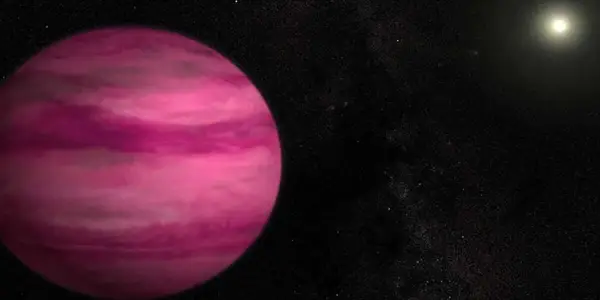
A new study reveals the chemical composition of GJ b, a cold gas giant, shedding light on its faint appearance and enriching our understanding of exoplanets.
In-depth analysis
New discoveries
Recent research has unveiled the atmospheric composition of GJ b, revealing crucial elements such as water vapor, methane, carbon dioxide, and ammonia. This groundbreaking work suggests the planet may be enriched in heavy elements and challenges existing models by proposing that cloud cover, particularly salt clouds, plays a significant role in its atmospheric characteristics.
Mission updates
The study, led by Aneesh Baburaj, successfully utilized the James Webb Space Telescope to capture the spectrum of GJ b, achieving this in just two hours. This marks a significant advancement in the direct imaging of cold exoplanets.
Who is affected
The findings from the GJ b study impact astronomers and astrophysicists engaged in exoplanet research, as they provide new methodologies for analyzing cold and faint celestial bodies. Additionally, this research may influence future studies of planetary classification and atmospheric modeling.
Next steps
Researchers plan to refine their atmospheric models by further investigating the implications of cloud cover on GJ b's characteristics. This ongoing work aims to enhance the understanding of similar exoplanets and improve techniques for their observation.
Did you know?
Why we should care
Understanding planets like GJ b reshapes our knowledge of the universe and our place within it. Insights gained from this research can influence the search for extraterrestrial life and inform climate models on distant worlds. As we grapple with our own planet's environmental challenges, learning about these celestial bodies may inspire innovative solutions and deepen our appreciation for the conditions necessary for life.
The universe's unsolved mystery
GJ b presents a paradox: a planet so cold yet rich in complex chemistry. This deviation from typical models challenges astronomers' understanding of planetary formation and evolution. The mystery of its atmospheric composition invites further exploration, pushing the boundaries of astrophysics and prompting questions about the nature of similar exoplanets lurking in the cosmos.
The person who looks at the stars
Meet Clara Liu, a high school science teacher in a small town, who spends her nights stargazing with her students. Clara often points out GJ b, using it as an example of the wonders of space. For her, this planet is more than an astronomical object; it symbolizes the curiosity and imagination she hopes to instill in her students. After the recent findings, she feels a renewed sense of excitement and purpose, eager to share how scientific advancements can reshape our understanding of the universe. Clara dreams of taking her students to a local observatory, where they can engage with the stars and explore the mysteries that lie beyond our atmosphere. Each discovery, including GJ b's peculiar atmosphere, becomes a stepping stone for her students, igniting dreams of one day becoming scientists themselves.
Expert Commentary
Interstellar Comet 3I/ATLAS Approaches...
Portal Systems Aims to Revolutionize Spacecraft...
NASA's Campaign to Monitor Interstellar Comet...

Top Black Friday Smartwatch Deals Worth...
Italian Producer Plans Historic Film to Shoot in...
James Webb Space Telescope May Have Detected the...
Exploring the Composition of Cosmic Voids
Astronomers Uncover a Rapid Star-Forming Galaxy...
NASA Considers Reopening Bidding for Artemis 3...

European Space Agency Unveils Stunning Radar...

Urwerk Unveils Limited-Edition 100V 'LightSpeed'...
Astrophotographer Captures Stunning Image of...

This Week In Space Podcast: Episode 187 Explores...
Andromeda Galaxy's Impact on Its Satellite...
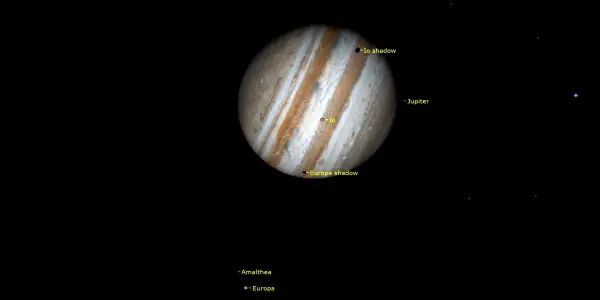
Jupiter's Moons Io and Europa to Cast Shadows...

NASA's X-59 Achieves Historic Supersonic Flight

Satellite Imagery Highlights Hurricane Damage...
Breakthrough in Milky Way Simulation Using AI...

Unistellar eQuinox 2 Smart Telescope Sees...

Deep Fission Proposes Underground Nuclear...
Webb Telescope Reveals Unprecedented Cosmic...
ISS Crew Takes Precautions Against Radiation...

Exploring Alternatives to the Meta Quest 3 Elite...
NASA's Ambitious Timeline for Human Exploration...
Intense Solar Storms Could Ignite Life on...
The Impact of Space Technology on Everyday Life
Highlights of 2025 in Space Exploration: From...
NASA's Artemis 3 Moon Mission Delayed to 2028 Due...
The Pleiades Star Cluster Reveals Its Extensive...
Discovery of a Planet Formation Zone Beyond...
Astronomers Uncover Evidence of Aging Stars...
Fintech Founder Champions Innovation Through...
Potential Evidence of Dark Matter Emerges from...
NASA and European Partners Prepare for...

SpaceX Achieves 150th Falcon 9 Launch with...
Rogue Moons: A New Frontier for Life Beyond Stars
New Mexico Startup Unveils Ambitious Plan to...
NASA's ESCAPADE Probes Set for Unique Journey to...
Astronomers Identify Potential Earth-Like...