NASA's Campaign to Monitor Interstellar Comet 3I/ATLAS Aims to Enhance Earth’s Asteroid Defense
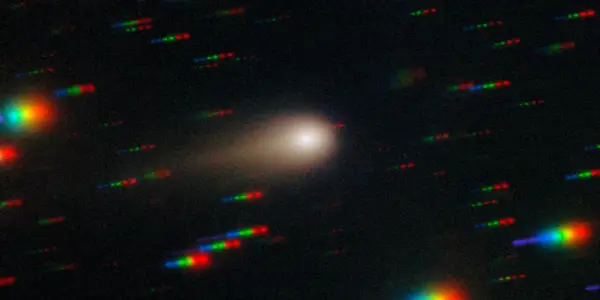
While interstellar comet 3I/ATLAS poses no immediate danger to Earth, a new NASA-led initiative is focused on improving our predictive capabilities for future celestial objects.
In-depth analysis
New discoveries
The interstellar comet 3I/ATLAS is a significant find, marking the third confirmed interstellar object in our solar system. Its detection, alongside 'Oumuamua and 2I/Borisov, highlights the growing catalog of cosmic visitors that challenge our understanding of celestial mechanics and the dynamics of our solar system.
Mission updates
NASA's initiative to observe 3I/ATLAS is actively underway, allowing astronomers to refine their tracking techniques. This project emphasizes astrometric observations to improve predictions of comet trajectories and engage the scientific community in collaborative efforts.
Who is affected
The initiative impacts astronomers and researchers involved in planetary defense and comet studies. By inviting global participation, it fosters collaboration among scientists, enhancing their ability to monitor and predict the behavior of interstellar objects that could pose future risks.
Next steps
Following the registration deadline on November 7, participating scientists will engage in periodic teleconferences to share findings. This collaborative approach aims to enhance tracking capabilities and prepare for potential future encounters with interstellar comets.
Did you know?
Why we should care
The discovery of interstellar comet 3I/ATLAS presents a unique opportunity for scientific advancement that directly impacts planetary safety. As astronomers refine their tracking techniques, they enhance our ability to predict the paths of potential cosmic threats. This effort is crucial for safeguarding our planet, as the future could see more interstellar objects crossing our solar system, possibly endangering life on Earth.
The universe's unsolved mystery
Despite our advancements in astronomy, the origins and behaviors of interstellar comets like 3I/ATLAS remain enigmatic. Each new comet brings questions about the formation of our solar system and the interstellar medium. Understanding their trajectories could unlock secrets of cosmic evolution, challenging our perceptions of where and how life may arise beyond Earth.
The person who looks at the stars
Jessica Morales, a high school astronomy teacher in Tucson, often inspires her students by sharing her passion for the cosmos. When she learned about 3I/ATLAS, she felt a renewed sense of wonder. Sharing the news with her class, she emphasized the importance of tracking these celestial visitors, connecting their paths to the broader narrative of our universe. For her students, this comet isn't just an object in the sky; it represents the possibility of discovery and the importance of vigilance in understanding our place in the cosmos. As they gaze at the stars, they aren't merely looking at distant points of light; they're contemplating the mysteries of existence and the future of our planet.
The Dwarf III Smart Telescope: A Compact Marvel...
Interstellar Comet 3I/ATLAS Approaches...

Satellite Imagery Highlights Hurricane Damage...
James Webb Space Telescope Captures Stunning...

Mapping the Invisible: Astronomers Uncover Dark...

James Webb Space Telescope May Have Detected the...
NASA's Ambitious Timeline for Human Exploration...
AI Reveals Over 800 New Cosmic Anomalies from...

Astronomers Uncover a Rapid Star-Forming Galaxy...

X-Men Return to Education in Upcoming Comic...
Unraveling the Mysteries of Mars: Recent...
SpaceX Achieves Major Milestone with Launch of...
Potential Alien Disclosure May Trigger Bitcoin...
SpaceX Achieves 150th Falcon 9 Launch with...

Astrophysicists Unveil Dark Universe Through...

Potential Evidence of Dark Matter Emerges from...
Innovative Portable Reflecting Telescope...

The Pleiades Star Cluster Reveals Its Extensive...

New Research Suggests Dark Matter Influences...

OnePlus 15 vs. Samsung Galaxy S25 Plus: A Clash...

Astronomers Discover Ancient White Dwarf Actively...

Rogue Moons: A New Frontier for Life Beyond Stars
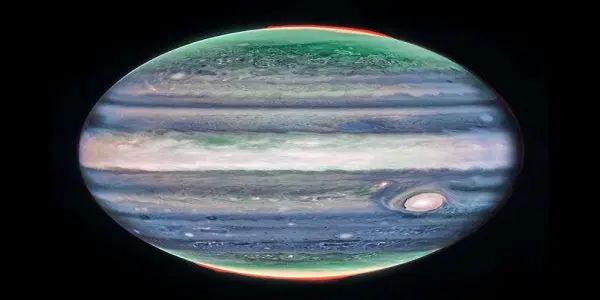
Exploring the Best Online Resources for Stunning...

Satellite Imagery Reveals Extensive Damage Across...
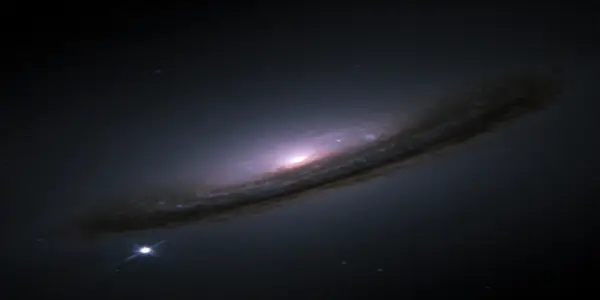
Study Suggests the Universe's Expansion May Be...
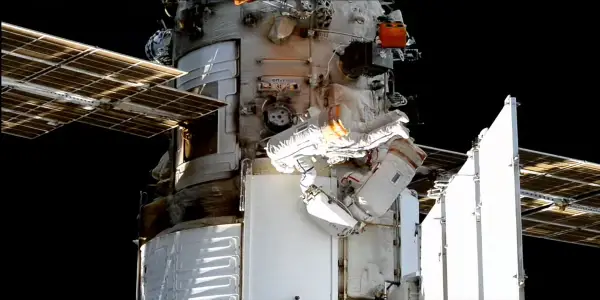
Russian Cosmonauts Conduct Extended Spacewalk to...
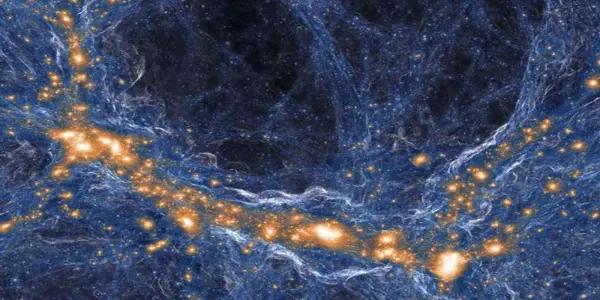
Exploring the Composition of Cosmic Voids
Apple Introduces Emergency SOS via Satellite in...
New Simulations Shed Light on the Enigmatic...
NASA Unveils New Images of Interstellar Comet...

European Space Agency Unveils Stunning Radar...
Blue Origin Faces Major Setback as New Glenn...
Intense Solar Storm May Illuminate Skies Across...
SpaceX Faces Challenges in Meeting NASA's 2027...
Collaboration Between Exoplanet Researchers and...
NASA's Campaign to Monitor Interstellar Comet...
Astronomers Converge in Phoenix for AAS 247: A...
The Impact of Space Technology on Everyday Life
SabreSat: An Innovative Air-Breathing Satellite...