NASA and European Partners Prepare for Sentinel-6B Satellite Launch
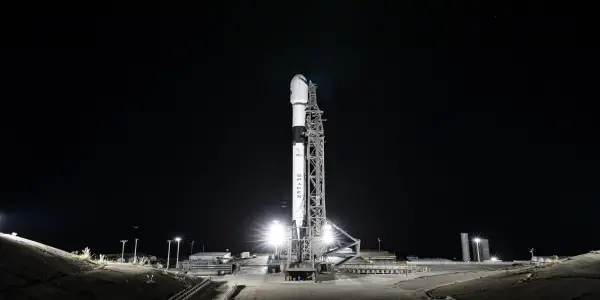
NASA and ESA are set to launch the Sentinel-6B satellite on November 6, 2023, enhancing sea level monitoring and advancing our understanding of ocean changes.
In-depth analysis
New discoveries
The Sentinel-6B satellite promises to enhance our understanding of sea level dynamics with its advanced measurement capabilities. By collecting data every 10 days with an impressive accuracy of 4 millimeters, it will provide critical insights into oceanic changes and their implications for climate science and coastal management.
Mission updates
Scheduled for launch on November 6, 2023, at 3:17 a.m. PST, Sentinel-6B will be deployed from Vandenberg Space Force Base aboard a SpaceX Falcon 9 rocket, marking a significant milestone in Earth observation.
Who is affected
Coastal communities and governments will significantly benefit from the data generated by Sentinel-6B, as it aids in urban planning and disaster preparedness. The satellite's insights are crucial for protecting infrastructure and mitigating the impacts of rising sea levels.
Next steps
Following its launch, Sentinel-6B will begin its operational phase, providing crucial data for scientific research and enhancing atmospheric models that support NASA's Artemis program, ensuring astronaut safety during missions.
Did you know?
Why we should care
The launch of Sentinel-6B is crucial for communities around the world facing the daily impacts of rising sea levels. With coastal cities experiencing increased flooding and erosion, accurate data from this satellite can guide urban planning and disaster preparedness, helping protect homes and infrastructure. As climate change accelerates, the information gathered will inform proactive measures, ensuring safety and sustainability for millions.
The universe's unsolved mystery
While Sentinel-6B addresses immediate concerns of sea level rise, it also contributes to a larger enigma: how climate dynamics affect planetary systems. Understanding these interactions on Earth could unlock insights into other planetary bodies and their climates, revealing patterns that could explain phenomena across the solar system. This mission is a stepping stone toward solving the mysteries of our universe.
The person who looks at the stars
Meet Julia Ramirez, a high school science teacher in Miami. Every night, she takes her students outside to gaze at the stars, inspiring them to think about their place in the universe. As they discuss the implications of rising sea levels, Julia emphasizes the importance of missions like Sentinel-6B. For her, this satellite represents hope—a tool to empower her students with knowledge to face climate challenges. Julia believes that understanding our planet is the first step toward protecting it, and she dreams of a future where her students become the scientists who tackle these pressing issues. In her eyes, each launch is not just a technological achievement; it’s a beacon of possibility for the next generation.

Exploring Alternatives to the Meta Quest 3 Elite...
Interstellar Comet 3I/ATLAS Approaches...
Andromeda Galaxy's Impact on Its Satellite...

Intense Solar Storms Could Ignite Life on...

Portal Systems Aims to Revolutionize Spacecraft...
Apple Introduces Emergency SOS via Satellite in...

Astronomers Uncover Evidence of Aging Stars...
SpaceX Set to Launch NASA's Pandora Exoplanet...
Artemis 2 Astronauts Safely Return After Historic...

OnePlus 15 vs. Samsung Galaxy S25 Plus: A Clash...
Astrophotographer Captures Stunning Image of...
Italian Producer Plans Historic Film to Shoot in...

NASA Unveils New Images of Interstellar Comet...

Astronomers Discover Ancient White Dwarf Actively...
AI Reveals Over 800 New Cosmic Anomalies from...
X5.1 Solar Flare Triggers G4 Geomagnetic Storm...

Unusual Wind from Neutron Star Challenges Space...
Jupiter's Moons Io and Europa to Cast Shadows...
Mapping the Invisible: Astronomers Uncover Dark...
ISS Crew Takes Precautions Against Radiation...
Assessing the Financial Impact of NASA's Apollo...
SpaceX Faces Challenges in Meeting NASA's 2027...
Astronauts aboard the ISS Capture Stunning Images...
The Dwarf III Smart Telescope: A Compact Marvel...

Samsung's Galaxy S26 Ultra Set for Significant...

Webb Telescope Reveals Unprecedented Cosmic...
SpaceX Achieves 150th Falcon 9 Launch with...
Highlights of 2025 in Space Exploration: From...
NASA and Blue Origin Successfully Launch Dual...
NASA's ESCAPADE Probes Set for Unique Journey to...
James Webb Space Telescope Captures Stunning...

Exploring the Composition of Cosmic Voids

Daily Roundup: November 10, 2025 – Advancements...
The Impact of Space Technology on Everyday Life

FULU Foundation Introduces Repair Bounty System...
Astronomers Converge in Phoenix for AAS 247: A...

Innovative Portable Reflecting Telescope...