Unveiling the Largest Galaxy Cluster Catalog: Insights into the Dark Universe
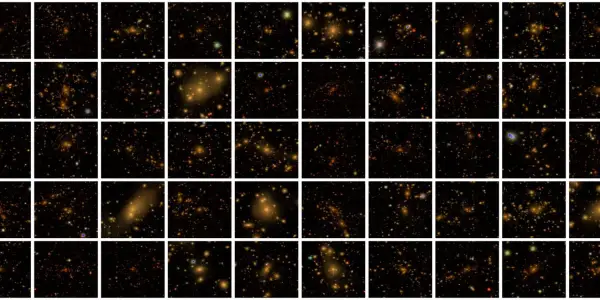
A groundbreaking catalog of massive galaxy clusters has been released, providing new perspectives on the universe's evolution and the enigmatic forces of dark matter and dark energy.
In-depth analysis
New discoveries
Researchers have unveiled the most comprehensive catalog of galaxy clusters to date, derived from the Dark Energy Survey. This extensive resource enhances understanding of the universe's evolution and offers a detailed mapping of these massive structures, crucial for investigating the distribution of dark matter and dark energy, which remain elusive yet fundamental components of cosmology.
Mission updates
The Dark Energy Survey has successfully compiled a vast catalog of galaxy clusters over six years, utilizing data from the 4-meter Blanco Telescope in Chile, marking a significant milestone in astrophysics.
Who is affected
The findings from this new catalog impact astrophysicists and cosmologists, providing them with valuable data to address critical questions regarding dark matter and dark energy. Additionally, the broader scientific community stands to benefit from enhanced insights into cosmic evolution and structure.
Next steps
With the upcoming launch of advanced telescopes like the Vera C. Rubin Observatory and NASA’s Nancy Grace Roman Space Telescope, researchers plan to expand the galaxy cluster catalog, facilitating further exploration of cosmic evolution and enhancing our understanding of the universe.
Did you know?
Why we should care
Understanding galaxy clusters is not just for astrophysicists; it has real implications for our grasp of the universe and our place within it. The insights gained from the new catalog can influence technologies like GPS and satellite communications, which depend on precise measurements of gravitational fields. As scientists decode dark matter and dark energy, they may uncover principles that could one day transform energy production or inform climate change strategies.
The universe's unsolved mystery
Despite the advancements in our understanding of galaxy clusters, the fundamental nature of dark matter and dark energy continues to elude scientists. These forces govern the universe's expansion and structure, yet they remain invisible. The ongoing research highlights a cosmic puzzle: if our current models are accurate, why do discrepancies persist in observations? This question drives researchers to look deeper, challenging our understanding of physics itself.
The person who looks at the stars
Meet Lila Chan, a high school science teacher in a small town who inspires her students to explore the cosmos. Every evening, she sets up a telescope in her backyard, inviting her students to gaze at the stars. This new catalog of galaxy clusters fuels Lila's passion; she explains to her students how the vast distances they see relate to the mysteries of dark matter and energy. For Lila, each cluster represents not just a collection of galaxies, but a new opportunity for her students to connect with science. She watches as their eyes widen in wonder, knowing that the knowledge gained today could inspire the next generation of astrophysicists. Lila's commitment to making the universe accessible bridges the gap between complex research and everyday curiosity, reminding us that exploration starts with a single glance upward.

Lenovo's Legion Tab Gen 3 Sees Significant Black...
Potential Evidence of Dark Matter Emerges from...
Unraveling the Mysteries of Mars: Recent...

European Space Agency Unveils Stunning Radar...

OnePlus 15 vs. Samsung Galaxy S25 Plus: A Clash...
Astronomers Uncover Evidence of Aging Stars...
Webb Telescope Reveals Unprecedented Cosmic...
Astronomers Capture Unprecedented Black Hole...
Andromeda Galaxy's Impact on Its Satellite...
James Webb Space Telescope May Have Detected the...
Astronomers Discover Ancient White Dwarf Actively...
Astrophysicists Unveil Dark Universe Through...
Blue Origin Faces Major Setback as New Glenn...
James Webb Space Telescope Captures Stunning...
Ancient Galaxies: A Chaotic Early Universe...
Meteorite Fragment May Have Impacted Houston Home
ISS Crew Takes Precautions Against Radiation...
NASA Unveils New Images of Interstellar Comet...
Study Suggests the Universe's Expansion May Be...

SabreSat: An Innovative Air-Breathing Satellite...

NASA's Artemis 3 Moon Mission Delayed to 2028 Due...

Foundation Season 3 Hints at Deeper Asimov Themes...
Young Canadian Astronomer Identifies Two...
Breakthrough in Milky Way Simulation Using AI...
NASA and European Partners Prepare for...
NASA's Ambitious Timeline for Human Exploration...
AI Reveals Over 800 New Cosmic Anomalies from...
New Simulations Shed Light on the Enigmatic...
Euclid Space Telescope Discovers Hidden Stars in...
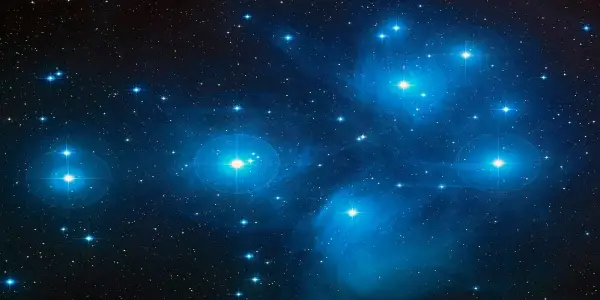
The Pleiades Star Cluster Reveals Its Extensive...
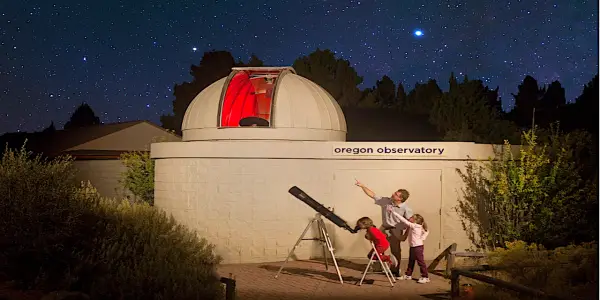
Exploring Oregon's Premier Public Telescope...
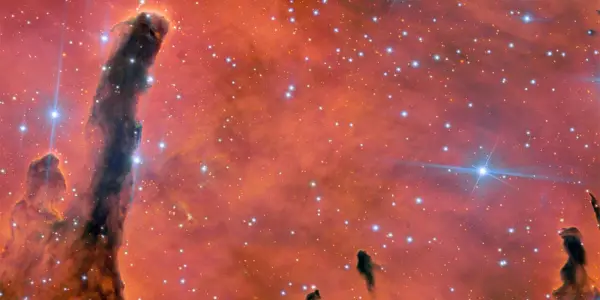
Hawaiian Students Honor Gemini North Telescope's...
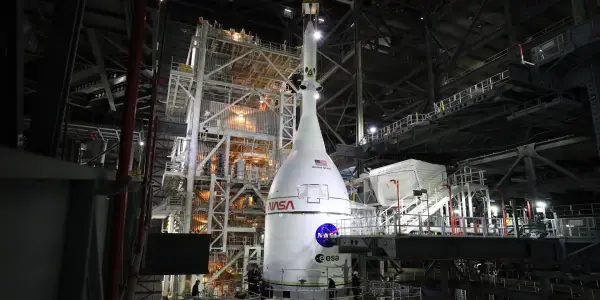
NASA Advances Artemis 2 Mission with Orion...

Samsung Unveils Unprecedented Black Friday Deal...
Potential Alien Disclosure May Trigger Bitcoin...

Childcare Crisis: Families Struggle as...
Astronomers Uncover a Rapid Star-Forming Galaxy...
Assessing the Financial Impact of NASA's Apollo...
Portal Systems Aims to Revolutionize Spacecraft...
James Webb Space Telescope Sheds Light on Early...