Nearest Alien Civilization May Be 33,000 Light Years Away, Study Suggests

Research indicates that complex life forms capable of technology are exceedingly rare in our galaxy, with the closest potential civilization estimated to be 33,000 light years from Earth. Despite the challenges, experts emphasize the importance of ongoing searches for extraterrestrial intelligence.
In-depth analysis
New discoveries
Recent research presented at the EPSC-DPS Joint Meeting reveals that if a technological civilization exists in the Milky Way, it may be up to 33,000 light years away. This finding underscores the rarity of planets capable of supporting advanced life, emphasizing the need for specific environmental conditions such as plate tectonics and a nitrogen-oxygen atmosphere.
Mission updates
The study highlights the importance of ongoing efforts in the Search for Extraterrestrial Intelligence (SETI), advocating for direct search initiatives to ascertain the existence of alien civilizations.
Who is affected
The implications of this research impact scientists, space agencies, and the broader public interested in the search for extraterrestrial life. It raises awareness about the challenges of detecting intelligent civilizations and the necessary conditions for life to thrive beyond Earth.
Next steps
Future research will focus on refining models of planetary conditions conducive to life, while continuing to support SETI initiatives aimed at detecting signs of extraterrestrial intelligence in the cosmos.
Did you know?
Why we should care
Understanding the potential distances involved in finding extraterrestrial civilizations can reshape our perspective on life on Earth. If intelligent life exists 33,000 light years away, it prompts reflection on our own technological evolution and survival. This research emphasizes the fragility of our existence and the unique conditions that allow life to thrive, reminding us to cherish and protect our planet's environment.
The universe's unsolved mystery
The vastness of the Milky Way presents a profound enigma: if civilizations are so rare, what does that mean for our understanding of life's development? The conditions required for advanced life are specific and may not be replicated elsewhere, leading to a haunting question—are we truly alone, or are we simply unable to recognize the signs of life that might be out there?
The person who looks at the stars
Maria, an amateur astronomer from a small town, spends her nights gazing at the sky through her telescope, searching for signs of life beyond Earth. Each twinkling star ignites her imagination, as she dreams of distant civilizations. Maria often wonders if anyone out there shares her curiosity, or if they too ponder the cosmos. Her passion for astronomy isn't just about the stars; it's about connection. The research resonates with her deeply, reinforcing her belief that every effort to explore the universe is a step toward understanding our place in it. For Maria, the idea that other civilizations might be out there—far away yet somehow linked through the fabric of time and space—is a beacon of hope, inspiring her to advocate for more scientific exploration and environmental stewardship.
Expert Commentary
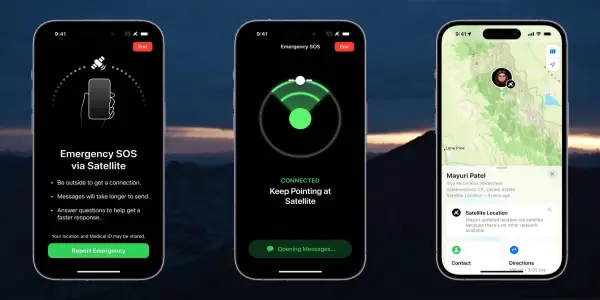
Apple Introduces Emergency SOS via Satellite in...

The Impact of Space Technology on Everyday Life
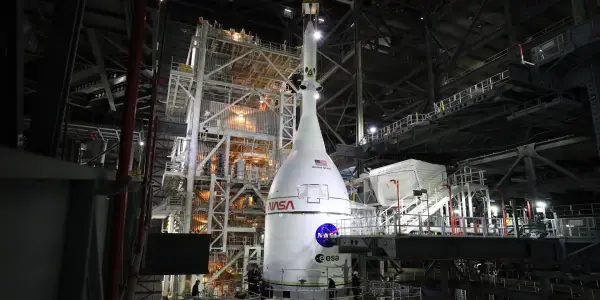
NASA Advances Artemis 2 Mission with Orion...
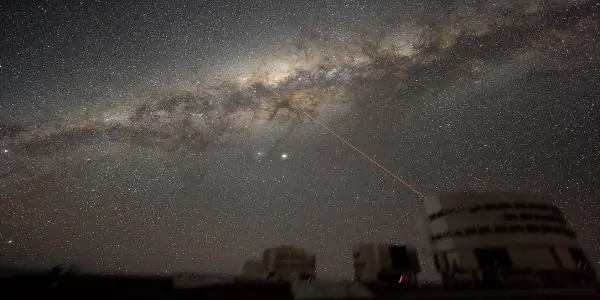
Breakthrough in Milky Way Simulation Using AI...
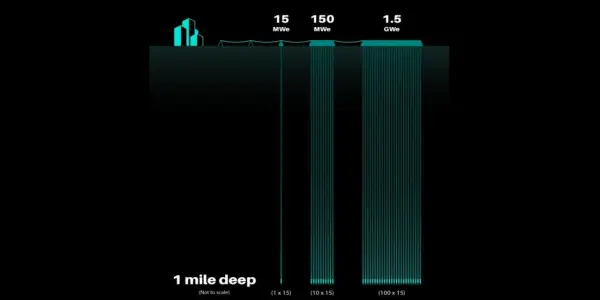
Deep Fission Proposes Underground Nuclear...
Astronomers Identify Potential Earth-Like...

Webb Telescope Reveals Unprecedented Cosmic...

Intense Solar Storms Could Ignite Life on...

Meteorite Fragment May Have Impacted Houston Home
ISS Crew Takes Precautions Against Radiation...

AI Reveals Over 800 New Cosmic Anomalies from...

Astronomers Discover Ancient White Dwarf Actively...
James Webb Space Telescope Captures Stunning...

OnePlus 15 vs. Samsung Galaxy S25 Plus: A Clash...
India Successfully Launches CMS-03 Military...

Young Canadian Astronomer Identifies Two...

Urwerk Unveils Limited-Edition 100V 'LightSpeed'...

European Space Agency Unveils Stunning Radar...

SpaceX Achieves 150th Falcon 9 Launch with...

Discovery of a Planet Formation Zone Beyond...

Samsung Galaxy S26 Expected to Feature Enhanced...
Blue Origin Faces Major Setback as New Glenn...
Euclid Space Telescope Discovers Hidden Stars in...

FULU Foundation Introduces Repair Bounty System...
NASA's Campaign to Monitor Interstellar Comet...

New Research Suggests Dark Matter Influences...
Assessing the Financial Impact of NASA's Apollo...


NASA Unveils New Images of Interstellar Comet...

Exploring the Composition of Cosmic Voids

NASA's Ambitious Timeline for Human Exploration...

Top Black Friday Smartwatch Deals Worth...
Highlights of 2025 in Space Exploration: From...

Astronomers Uncover a Rapid Star-Forming Galaxy...

X5.1 Solar Flare Triggers G4 Geomagnetic Storm...
New Mexico Startup Unveils Ambitious Plan to...
James Webb Space Telescope Discovers Ancient...

Intense Solar Storm May Illuminate Skies Across...

Ancient Galaxies: A Chaotic Early Universe...