Reviving Adult Friendships: Strategies to Combat Social Isolation

Explore effective strategies to revive adult friendships and combat social isolation as life changes challenge our connections. Discover insights from expert...
In-depth analysis
New discoveries
Recent research reveals that adults typically lose around half of their friends every seven years, a trend driven by life transitions rather than a lack of desire to maintain connections. Psychologist Dr. Marisa Franco highlights the importance of understanding these shifts during various life stages, emphasizing the need for adaptive strategies to sustain friendships.
Mission updates
Experts are advocating for a proactive approach to friendship maintenance, suggesting that individuals integrate friends into everyday activities. This method aims to normalize social interactions, making them more accessible and less daunting.
Who is affected
Both men and women experience the challenges of maintaining friendships as they navigate significant life changes, such as marriage and parenthood. These transitions often necessitate adjustments in how relationships are fostered and prioritized.
Next steps
To strengthen friendships, individuals are encouraged to reach out with thoughtful messages or engage in shared activities. Embracing vulnerability and taking initiative can lead to deeper, more meaningful connections.
Did you know?
Why we should care
Friendship is a cornerstone of mental health and well-being, yet many adults find themselves drifting away from their closest connections. As life becomes busier with work and family obligations, neglecting these relationships can lead to feelings of loneliness and isolation. Understanding the importance of nurturing friendships can inspire individuals to prioritize social interactions, transforming mundane routines into opportunities for joy and support.
The universe's unsolved mystery
The complexities of adult friendships reveal deeper social dynamics at play. As people navigate life's transitions, the fragility of these bonds becomes evident. Why do some friendships fade while others thrive? This question underscores the need for ongoing exploration into the emotional and psychological factors that influence our connections, inviting new research into the art of maintaining meaningful relationships.
The person who looks at the stars
Meet Jessica, a 34-year-old software engineer and mother of two. Between juggling deadlines and school runs, she often feels her friendships slipping away. Recently, Jessica reconnected with her college roommate, Sarah, after sending a simple voice note reminiscing about their late-night study sessions. This small gesture reignited their bond, reminding Jessica of the comfort and stability that friendships provide. As she navigates the challenges of motherhood, Jessica now invites Sarah for casual coffee runs or family outings, integrating her friends into daily life. By acknowledging her need for connection, she not only strengthens her friendships but also enriches her family's social circle, illustrating the profound impact of prioritizing these relationships.

India Successfully Launches CMS-03 Military...

Study Suggests the Universe's Expansion May Be...
Highlights of 2025 in Space Exploration: From...
Exploring the Composition of Cosmic Voids

FULU Foundation Introduces Repair Bounty System...

Astronomers Uncover a Rapid Star-Forming Galaxy...

Satellite Imagery Reveals Extensive Damage Across...
Young Canadian Astronomer Identifies Two...
Andromeda Galaxy's Impact on Its Satellite...
Assessing the Financial Impact of NASA's Apollo...

European Space Agency Unveils Stunning Radar...

Top Black Friday Smartwatch Deals Worth...


Mapping the Invisible: Astronomers Uncover Dark...
Samsung's Galaxy S26 Ultra Set for Significant...
The Impact of Space Technology on Everyday Life
NASA's Campaign to Monitor Interstellar Comet...

The Pleiades Star Cluster Reveals Its Extensive...
New Simulations Shed Light on the Enigmatic...

Recent Studies Explore Potential Exoplanet in...
Innovative Portable Reflecting Telescope...
Congress Questions NASA's Facility Closures Amid...
Interstellar Comet 3I/ATLAS Approaches...
James Webb Space Telescope Sheds Light on Early...
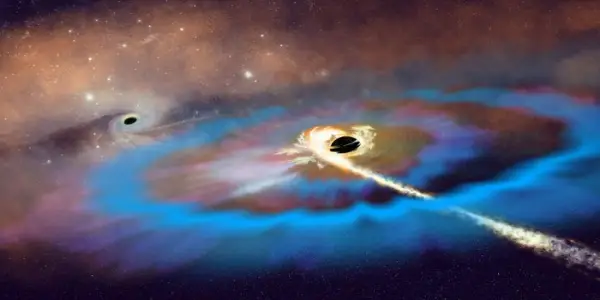
Astronomers Capture Unprecedented Black Hole...
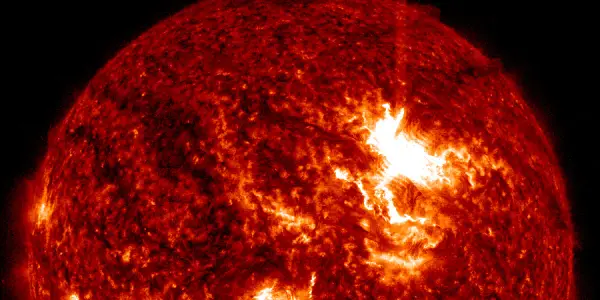
X5.1 Solar Flare Triggers G4 Geomagnetic Storm...
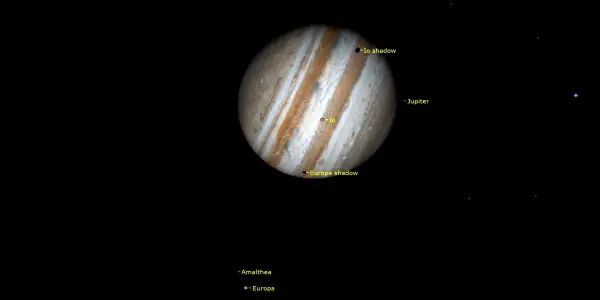
Jupiter's Moons Io and Europa to Cast Shadows...
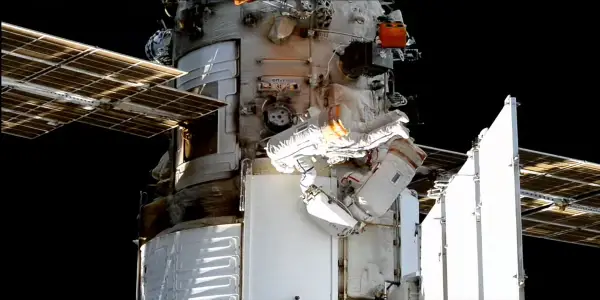
Russian Cosmonauts Conduct Extended Spacewalk to...

This Week In Space Podcast: Episode 187 Explores...
Webb Telescope Reveals Unprecedented Cosmic...
NASA's Ambitious Timeline for Human Exploration...

NASA's Artemis 3 Moon Mission Delayed to 2028 Due...
Astronauts aboard the ISS Capture Stunning Images...
Hubble Telescope Unveils Enigmatic Galaxy NGC 2775

Urwerk Unveils Limited-Edition 100V 'LightSpeed'...
The Dwarf III Smart Telescope: A Compact Marvel...

X-Men Return to Education in Upcoming Comic...