Venezuela Moves to Withdraw from ICC's Rome Statute Amid Ongoing Investigations
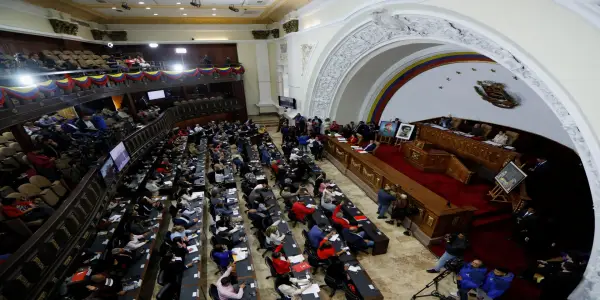
Venezuela's National Assembly votes to withdraw from the ICC's Rome Statute amid ongoing investigations into human rights violations by Maduro's government.
In-depth analysis
Background context
Venezuela's National Assembly has voted to withdraw from the Rome Statute, which established the International Criminal Court. This decision follows the ICC's investigation into alleged crimes against humanity by President Maduro's administration, which has faced accusations of systematic human rights violations since 2023, including torture and extrajudicial killings during protests.
Key political implications
This withdrawal signals a defiance against international scrutiny and may embolden other nations to reconsider their commitments to international legal frameworks, potentially undermining global human rights accountability.
Who gains / who loses
The Maduro administration could gain a temporary reprieve from international legal pressures by distancing itself from the ICC, while human rights advocates and Venezuelan citizens may lose crucial avenues for accountability and justice amid ongoing abuses.
Possible future scenarios
Venezuela's departure from the Rome Statute could lead to increased isolation from international bodies, while encouraging other nations to follow suit, thus complicating the global landscape of human rights enforcement and accountability.
Did you know?
Why you should know this
Venezuela's decision to withdraw from the Rome Statute affects not only its own citizens but also international human rights standards. This move signals a retreat from accountability in a country already grappling with severe human rights abuses. For those concerned about global justice and the protection of human rights, this shift challenges the efficacy of international systems designed to safeguard these principles, potentially emboldening other nations to follow suit.
Behind the political curtain
Interestingly, Venezuela's National Assembly was established in 1811, making it one of the oldest in the Americas. Despite its long history, its current authority is often questioned, as many view it as a puppet of the Maduro regime, undermining the democratic processes that were once foundational to its creation.
Ordinary person in an extraordinary situation
Meet Clara, a 34-year-old teacher in Caracas who has witnessed the erosion of rights in her community firsthand. With protests met by violence and dissenters imprisoned, she feels trapped in a climate of fear. Clara used to teach her students about the importance of justice and democracy, but now, those lessons feel hollow. Watching her students live in a state of uncertainty, she grapples with despair over the future of a nation that seems to be retreating from the ideals she once held dear. Clara's story reflects the struggles of many Venezuelans who yearn for change but feel powerless against a regime that silences their hopes.
Expert Commentary
Venezuela’s decision to repeal its law ratifying the Rome Statute and signal withdrawal from the ICC shows how deeply politicized international justice has become in Caracas. While the government frames this as defending sovereignty and rejecting alleged bias, the timing—amid an active ICC probe into serious human rights abuses—is clearly aimed at frustrating external scrutiny. Such a move may rally domestic supporters, but it also weakens accountability mechanisms and could isolate Venezuela diplomatically. Ultimately, long‑term credibility and rule‑of‑law depend on transparent cooperation with impartial institutions rather than withdrawal.

Reddit Enhances App Performance with R8...
Canada and China Take Steps Toward Repairing...

Apple Achieves Unprecedented Financial Success in...

Exploring Intimacy and Isolation in Claire-Louise...
Trump Appoints Special Envoy to Greenland,...
Saudi Crown Prince Mohammed bin Salman Set for...
Cuba Rejects U.S. Security Threat Claims Amid...
Sias University Adapts to Modern Educational...
Limited Expectations as Trump and Xi Approach...
Zohran Mamdani Secures Victory in New York City...

New Advocacy Report Urges Action Against Child...
Jim Avila, Esteemed ABC News Correspondent, Dies...
Germany Resumes Arms Exports to Israel Amid...

European Automakers Face New Chip Shortage as...
U.S. Embassies Redefine Human Rights:...
U.S. Extends Sanctions Relief as Syrian Leader...
New England Senators Play Crucial Role in...
Denmark's Prime Minister Advocates for Stricter...
Hungarian Prime Minister Viktor Orban Engages...
South Korea Initiates First Military Talks with...
Javier Milei's Victory Signals a Shift in...
Saudi Crown Prince's Invitation to the White...
China's Shift to a Cautious Research Strategy...
Examining Trump's Claims of Resolving Conflicts:...
South Africa's G20 Presidency: A Mixed Legacy of...
Russian and Indian Foreign Ministers Convene...
US Tariffs Impact Nuevo Leon's Steel Sector,...
Israel Seeks Diplomatic Renewal with Bolivia...

The Evolving Landscape of Copyright Enforcement...
Japan Reacts Strongly to China's Travel Advisory...
Ireland Moves Forward with Bill Targeting Israeli...

Miss Universe Cayman Islands Advocates for Global...
Italy's Meloni Engages with Qatar Emir on Energy...

Comet 3I/ATLAS Continues to Mystify Scientists...

US-South Korea Agreement to Develop...
Analyzing Trump's Latin America Strategy Amid...
Mark Carney Discusses Political Transition During...
Trump Addresses Nuclear Testing, Government...
UK Finalizes £8 Billion Typhoon Fighter Jet...
The 1969 Sino-Soviet Border Conflict: A Near Miss...