Turkey's Strategic Engagement with Russia Amid Global Tensions
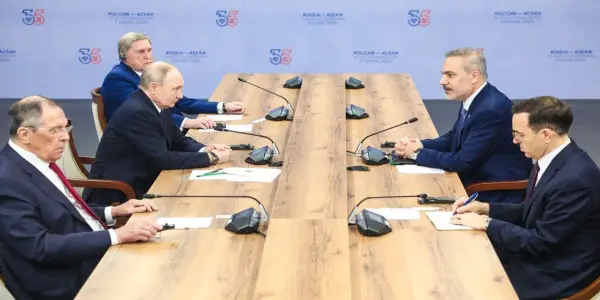
Turkey's Foreign Minister Fidan's recent Moscow visit highlights Ankara's independent diplomatic approach and energy cooperation with Russia.
In-depth analysis
Background context
The recent visit of Turkish Foreign Minister Hakan Fidan to Moscow highlights Turkey's strategic positioning amid a complex geopolitical landscape. As NATO members adopt anti-Russian policies, Turkey has maintained a pragmatic foreign policy, balancing its commitments to NATO with strong ties to Russia, particularly in energy cooperation and regional diplomacy.
Key political implications
Fidan's visit underscores Turkey's growing influence as a mediator in international conflicts, challenging traditional alliances and positioning Ankara as a pivotal player in regional stability and security discussions.
Who gains / who loses
Turkey stands to gain economically and politically from its partnership with Russia, enhancing energy security and diplomatic stature. Conversely, NATO allies may perceive Turkey's alignment with Russia as a challenge to collective security, potentially straining relationships within the alliance.
Possible future scenarios
As Turkey deepens its ties with Russia, it may further assert its independence from Western influence, leading to a reconfiguration of regional alliances and a potential escalation of tensions within NATO.
Did you know?
Why you should know this
Turkey's diplomatic balancing act directly impacts global energy markets and regional stability. As it forges strong ties with Russia while being a NATO member, the decisions made in Ankara affect everyday consumers, influencing energy prices and geopolitical tensions that ripple through economies worldwide. Understanding this relationship illuminates the complexities of international diplomacy and its real-world ramifications.
Behind the political curtain
Turkey has historically leveraged its unique geopolitical position to act as a bridge between East and West. Interestingly, it was the first NATO country to purchase the Russian S-400 missile system, showcasing its willingness to diverge from traditional Western alliances in pursuit of national interests.
Ordinary person in an extraordinary situation
Ayla Demir, a shop owner in Istanbul, feels the weight of Turkey's diplomatic decisions every day. With rising energy costs and inflation affecting her business, Ayla has had to make difficult choices about staffing and pricing. The stability of Turkey's energy supply, influenced by its ties to Russia, directly impacts her livelihood. Ayla often discusses these issues with her customers, revealing a deep concern for how international relations shape their daily lives. Her story reflects the broader anxieties felt by many Turks, illustrating how the political landscape can dictate economic realities and personal futures.
Expert Commentary
UK Finalizes £8 Billion Typhoon Fighter Jet...
Japan Protests China's Travel Advisory Amid...

Canada Decides Against Public Disclosure of Nazi...
US Tariffs Impact Nuevo Leon's Steel Sector,...
Geopolitical Tensions Surround Palau Amid...
US-South Korea Agreement to Develop...
Iraq's Parliamentary Elections: Key Insights...
Italy's Meloni Engages with Qatar Emir on Energy...
Contradictory Signals from Trump and Rubio on...

Golden Snub-Nosed Monkeys Make European Debut in...
Sias University Adapts to Modern Educational...
Political Reactions to BBC Leadership Changes...
Canada's Carney to Meet Xi in China, Signaling a...
Inquiry Critiques Scottish Government's Covid-19...
Colombia's ELN Rebels Intensify Military Drills...
Is the U.S. Reassessing Its Stance on Israel...

EA Raises Concerns Over Sale to Saudi Arabia's...

NASA Unveils Stunning Images of Interstellar...

Revitalizing Relations: The Future of the...
Kenya Urges Protection for Citizens Amid...
The Role of Palestinian Statehood in Advancing...
Examining Trump's Claims of Resolving Conflicts:...

Misjudgments in Military Strategy: The Lessons...
South Korea Initiates First Military Talks with...

Tarique Rahman's Homecoming: A Potential Turning...
Democrats Celebrate Recent Wins Amidst Internal...

Hungarian Prime Minister Viktor Orban Engages...
Switzerland Faces Economic Challenges Amid U.S....
Cuban Authorities Engage in Deadly Clash with...

Peru Sever Diplomatic Relations with Mexico Amid...
Italy's PM Meloni Responds Firmly to Trump's...
Jim Avila, Esteemed ABC News Correspondent, Dies...

Ireland Moves Forward with Bill Targeting Israeli...

Mamdani Emerges Victorious in NYC Mayoral Race...
Czech President Appoints Billionaire Former Prime...
German Chancellor Merz to Visit Israel for Key...
Bangladesh Seeks India's Assistance in...
Key Insights from Trump's National Security...

Spain's Attorney General Convicted in...

Challenges Faced by Costumes in 'Mighty Morphin...