Hungarian Parliament Enacts Term Limits for Prime Ministers, Restricting Orban's Comeback
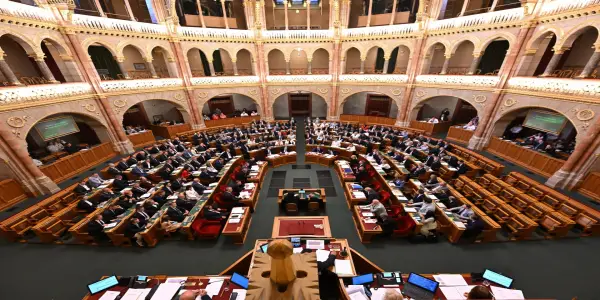
Hungarian lawmakers have instituted a constitutional amendment limiting prime ministerial terms, effectively hindering Viktor Orban's potential return.
In-depth analysis
Background context
The Hungarian Parliament's recent approval of a constitutional amendment limiting prime ministerial tenure to eight years signifies a major shift in the country's political dynamics. This change, largely driven by Prime Minister Peter Magyar and his Tisza Party, aims to reduce the influence of Viktor Orban, who has dominated the political scene for over a decade.
Key political implications
This amendment represents a significant move towards democratic reform in Hungary, potentially improving the nation’s relations with the European Union and addressing concerns over Orban's legacy of illiberal governance.
Who gains / who loses
The Tisza Party and Prime Minister Magyar stand to gain by solidifying their political power and advancing democratic reforms. Conversely, Viktor Orban and his supporters may find their influence diminished as Hungary shifts towards a more EU-aligned governance model.
Possible future scenarios
Hungary may experience a gradual restoration of democratic norms, with potential for increased EU integration. However, Orban's continued presence in politics could lead to ongoing tensions between reformist and conservative factions.
Did you know?
Why you should know this
This constitutional amendment directly affects the future of governance in Hungary and could set a precedent for other democracies facing similar challenges. By limiting prime ministerial terms to eight years, it fosters political accountability and encourages fresh leadership. For citizens, this means potential shifts in policies that could impact everyday life, from economic stability to civil liberties and EU relations.
Behind the political curtain
Despite the overwhelming support for the amendment, it's noteworthy that Viktor Orban's political party still holds a significant number of seats in Parliament, making the path to reform complex and fraught with potential pushback.
Ordinary person in an extraordinary situation
Consider Anna, a 34-year-old teacher in Budapest, who has felt the weight of Orban's policies in her daily life. From restrictions on educational content to concerns about press freedom, Anna has witnessed how governance can directly affect her profession and community. With the recent amendments, she feels a cautious optimism for the future, hopeful that a new era of leadership might prioritize transparency and civic engagement. Anna dreams of a Hungary where her students can learn freely and without fear of censorship, and where their voices shape the country's direction. As she reflects on the recent political changes, she wonders if this could finally be the turning point for a more inclusive and democratic society.
Expert Commentary

Golden Snub-Nosed Monkeys Make European Debut in...
Six Finalists Announced for the 2026...

Khamenei Assassination: A Pivotal Shift in...

Saudi Crown Prince Mohammed bin Salman Set for...

NFL Players Union Faces Grievance Over Annual...

U.S. Lawmakers Express Concerns Over Trump...

Geopolitical Tensions Surround Palau Amid...

New Advocacy Report Urges Action Against Child...
Zohran Mamdani Secures Victory in New York City...

Bangladesh Seeks India's Assistance in...

The Evolving Landscape of Copyright Enforcement...

Jetpack Navigation 3 Achieves Stability for...
Russian and Indian Foreign Ministers Convene...
Denmark's Prime Minister Advocates for Stricter...

The Impact of Trump's Second Year: A Year of...

Italy's Meloni Engages with Qatar Emir on Energy...

South Korea Rebuilds Trust and Reassesses Foreign...
Japan Reacts Strongly to China's Travel Advisory...

Canada Decides Against Public Disclosure of Nazi...

Lessons from Ulysses S. Grant on Civil-Military...

The Role of Palestinian Statehood in Advancing...

NASA Unveils Stunning Images of Interstellar...

Challenges Faced by Costumes in 'Mighty Morphin...

Hungarian Prime Minister Viktor Orban Engages...

The Legacy of French Colonialism: Language and...

German Chancellor Merz to Visit Israel for Key...
Syria's Foreign Minister Visits China to...

Revitalizing Relations: The Future of the...

China's Shift to a Cautious Research Strategy...

US Tariffs Impact Nuevo Leon's Steel Sector,...

Mark Carney Discusses Political Transition During...

Colombia's ELN Rebels Intensify Military Drills...

Contradictory Signals from Trump and Rubio on...

Nevada's Governor's Office Allegedly Intervened...

European Allies Stand Firm with Denmark Amid U.S....

Exiled Russian Orthodox Leader Responds to Spying...

Sias University Adapts to Modern Educational...

Baden Bower Reduces Pitch-to-Publish Timeline by...

Mamdani's Victory: A Turning Point for the...

Comet 3I/ATLAS Continues to Mystify Scientists...