Gen Z's Cockroach Movement Protests in New Delhi, Calls for Education Minister's Resignation
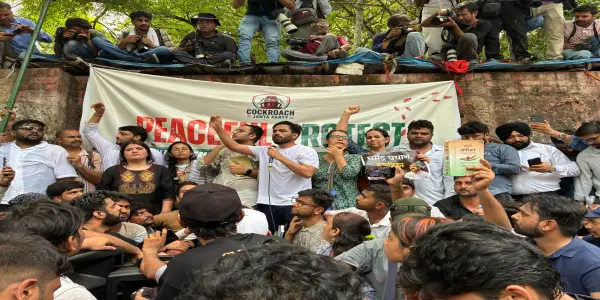
The Cockroach Janata Party, a Gen Z-led protest movement, demands the resignation of India's education minister during a rally in New Delhi.
In-depth analysis
Background context
The Cockroach movement in India emerged as a satirical response to political commentary labeling youth as cockroaches. With a significant portion of the population under 30, this grassroots initiative reflects widespread dissatisfaction with educational policies and government accountability, particularly following controversies involving the Central Board of Secondary Education.
Key political implications
The protest signals a shift in political dynamics, as young voters increasingly demand accountability from elected officials. This movement may challenge the ruling party's influence and reshape electoral strategies ahead of future elections.
Who gains / who loses
The Cockroach movement empowers young activists, potentially reshaping political discourse in India. Conversely, the ruling Bharatiya Janata Party risks losing support among youth disillusioned by perceived governmental neglect, impacting its long-term electoral viability.
Possible future scenarios
If the Cockroach movement maintains momentum, it could lead to significant political reform and increased youth representation. Alternatively, government repression may escalate, prompting further protests and deepening societal divisions.
Did you know?
Why you should know this
The Cockroach movement highlights a growing wave of youth activism in India, directly impacting educational policies and political accountability. As young citizens express their discontent over failures in the education system, their actions can lead to tangible changes in governance that affect daily educational experiences. This movement illustrates how collective voices can challenge political norms and influence the future of India's youth.
Behind the political curtain
Interestingly, the term 'cockroach' used in the movement was initially a derogatory comment by a politician, illustrating how language can be repurposed by activists to galvanize support. This satirical twist has allowed the Cockroach Janata Party to connect deeply with disillusioned youth, turning an insult into a rallying cry for change.
Ordinary person in an extraordinary situation
Saurav Kushwaha, a recent high school graduate from Madhya Pradesh, embodies the frustrations of many young Indians. After working tirelessly to secure a spot in college, he was devastated when the medical exam was suddenly canceled. His dreams felt shattered, but instead of surrendering to despair, he found empowerment through activism. At the protest, with his cockroach mask on, Saurav felt a sense of community with others who shared his struggles. This unity transformed his anger into determination, as he realized the power of collective action. For Saurav and many like him, the Cockroach movement isn't just about demanding a resignation; it's about reclaiming their future and ensuring that their voices will shape the policies that affect their lives.
Expert Commentary

Mamdani Emerges Victorious in NYC Mayoral Race...

Comet 3I/ATLAS Continues to Mystify Scientists...

U.S. Lawmakers Express Concerns Over Trump...

Examining Trump's Claims of Resolving Conflicts:...
Contradictory Signals from Trump and Rubio on...

Lessons from Ulysses S. Grant on Civil-Military...
Bhutan's Complex Relationship with India: A...
Indian Trade Unions Rally Against New Labour...

NFL Players Union Faces Grievance Over Annual...

WWE Raw Recap: Titles Change Hands in Thrilling...
Golden Snub-Nosed Monkeys Make European Debut in...

Egypt Affirms Commercial Nature of Gas Agreement...

New Advocacy Report Urges Action Against Child...
Zohran Mamdani Secures Victory in New York City...
US Tariffs Impact Nuevo Leon's Steel Sector,...
Texas Governor Abbott Designates CAIR as a...

Denmark's Prime Minister Advocates for Stricter...
South Korea Initiates First Military Talks with...

Trump Appoints Special Envoy to Greenland,...
U.S. Embassies Redefine Human Rights:...

Japan and Finland in Diplomatic Tension Following...

The Fate of the Maquis in Star Trek: A Missed...

US-South Korea Agreement to Develop...

Kenya Urges Protection for Citizens Amid...

Inquiry Critiques Scottish Government's Covid-19...
South Korea Rebuilds Trust and Reassesses Foreign...

Jared Isaacman Renominated as NASA Administrator...

Apple Achieves Unprecedented Financial Success in...

Iraq's Parliamentary Elections: Key Insights...

Spain's Attorney General Convicted in...

Mark Carney Discusses Political Transition During...
Sias University Adapts to Modern Educational...

The Evolving Landscape of Copyright Enforcement...
Key Insights from Trump's National Security...
China's Shift to a Cautious Research Strategy...

Limited Expectations as Trump and Xi Approach...

The Role of Palestinian Statehood in Advancing...
Japan Protests China's Travel Advisory Amid...

Algeria Grants Pardon to Jailed Novelist Boualem...

Democrats Celebrate Recent Wins Amidst Internal...