US Expands Strategic Pressure Tactics Against Iran Amid NATO Summit Dynamics
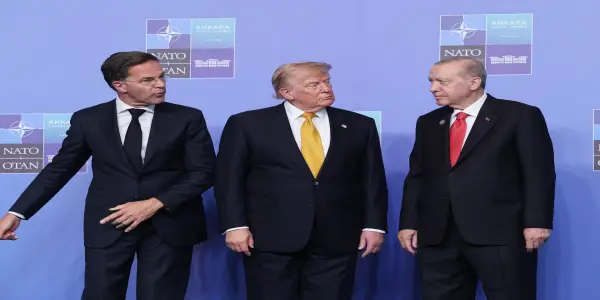
The US is reshaping its approach to Iran through coordinated regional pressures and strategic alliances, as highlighted by Trump's NATO summit participation.
In-depth analysis
Background context
The NATO summit in Turkiye marks a significant juncture in U.S. foreign policy, particularly regarding Iran. The shift from direct military engagement and sanctions to a hybrid strategy reflects a need to address the complexities of Iran's regional influence and internal governance challenges.
Key political implications
The recalibrated U.S. strategy signals a potential shift in NATO's collective approach to Iran, emphasizing a united front while testing European allies' commitment to confronting Tehran's actions.
Who gains / who loses
Iran may face increased internal pressures as the U.S. strategy aims to destabilize its governance, while regional adversaries and U.S. allies could gain from a more coordinated response to Tehran's influence. However, European nations risk political backlash if perceived as overly aligned with U.S. interests.
Possible future scenarios
Future developments may see an escalation of internal dissent in Iran, potentially leading to political instability. Alternatively, if European allies hesitate, the U.S. might struggle to maintain a cohesive strategy against Iranian influence.
Did you know?
Why you should know this
The shift in U.S. strategy towards Iran marks a critical juncture in global politics that could affect everything from oil prices to national security. As tensions rise in the Middle East, the implications of this new hybrid approach may ripple through everyday life, potentially impacting energy costs, international relations, and even local economies dependent on stable global markets.
Behind the political curtain
Interestingly, despite the extensive U.S. sanctions against Iran, the country has maintained a thriving black market that continues to facilitate significant trade. This underbelly of economic resilience complicates efforts to apply pressure and highlights the challenges of enforcing effective sanctions.
Ordinary person in an extraordinary situation
Meet Farah, a 32-year-old teacher in southern Lebanon. As Iranian influence shapes the political landscape, she finds herself caught in the crossfire of regional power struggles. The recent NATO summit discussions, while distant from her classroom, directly affect her community's stability. Farah worries about how escalating tensions might disrupt her students' futures. With her family facing economic instability, she feels the weight of geopolitical decisions pressing down on her daily life. As she navigates these uncertainties, Farah remains determined to educate her students on the value of peace and resilience, hoping they can forge a brighter future amid chaos.
Expert Commentary
The recalibration of U.S. strategy towards Iran, particularly as articulated at the NATO summit in Turkiye, signals a significant shift in foreign policy. By adopting a hybrid approach that intertwines military, economic, and social pressures, the U.S. aims to exploit Iran’s vulnerabilities from multiple angles. This tactic not only seeks to stretch Iran's resources but also to create a domestic crisis that could distract its leadership from regional ambitions. However, the effectiveness of this strategy hinges on NATO's unity and the willingness of European allies to engage actively. The complexities of regional dynamics, especially given Iran's entrenched influence, suggest that achieving a cohesive and effective strategy will be anything but straightforward.

South Korea Initiates First Military Talks with...
Egypt Affirms Commercial Nature of Gas Agreement...
Limited Expectations as Trump and Xi Approach...

Apple Achieves Unprecedented Financial Success in...
Khamenei Assassination: A Pivotal Shift in...
Italy's Meloni Engages with Qatar Emir on Energy...

Iraq's Parliamentary Elections: Key Insights...
Canada's Carney to Meet Xi in China, Signaling a...

Baden Bower Reduces Pitch-to-Publish Timeline by...

Colombia's ELN Rebels Intensify Military Drills...

Cuban Authorities Engage in Deadly Clash with...
Russian and Indian Foreign Ministers Convene...

Saudi Crown Prince Mohammed bin Salman Set for...

Jetpack Navigation 3 Achieves Stability for...

Hungarian Prime Minister Viktor Orban Engages...
Cuba Rejects U.S. Security Threat Claims Amid...

South Africa's G20 Presidency: A Mixed Legacy of...

The Evolving Landscape of Copyright Enforcement...

Denmark's Prime Minister Advocates for Stricter...
Switzerland Faces Economic Challenges Amid U.S....

The Rise of Technocracy in Modern Governance

Jared Isaacman Renominated as NASA Administrator...

Reddit Enhances App Performance with R8...
Germany Resumes Arms Exports to Israel Amid...

U.S. Authorities Detain British Journalist Linked...

NASA Unveils Stunning Images of Interstellar...

Contradictory Signals from Trump and Rubio on...

New England Senators Play Crucial Role in...

European Automakers Face New Chip Shortage as...

Lessons from Ulysses S. Grant on Civil-Military...

Geopolitical Tensions Surround Palau Amid...
German Chancellor Merz to Visit Israel for Key...
UK Finalizes £8 Billion Typhoon Fighter Jet...

The Legacy of French Colonialism: Language and...

The Fate of the Maquis in Star Trek: A Missed...

Sias University Adapts to Modern Educational...

Tarique Rahman's Homecoming: A Potential Turning...

Bhutan's Complex Relationship with India: A...

The 1969 Sino-Soviet Border Conflict: A Near Miss...
Saudi Crown Prince's Invitation to the White...