Escalating Tensions Between India and Bangladesh Amid Protests
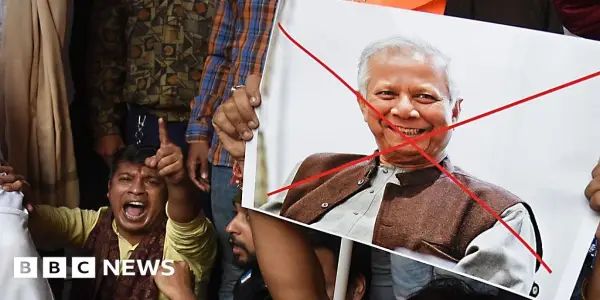
Escalating tensions between India and Bangladesh follow violent protests over the death of a Hindu man, raising concerns about their historically close relat...
In-depth analysis
Background context
The relationship between India and Bangladesh has become increasingly fraught following the violent protests in Bangladesh, sparked by the death of a Hindu factory worker, Dipu Chandra Das. This incident has led to heightened tensions, with accusations exchanged between the two nations regarding destabilizing actions, raising concerns about their historically close ties.
Key political implications
The incident may exacerbate existing political tensions in Bangladesh, particularly as the ruling Awami League faces scrutiny over its handling of minority rights and civil liberties, potentially impacting its standing ahead of upcoming elections.
Who gains / who loses
Radical elements within Bangladesh may gain traction by exploiting anti-India sentiments, while the Awami League risks losing support due to its perceived failure to protect minority rights. Conversely, India may find its influence in Bangladesh further diminished.
Possible future scenarios
As tensions continue to rise, both countries could face a deterioration of diplomatic relations, potentially leading to increased violence. Alternatively, there may be efforts to reestablish dialogue and cooperation to stabilize the region.
Did you know?
The relationship between India and Bangladesh is facing significant strain following the violent protests that erupted in Bangladesh, culminating in the death of a Hindu man.
Understanding the tensions between India and Bangladesh highlights the fragile nature of regional relationships that can impact daily life through economic ties, migration, and cultural exchange. The aftermath of violence can ripple through communities, affecting everything from trade to tourism. For those in border areas, this conflict could mean increased security checks, disrupted travel plans, and shifts in local economies reliant on cross-border cooperation.
The relationship between India and Bangladesh is facing significant strain following the violent protests that erupted in Bangladesh, culminating in the death of a Hindu man.
In 1971, during the Bangladesh Liberation War, India played a crucial role in supporting Bangladesh's independence. However, few are aware that this involvement is often cited by some Bangladeshi nationalists as a source of ongoing resentment, complicating the narrative of friendship between the two nations. This historical context adds layers to current tensions, showing how past alliances can haunt present diplomacy.
The relationship between India and Bangladesh is facing significant strain following the violent protests that erupted in Bangladesh, culminating in the death of a Hindu man.
Consider the story of Meena, a 32-year-old school teacher in Dhaka, who has seen the fabric of her community fray amidst rising religious tensions. After Dipu Chandra Das's death, she witnessed parents pulling their children from school out of fear. Meena feels the weight of responsibility to foster understanding in her classroom, yet the atmosphere of distrust makes it increasingly difficult. She organizes interfaith dialogues, hoping to bridge divides, but the rising radicalism often overshadows her efforts. As her city grapples with fear and anger, Meena's commitment to peace becomes a beacon of hope, illustrating how ordinary individuals can strive for harmony, even in tumultuous times.
Expert Commentary
This is heartbreaking. A man killed for blasphemy, and now two neighbors blaming each other instead of protecting their people. Bangladesh’s minorities are scared, and India’s reaction feels more political than compassionate. At some point, you stop pointing fingers and start asking: how do we stop this from happening again?
UK Finalizes £8 Billion Typhoon Fighter Jet...
Japan Protests China's Travel Advisory Amid...
Key Insights from Trump's National Security...

US Tariffs Impact Nuevo Leon's Steel Sector,...
Geopolitical Tensions Surround Palau Amid...

US-South Korea Agreement to Develop...
Iraq's Parliamentary Elections: Key Insights...

Italy's Meloni Engages with Qatar Emir on Energy...
Contradictory Signals from Trump and Rubio on...

Golden Snub-Nosed Monkeys Make European Debut in...

Sias University Adapts to Modern Educational...

Political Reactions to BBC Leadership Changes...

Spain's Attorney General Convicted in...

Inquiry Critiques Scottish Government's Covid-19...
Colombia's ELN Rebels Intensify Military Drills...
Is the U.S. Reassessing Its Stance on Israel...

EA Raises Concerns Over Sale to Saudi Arabia's...

NASA Unveils Stunning Images of Interstellar...

Revitalizing Relations: The Future of the...
Kenya Urges Protection for Citizens Amid...
The Role of Palestinian Statehood in Advancing...

Comet 3I/ATLAS Continues to Mystify Scientists...
Misjudgments in Military Strategy: The Lessons...
South Korea Initiates First Military Talks with...
Tarique Rahman's Homecoming: A Potential Turning...

Democrats Celebrate Recent Wins Amidst Internal...
Hungarian Prime Minister Viktor Orban Engages...

Switzerland Faces Economic Challenges Amid U.S....
Cuban Authorities Engage in Deadly Clash with...

Peru Sever Diplomatic Relations with Mexico Amid...
Italy's PM Meloni Responds Firmly to Trump's...
Jim Avila, Esteemed ABC News Correspondent, Dies...

Ireland Moves Forward with Bill Targeting Israeli...

Mamdani Emerges Victorious in NYC Mayoral Race...
Czech President Appoints Billionaire Former Prime...
German Chancellor Merz to Visit Israel for Key...
Bangladesh Seeks India's Assistance in...
Canada Decides Against Public Disclosure of Nazi...
Canada's Carney to Meet Xi in China, Signaling a...

Challenges Faced by Costumes in 'Mighty Morphin...