Public Health Official Dr. Brian Christine Faces Scrutiny Amid Hantavirus Concerns
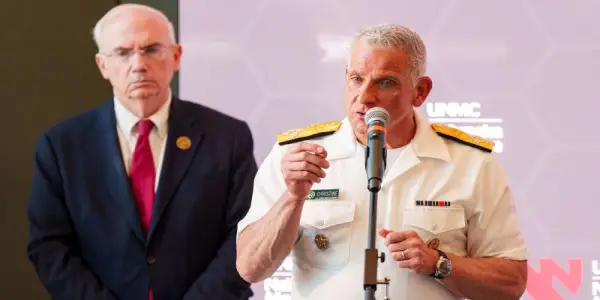
Dr. Brian Christine addresses hantavirus risks while his controversial past raises questions about public health leadership under the Trump administration.
In-depth analysis
Background context
Dr. Brian Christine's recent appointment as assistant secretary for health has elicited scrutiny due to his unconventional background as a urologist and controversial views on public health. His prior remarks, often intertwining health initiatives with political narratives, raise questions about his ability to lead effectively in a field requiring scientific integrity and public trust.
Key political implications
Christine's leadership role highlights potential tensions between public health policy and political ideology, which may affect the administration's credibility in managing health crises.
Who gains / who loses
While the Trump administration may benefit from Christine's alignment with its health agenda, public health experts and citizens concerned about scientific integrity could feel alienated. Trust in health authorities may diminish if his controversial past overshadows effective crisis management.
Possible future scenarios
If Christine's leadership fosters effective responses to health threats, it could bolster public confidence. Conversely, ongoing scrutiny of his past could lead to increased skepticism and resistance to health initiatives.
Did you know?
Why you should know this
Understanding Dr. Brian Christine's role in public health is crucial as the U.S. grapples with potential infectious disease outbreaks like hantavirus. His controversial past raises questions about leadership in health crises, directly affecting trust in public health initiatives. This impacts how communities respond to health advisories and manage their safety, highlighting the intersection of politics and public health.
Behind the political curtain
Before his current role, Dr. Christine expressed skepticism about the COVID-19 vaccine's efficacy, stating it did not prevent disease transmission. This controversial stance is notable given his responsibility for overseeing health initiatives during a pandemic and potential future outbreaks, raising alarms about the consistency of public health messaging.
Ordinary person in an extraordinary situation
Take Sarah, a Nebraska resident and mother of two, who is anxiously monitoring news about the hantavirus. With a family history of respiratory issues, she feels vulnerable. Sarah recalls how misinformation during the COVID-19 pandemic led to panic in her community, making her skeptical about health officials. As she navigates the uncertainty surrounding Dr. Christine's leadership, her trust is tested. Sarah's experience reflects a broader sentiment among citizens who must balance health directives with their personal fears and the reliability of the government’s response.
Expert Commentary
Canada and China Take Steps Toward Repairing...

Geopolitical Tensions Surround Palau Amid...

Canada Decides Against Public Disclosure of Nazi...

Political Reactions to BBC Leadership Changes...
Mark Carney Discusses Political Transition During...

Bhutan's Complex Relationship with India: A...

Misjudgments in Military Strategy: The Lessons...

Golden Snub-Nosed Monkeys Make European Debut in...
Italy's Meloni Engages with Qatar Emir on Energy...
Denmark's Prime Minister Advocates for Stricter...
New England Senators Play Crucial Role in...
Canada's Carney to Meet Xi in China, Signaling a...

Challenges Faced by Costumes in 'Mighty Morphin...
Germany Resumes Arms Exports to Israel Amid...
Mamdani Emerges Victorious in NYC Mayoral Race...

Isaac Asimov's Perspective on Star Trek: A Sci-Fi...
Khamenei Assassination: A Pivotal Shift in...
New Yorkers Kick Off Early Voting for Mayoral...
Revitalizing Relations: The Future of the...
Exiled Russian Orthodox Leader Responds to Spying...
Sias University Adapts to Modern Educational...
Is the U.S. Reassessing Its Stance on Israel...

Jetpack Navigation 3 Achieves Stability for...

Trump Appoints Special Envoy to Greenland,...

Spain's Attorney General Convicted in...
South Korea Rebuilds Trust and Reassesses Foreign...
Six Finalists Announced for the 2026...
Syria's Foreign Minister Visits China to...

NASA Unveils Stunning Images of Interstellar...
US Tariffs Impact Nuevo Leon's Steel Sector,...

Baden Bower Reduces Pitch-to-Publish Timeline by...

Egypt Affirms Commercial Nature of Gas Agreement...
Bangladesh's International Crimes Tribunal...

Ireland Moves Forward with Bill Targeting Israeli...

Indian Trade Unions Rally Against New Labour...
Russian and Indian Foreign Ministers Convene...
The Rise of Technocracy in Modern Governance
Algeria Grants Pardon to Jailed Novelist Boualem...
Cuba Rejects U.S. Security Threat Claims Amid...
The Impact of Trump's Second Year: A Year of...