Cuba Rejects U.S. Security Threat Claims Amid Rising Tensions
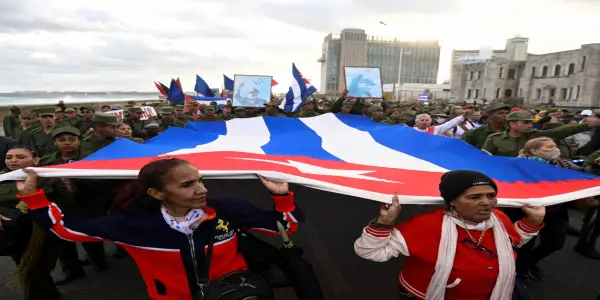
Cuba has rejected U.S. claims of a security threat, advocating for constructive engagement and dialogue amidst rising tensions over oil supply restrictions.
In-depth analysis
Background context
Cuba has firmly rejected claims of being a security threat to the United States, emphasizing its desire for constructive engagement. This comes amid heightened tensions due to U.S. restrictions on oil supplies, a situation deeply rooted in decades of complex relations. The Cuban government seeks a respectful dialogue with Washington based on mutual interests.
Key political implications
The diplomatic exchange signals a potential thaw in U.S.-Cuba relations, which could reshape regional dynamics and influence U.S. foreign policy strategies in Latin America.
Who gains / who loses
If dialogue progresses, both nations could benefit economically and politically. Conversely, hardline factions in the U.S. and Cuba may lose influence as diplomatic engagement challenges their longstanding narratives and policies.
Possible future scenarios
Future interactions may lead to increased cooperation or renewed tensions, depending on how both governments navigate their historical grievances and current geopolitical pressures affecting their relationship.
Did you know?
Why you should know this
Understanding Cuba's response to U.S. accusations is crucial as it highlights the complexities of diplomatic relations that affect everyday lives. For Cubans, restrictions on oil and trade have immediate consequences, impacting everything from transportation to food security. This dialogue could influence future policies, potentially leading to improved conditions for Cuban families and enhanced cultural exchanges between the nations.
Behind the political curtain
Few know that Cuba's foreign policy has historically been shaped by its strong ties to the Soviet Union, which provided economic support during the Cold War. This legacy influences current relations with the U.S., as Cuba seeks to assert its sovereignty while navigating pressures from both Washington and its allies in Latin America.
Ordinary person in an extraordinary situation
Maria, a 34-year-old teacher in Havana, feels the weight of political tensions every day. With her salary barely enough to cover basic needs, the recent U.S. restrictions on oil supplies have made life even more challenging. She often waits in long lines for gasoline, which is critical for her to drive her children to school. Despite these struggles, Maria remains hopeful about the diplomatic overtures from her government. She dreams of a future where her students can access more resources and opportunities. To her, this dialogue could mean not just political change, but a real improvement in daily life, allowing her family to thrive rather than merely survive.
Expert Commentary
From a geopolitical perspective, Cuba’s outright rejection of U.S. claims that it poses a security threat underscores how fragile U.S.–Cuba relations remain. Havana’s call for constructive engagement and cooperation contrasts sharply with Washington’s national emergency designation. This standoff highlights broader tensions over sanctions, energy access, and regional influence, and it’s clear neither side wants to escalate further—yet neither is ready to back down.
South Africa's G20 Presidency: A Mixed Legacy of...

Baden Bower Reduces Pitch-to-Publish Timeline by...
Javier Milei's Victory Signals a Shift in...
Japan Protests China's Travel Advisory Amid...
Czech President Appoints Billionaire Former Prime...
The 1969 Sino-Soviet Border Conflict: A Near Miss...

China's Shift to a Cautious Research Strategy...

Spain's Attorney General Convicted in...
Texas Governor Abbott Designates CAIR as a...
Bangladesh's International Crimes Tribunal...

Reddit Enhances App Performance with R8...
Limited Expectations as Trump and Xi Approach...
South Korea Rebuilds Trust and Reassesses Foreign...
Geopolitical Tensions Surround Palau Amid...
Khamenei Assassination: A Pivotal Shift in...
Italy's PM Meloni Responds Firmly to Trump's...
Japan Reacts Strongly to China's Travel Advisory...

Japan and Finland in Diplomatic Tension Following...
Indian Trade Unions Rally Against New Labour...

New Advocacy Report Urges Action Against Child...

NASA Unveils Stunning Images of Interstellar...
The Impact of Trump's Second Year: A Year of...

The Evolving Landscape of Copyright Enforcement...
Canada and China Take Steps Toward Repairing...

Exploring Intimacy and Isolation in Claire-Louise...
NFL Players Union Faces Grievance Over Annual...
Switzerland Faces Economic Challenges Amid U.S....
US Tariffs Impact Nuevo Leon's Steel Sector,...
U.S. Extends Sanctions Relief as Syrian Leader...

European Automakers Face New Chip Shortage as...
The Legacy of French Colonialism: Language and...
Six Finalists Announced for the 2026...
Golden Snub-Nosed Monkeys Make European Debut in...
Cuban Authorities Engage in Deadly Clash with...
Is the U.S. Reassessing Its Stance on Israel...

Bhutan's Complex Relationship with India: A...
German Chancellor Merz to Visit Israel for Key...
Egypt Affirms Commercial Nature of Gas Agreement...
Trump Appoints Special Envoy to Greenland,...

Comet 3I/ATLAS Continues to Mystify Scientists...