Armenian Prime Minister Dismisses Russia's Push for EU Referendum Amid Deteriorating Relations
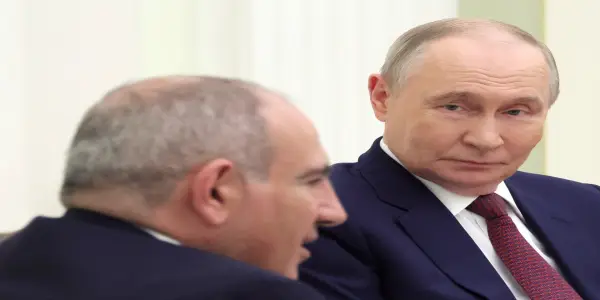
Armenian PM Pashinyan rebuffs Russian demand for EU referendum, signaling a shift towards Western alliances amid increasing tensions.
In-depth analysis
Background context
Armenia's Prime Minister Nikol Pashinyan has rejected Russia's proposal for a referendum on leaving the Eurasian Economic Union in favor of EU membership. This rejection marks a pivotal moment in Armenia's foreign policy, driven by dissatisfaction with Russia's support during the Nagorno-Karabakh conflict and a desire to strengthen ties with Western nations.
Key political implications
Pashinyan's refusal signals a potential realignment in Armenia's foreign policy, challenging Russia's influence in the region and possibly prompting a re-evaluation of alliances among former Soviet states.
Who gains / who loses
Armenia stands to gain increased autonomy and potential economic benefits from EU integration, while Russia risks losing a key ally and facing diminished influence in the South Caucasus. The Kremlin's economic pressures could further alienate Armenian citizens.
Possible future scenarios
Armenia may continue to deepen its ties with the EU, leading to further tensions with Russia. Conversely, Moscow could escalate economic sanctions, potentially destabilizing Armenia's political landscape ahead of upcoming elections.
Did you know?
Why you should know this
Armenia's changing relationship with Russia could reshape regional dynamics, impacting trade, security, and diplomatic ties. For everyday Armenians, this shift may mean altered economic opportunities and international partnerships. As the country balances its historic ties with Russia against the lure of EU integration, individuals in sectors like agriculture and manufacturing may face significant challenges and opportunities in the evolving market landscape.
Behind the political curtain
Armenia has been a member of the Moscow-led EAEU since its inception in 2015, but recent tensions have highlighted a growing discontent. Surprisingly, Armenia's military reliance on Russia has decreased, with the country seeking to develop its own defense capabilities, reflecting a broader desire for autonomy in security matters.
Ordinary person in an extraordinary situation
Meet Anush, a 34-year-old fish exporter in Yerevan. For years, her business thrived on exporting seafood to Russia, but recent bans have jeopardized her livelihood. Anush feels the weight of her country's shifting alliances, caught between the fear of economic collapse and hope for a brighter future with the EU. As she navigates the uncertainty, she wonders if her children's prospects will be brighter in a more integrated Europe or if they'll face the same struggles of dependency that have defined her life. Anush's story exemplifies the personal stakes involved in geopolitical shifts, where political decisions reverberate through everyday lives, shaping the fabric of families and communities.
Expert Commentary
Armenia's rejection of Russia's referendum proposal signals a pivotal moment in its foreign policy, marking a deliberate shift toward the West. This move is not merely a response to economic pressures; it reflects growing discontent with Moscow's reliability as an ally, particularly after perceived failures during the Nagorno-Karabakh conflict. As Armenia seeks deeper ties with the EU, the Kremlin's economic sanctions may backfire, potentially galvanizing domestic support for a more independent trajectory. This evolving dynamic not only reshapes Armenia's international relations but also raises concerns about regional stability in the South Caucasus, an area already fraught with geopolitical tensions.

Mamdani Emerges Victorious in NYC Mayoral Race...

Comet 3I/ATLAS Continues to Mystify Scientists...

U.S. Lawmakers Express Concerns Over Trump...
Examining Trump's Claims of Resolving Conflicts:...
Contradictory Signals from Trump and Rubio on...

Lessons from Ulysses S. Grant on Civil-Military...

Bhutan's Complex Relationship with India: A...
Indian Trade Unions Rally Against New Labour...

NFL Players Union Faces Grievance Over Annual...

WWE Raw Recap: Titles Change Hands in Thrilling...

Golden Snub-Nosed Monkeys Make European Debut in...
Egypt Affirms Commercial Nature of Gas Agreement...

New Advocacy Report Urges Action Against Child...
Zohran Mamdani Secures Victory in New York City...
US Tariffs Impact Nuevo Leon's Steel Sector,...
Texas Governor Abbott Designates CAIR as a...
Denmark's Prime Minister Advocates for Stricter...
South Korea Initiates First Military Talks with...
Trump Appoints Special Envoy to Greenland,...
U.S. Embassies Redefine Human Rights:...
Japan and Finland in Diplomatic Tension Following...

The Fate of the Maquis in Star Trek: A Missed...
US-South Korea Agreement to Develop...
Kenya Urges Protection for Citizens Amid...
Inquiry Critiques Scottish Government's Covid-19...
South Korea Rebuilds Trust and Reassesses Foreign...

Jared Isaacman Renominated as NASA Administrator...

Apple Achieves Unprecedented Financial Success in...

Iraq's Parliamentary Elections: Key Insights...

Spain's Attorney General Convicted in...

Mark Carney Discusses Political Transition During...
Sias University Adapts to Modern Educational...

The Evolving Landscape of Copyright Enforcement...
Key Insights from Trump's National Security...

China's Shift to a Cautious Research Strategy...
Limited Expectations as Trump and Xi Approach...
The Role of Palestinian Statehood in Advancing...
Japan Protests China's Travel Advisory Amid...

Algeria Grants Pardon to Jailed Novelist Boualem...
Democrats Celebrate Recent Wins Amidst Internal...