Samsung Engages in Urgent Negotiations with Union Amid Potential $20 Billion Strike Impact
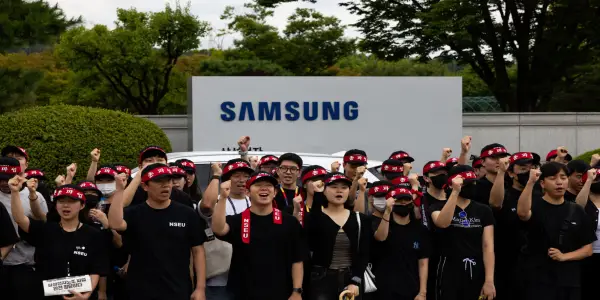
Samsung seeks to avert a looming strike that could severely disrupt chip production and impact its financial outlook as negotiations resume.
In-depth analysis
Background context
Samsung Electronics is engaged in critical negotiations with its primary labor coalition, mediated by South Korea's National Labor Relations Commission. A potential general strike set for May 31 threatens to disrupt operations at its major memory chip facility, risking significant financial losses estimated at over $20 billion.
Key political implications
The negotiations reflect broader labor relations challenges in South Korea, highlighting the government's role in mediating corporate disputes and the potential for increased labor activism in the tech sector.
Who gains / who loses
If the negotiations succeed, Samsung may stabilize its operations and retain key talent, while workers could secure better compensation. Conversely, a strike could severely impact both the company's profits and the livelihoods of the workers involved, particularly if prolonged.
Possible future scenarios
Should an agreement be reached, Samsung could enhance its competitive edge in the semiconductor market. However, a failure to resolve the dispute may lead to significant production disruptions and a shift in labor dynamics within the industry.
Did you know?
Why you should know this
The outcome of Samsung's negotiations could have a ripple effect on the global tech industry, especially as demand for high-bandwidth memory chips surges. If a strike occurs, consumers may face price increases for tech products ranging from gaming consoles to AI applications, directly impacting everyday budgets. Understanding this labor dispute is crucial for anyone following tech markets or considering purchases in the coming months.
Behind the political curtain
Labor unions in South Korea have a history of influencing corporate practices significantly. In the 1990s, widespread strikes led to major reforms in labor rights, shaping the landscape of employee compensation and benefits across the country. This context makes the current negotiations with Samsung particularly pivotal.
Ordinary person in an extraordinary situation
Meet Ji-hoon, a 32-year-old semiconductor engineer at Samsung's memory chip facility. With a family to support, Ji-hoon is torn between his loyalty to the company that has provided for him and the pressing need for better pay and benefits. As he prepares for the possibility of a strike, he feels the weight of responsibility not just for his livelihood, but for the 8,000 workers who could join him. Ji-hoon recalls how his father worked in manufacturing under similar pressures, and he reflects on the sacrifices made in pursuit of fair compensation. The emotional strain is palpable; for Ji-hoon, this isn't just about wages—it's about securing a future for his family in an industry that demands unwavering dedication.
Expert Commentary
Canada and China Take Steps Toward Repairing...

Geopolitical Tensions Surround Palau Amid...

Canada Decides Against Public Disclosure of Nazi...

Political Reactions to BBC Leadership Changes...

Mark Carney Discusses Political Transition During...

Bhutan's Complex Relationship with India: A...

Misjudgments in Military Strategy: The Lessons...

Golden Snub-Nosed Monkeys Make European Debut in...

Italy's Meloni Engages with Qatar Emir on Energy...

Denmark's Prime Minister Advocates for Stricter...

New England Senators Play Crucial Role in...
Canada's Carney to Meet Xi in China, Signaling a...

Challenges Faced by Costumes in 'Mighty Morphin...

Germany Resumes Arms Exports to Israel Amid...

Mamdani Emerges Victorious in NYC Mayoral Race...

Isaac Asimov's Perspective on Star Trek: A Sci-Fi...

Khamenei Assassination: A Pivotal Shift in...

New Yorkers Kick Off Early Voting for Mayoral...

Revitalizing Relations: The Future of the...

Exiled Russian Orthodox Leader Responds to Spying...
Sias University Adapts to Modern Educational...

Is the U.S. Reassessing Its Stance on Israel...

Jetpack Navigation 3 Achieves Stability for...

Trump Appoints Special Envoy to Greenland,...

Spain's Attorney General Convicted in...
South Korea Rebuilds Trust and Reassesses Foreign...
Six Finalists Announced for the 2026...
Syria's Foreign Minister Visits China to...

NASA Unveils Stunning Images of Interstellar...

US Tariffs Impact Nuevo Leon's Steel Sector,...

Baden Bower Reduces Pitch-to-Publish Timeline by...

Egypt Affirms Commercial Nature of Gas Agreement...

Bangladesh's International Crimes Tribunal...

Ireland Moves Forward with Bill Targeting Israeli...
Indian Trade Unions Rally Against New Labour...
Russian and Indian Foreign Ministers Convene...

The Rise of Technocracy in Modern Governance

Algeria Grants Pardon to Jailed Novelist Boualem...

Cuba Rejects U.S. Security Threat Claims Amid...
The Impact of Trump's Second Year: A Year of...