Escalating Tensions: Thailand's Military Operation Amid Cambodian Border Closures
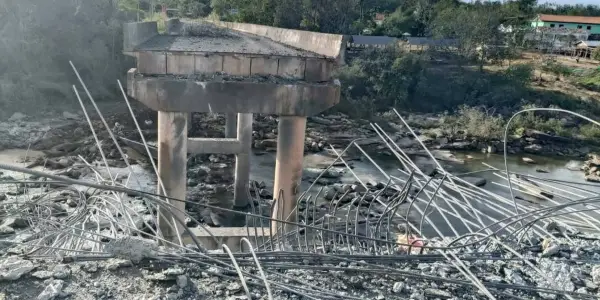
Thailand's military has initiated an offensive to assert control over disputed territories, coinciding with Cambodia's decision to close all border crossings.
In-depth analysis
Background context
The conflict between Thailand and Cambodia over border demarcations has deep historical roots, exacerbated by colonial legacies. Recent military operations by the Royal Thai Navy follow Cambodia's closure of border crossings, heightening tensions in a region where nearly a million residents are affected by the ongoing disputes.
Key political implications
This military escalation could reshape diplomatic relations between Thailand and Cambodia, potentially leading to increased regional instability and calls for international intervention to mediate the conflict.
Who gains / who loses
Thailand may assert territorial claims and strengthen national unity through military actions, while Cambodia risks territorial integrity and international standing. Local populations face disruption and insecurity, exacerbating human suffering in the region.
Possible future scenarios
The situation could evolve toward further military confrontations or, conversely, renewed diplomatic efforts to establish a lasting ceasefire. The international community's involvement may play a crucial role in determining the outcome.
Did you know?
Why you should know this
The military operations between Thailand and Cambodia could disrupt daily life for millions living near the border. As tensions rise, local economies may suffer from border closures, impacting trade and livelihoods. Understanding these developments helps illuminate how international disputes affect ordinary citizens, from farmers losing access to markets to families separated by closed crossings.
Behind the political curtain
A lesser-known aspect of this conflict is the role of colonial-era agreements, which have left ambiguous borders that are now the source of contention. These agreements, made decades ago, have created a complex legal landscape that both nations continue to navigate as they assert their sovereignty.
Ordinary person in an extraordinary situation
Meet Somchai, a farmer from Trat province who relies on cross-border trade to support his family. For him, the recent military operations have turned his life upside down. With border crossings closed, Somchai can no longer sell his goods in Cambodia, leading to uncertainty about how he will feed his children. His story reflects the broader impact of national conflicts on individual lives. With tensions escalating, he feels torn between patriotism and the need for peace. Somchai often recalls a time when families from both countries would gather to celebrate harvests together. Now, he fears that his children may grow up in a divided world, missing out on friendships that once crossed borders. It’s a stark reminder that behind every geopolitical issue, there are real people facing real challenges.
Expert Commentary
Thailand’s military actions in Trat highlight a troubling escalation in a decades-long border dispute with Cambodia. While Bangkok frames its operations as defensive and lawful, the use of airstrikes and heavy artillery risks destabilizing the region further. Analysts note that such moves may assert Thailand’s territorial claims, but they also undermine fragile peace efforts and complicate diplomatic resolutions. The situation underscores how historical colonial borders continue to inflame tensions today, and both nations face mounting pressure to engage in dialogue before local clashes spiral into a broader conflict affecting millions living along the contested border.

Revitalizing Relations: The Future of the...

European Automakers Face New Chip Shortage as...

Algeria Grants Pardon to Jailed Novelist Boualem...
Russian and Indian Foreign Ministers Convene...

Italy's Meloni Engages with Qatar Emir on Energy...


Czech President Appoints Billionaire Former Prime...

Challenges Faced by Costumes in 'Mighty Morphin...

Mark Carney Discusses Political Transition During...

AfD Leader Raises Concerns Over Potential Threats...

Golden Snub-Nosed Monkeys Make European Debut in...

Mamdani Emerges Victorious in NYC Mayoral Race...

The Rise of Technocracy in Modern Governance

Nevada's Governor's Office Allegedly Intervened...

U.S. Lawmakers Express Concerns Over Trump...

Cuban Authorities Engage in Deadly Clash with...

Apple Achieves Unprecedented Financial Success in...
South Korea Initiates First Military Talks with...
Cuba Rejects U.S. Security Threat Claims Amid...
Canada and China Take Steps Toward Repairing...

Texas Governor Abbott Designates CAIR as a...

Saudi Crown Prince Mohammed bin Salman Set for...

Jared Isaacman Renominated as NASA Administrator...
Switzerland Faces Economic Challenges Amid U.S....
Examining Trump's Claims of Resolving Conflicts:...

Indian Trade Unions Rally Against New Labour...

Isaac Asimov's Perspective on Star Trek: A Sci-Fi...
Six Finalists Announced for the 2026...

Zohran Mamdani's Vision for Global Municipal...

Hungarian Prime Minister Viktor Orban Engages...

Ireland Moves Forward with Bill Targeting Israeli...
Egypt Affirms Commercial Nature of Gas Agreement...
Kenya Urges Protection for Citizens Amid...

Khamenei Assassination: A Pivotal Shift in...

Jim Avila, Esteemed ABC News Correspondent, Dies...

European Allies Stand Firm with Denmark Amid U.S....
South Korea Rebuilds Trust and Reassesses Foreign...
Canada Decides Against Public Disclosure of Nazi...
The 1969 Sino-Soviet Border Conflict: A Near Miss...

Syria's Foreign Minister Visits China to...