Bangladesh's Upcoming Election: Key Political Players and Dynamics
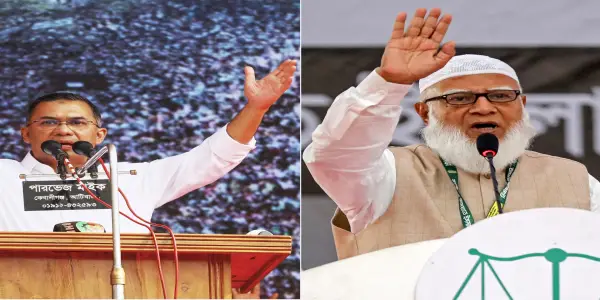
As Bangladesh prepares for its elections on February 12, a closer look at the political landscape reveals the parties and individuals poised to influence the outcome.
In-depth analysis
Background context
Bangladesh is approaching a crucial election on February 12, which will be the first parliamentary vote since the ousting of Sheikh Hasina. The election is conducted under a caretaker government led by Muhammad Yunus, following a student uprising that led to Hasina's removal. Approximately 50 million voters will participate in determining the new composition of the Jatiya Sangsad.
Key political implications
The disqualification of Hasina's Awami League marks a significant shift in Bangladesh's political landscape, potentially altering power dynamics and voter behavior in future elections.
Who gains / who loses
The Bangladesh Nationalist Party (BNP) stands to gain momentum, especially with Tarique Rahman's return and increased popularity, while the Awami League faces a substantial loss of influence. Jamaat-e-Islami may also benefit by appealing to younger voters through new alliances, despite internal dissent.
Possible future scenarios
If the BNP successfully capitalizes on its resurgence, it could reshape Bangladesh's political landscape, while Jamaat's alliances might either strengthen or fracture. Continued unrest could lead to further political instability.
Did you know?
Why you should know this
The upcoming election in Bangladesh on February 12 could reshape the nation’s political landscape. With around 50 million voters poised to cast ballots, the outcome will influence policies affecting everyday life—ranging from healthcare access to economic stability. As the country navigates its first vote under a caretaker government, the stakes are high for millions seeking change after a period of unrest.
Behind the political curtain
Interestingly, while Sheikh Hasina's Awami League party has been disqualified from the election, the caretaker government led by Muhammad Yunus is the first in Bangladesh's history to gain international recognition and legitimacy, a significant shift in the nation’s political narrative.
Ordinary person in an extraordinary situation
Meet Amina, a 32-year-old nurse in Dhaka, who has been a vocal advocate for healthcare reform. With the political turmoil weighing heavily on her community, Amina sees this election as a pivotal moment. Her family relies on public health services, which have been strained in recent years. As she prepares to vote, Amina expresses hope that a new government will prioritize health initiatives and infrastructure. This election, she believes, is not just about political parties, but about her neighbors' well-being and the future of her children. Amina’s determination reflects a growing sentiment among voters who are eager for a government that listens and acts.
Expert Commentary
Honestly, this feels bigger than just another election. After decades of Awami League dominance, Bangladesh is essentially hitting reset—and doing it under a Nobel laureate’s watch. That’s remarkable. But I can’t ignore the tensions. Disqualifying the former ruling party while a convicted leader’s son gains ground? It’s fragile. Real democracy isn’t just about voting; it’s about trust in the process. I really hope this moment leads to genuine stability, not just a shifting of who holds power.
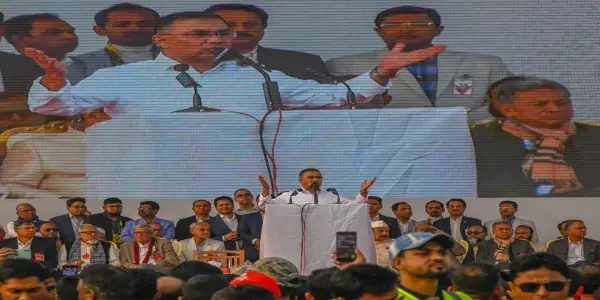
Tarique Rahman's Homecoming: A Potential Turning...
The Role of Palestinian Statehood in Advancing...

Jetpack Navigation 3 Achieves Stability for...

WWE Raw Recap: Titles Change Hands in Thrilling...

Bhutan's Complex Relationship with India: A...

Baden Bower Reduces Pitch-to-Publish Timeline by...
U.S. Embassies Redefine Human Rights:...

Javier Milei's Victory Signals a Shift in...

Mark Carney Discusses Political Transition During...

UK Finalizes £8 Billion Typhoon Fighter Jet...

European Allies Stand Firm with Denmark Amid U.S....
Saudi Crown Prince's Invitation to the White...

NFL Players Union Faces Grievance Over Annual...

Reddit Enhances App Performance with R8...

New England Senators Play Crucial Role in...

Revitalizing Relations: The Future of the...

Denmark's Prime Minister Advocates for Stricter...

Egypt Affirms Commercial Nature of Gas Agreement...

Japan Protests China's Travel Advisory Amid...

US-South Korea Agreement to Develop...
Jim Avila, Esteemed ABC News Correspondent, Dies...
Bangladesh's International Crimes Tribunal...
Russian and Indian Foreign Ministers Convene...

Zohran Mamdani's Vision for Global Municipal...

Geopolitical Tensions Surround Palau Amid...

Limited Expectations as Trump and Xi Approach...
U.S. Extends Sanctions Relief as Syrian Leader...

Peru Sever Diplomatic Relations with Mexico Amid...
Bangladesh Seeks India's Assistance in...

EA Raises Concerns Over Sale to Saudi Arabia's...

Nevada's Governor's Office Allegedly Intervened...
Six Finalists Announced for the 2026...
Bangladesh's Upcoming Election: Key Political...

Jared Isaacman Renominated as NASA Administrator...
Syria's Foreign Minister Visits China to...

The Impact of Trump's Second Year: A Year of...

Apple Achieves Unprecedented Financial Success in...

Israel Seeks Diplomatic Renewal with Bolivia...
China's Shift to a Cautious Research Strategy...

Inquiry Critiques Scottish Government's Covid-19...