NASA's OSIRIS-APEX Spacecraft Sends Back Breathtaking Images of Earth and Moon En Route to Asteroid Apophis
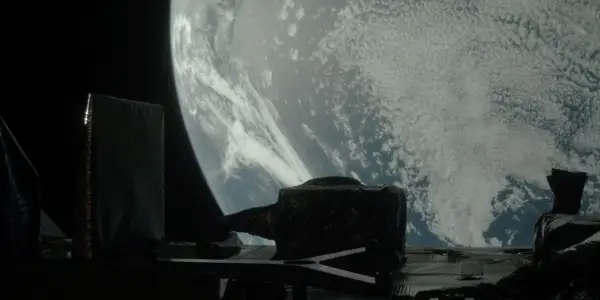
NASA's OSIRIS-APEX spacecraft has successfully captured remarkable images of Earth and its moon during a gravity-assist maneuver, propelling it toward the asteroid Apophis.
In-depth analysis
New discoveries
Recent images transmitted by NASA's OSIRIS-APEX spacecraft reveal stunning views of Earth, showcasing its swirling clouds and oceans. These visuals, captured during a close flyby, highlight the spacecraft's capabilities and signal a promising start to its mission focused on the metallic asteroid Apophis, enhancing our understanding of diverse asteroid compositions.
Mission updates
OSIRIS-APEX has successfully completed a high-velocity slingshot maneuver around Earth, positioning itself for its journey to the asteroid Apophis. The spacecraft's instruments are functioning optimally, confirmed by the recent imaging of Earth and the moon.
Who is affected
The OSIRIS-APEX mission impacts scientists and researchers studying near-Earth objects, as it aims to gather vital data on Apophis. Additionally, the findings may influence planetary defense strategies, benefiting global efforts to mitigate potential asteroid threats to Earth.
Next steps
Following its Earth flyby, OSIRIS-APEX will spend six months orbiting Apophis, conducting detailed mapping and analysis. The mission will also involve using thrusters to disturb the asteroid's surface, providing insights into its composition and history.
Did you know?
Why we should care
Understanding asteroids like Apophis is crucial for planetary defense. A close encounter in 2029 presents a unique chance to learn how these celestial bodies interact with Earth’s gravity. This knowledge could help scientists devise strategies to mitigate potential asteroid threats, ultimately safeguarding our planet and ensuring the safety of future generations.
The universe's unsolved mystery
The composition and behavior of asteroids remain largely enigmatic. With each mission, like OSIRIS-APEX, scientists inch closer to unraveling the secrets of these ancient remnants of the solar system. Understanding their origins could provide insights into the formation of planets, potentially rewriting the narrative of our cosmic history.
The person who looks at the stars
Meet Sarah, an aspiring astronomer from a small town, who spends her evenings stargazing with her grandfather’s old telescope. The recent images from OSIRIS-APEX reignited her childhood curiosity about space. Inspired by the spacecraft's journey, she dreams of contributing to planetary defense research, ensuring that future generations can continue to look up at the stars without fear. For her, each discovery transcends mere science; it’s a way to connect with both the cosmos and her late grandfather, who ignited her passion for the universe.

Daily Roundup: November 10, 2025 – Advancements...
Young Canadian Astronomer Identifies Two...
SabreSat: An Innovative Air-Breathing Satellite...

Urwerk Unveils Limited-Edition 100V 'LightSpeed'...

Innovative Portable Reflecting Telescope...
ISS Crew Takes Precautions Against Radiation...
Assessing the Financial Impact of NASA's Apollo...
NASA Considers Reopening Bidding for Artemis 3...
Interstellar Comet 3I/ATLAS Approaches...

Lenovo's Legion Tab Gen 3 Sees Significant Black...

Astrophysicists Unveil Dark Universe Through...

Childcare Crisis: Families Struggle as...
Astronomers Identify Potential Earth-Like...
Congress Questions NASA's Facility Closures Amid...
AI Reveals Over 800 New Cosmic Anomalies from...
Andromeda Galaxy's Impact on Its Satellite...

Astronomers Converge in Phoenix for AAS 247: A...
Study Suggests the Universe's Expansion May Be...

Top Black Friday Smartwatch Deals Worth...

Mapping the Invisible: Astronomers Uncover Dark...
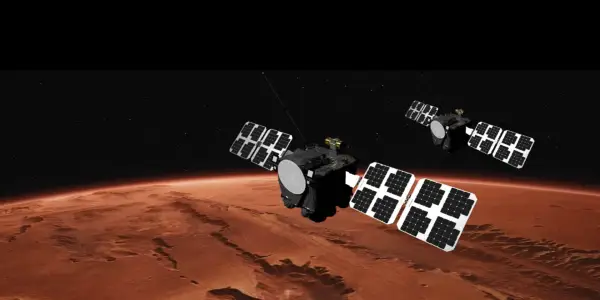
NASA's ESCAPADE Probes Set for Unique Journey to...

Satellite Imagery Highlights Hurricane Damage...

Apple Introduces Emergency SOS via Satellite in...
Potential Evidence of Dark Matter Emerges from...
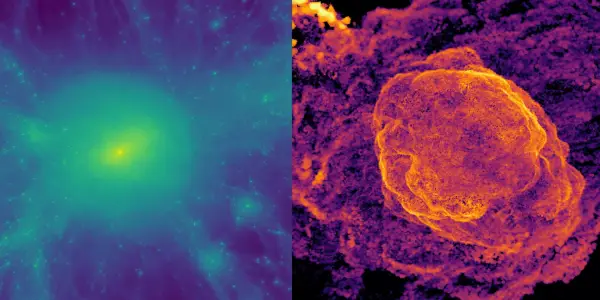
New Simulations Shed Light on the Enigmatic...

Boeing's Upcoming Starliner Mission Set for April...

SpaceX Achieves 150th Falcon 9 Launch with...

New Research Suggests Dark Matter Influences...

Astronomers Identify Three Earth-Sized Exoplanets...
Potential Alien Disclosure May Trigger Bitcoin...

Astronomers Uncover a Rapid Star-Forming Galaxy...

Satellite Imagery Reveals Extensive Damage Across...

Astronomers Uncover Evidence of Aging Stars...

Samsung Galaxy S26 Expected to Feature Enhanced...
Highlights of 2025 in Space Exploration: From...

Unraveling the Mysteries of Mars: Recent...
The Impact of Space Technology on Everyday Life
NASA and Blue Origin Successfully Launch Dual...

Jeff Bezos's AI Hardware Venture Takes Aim at...