Exploring the 'Ultraview Effect': Human Spirituality in the Cosmos
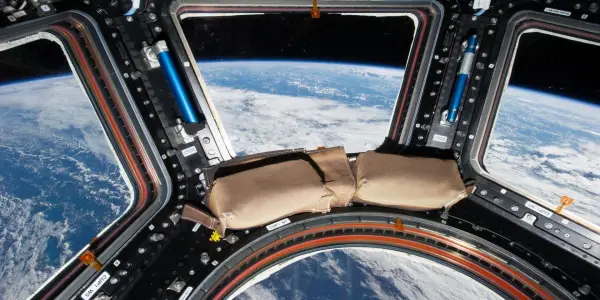
Discover the 'ultraview effect' as researchers explore the spiritual transformations astronauts experience in the cosmos, shaping human consciousness and und...
In-depth analysis
New discoveries
Recent research has unveiled the 'ultraview effect,' a phenomenon distinct from the 'overview effect.' This new concept highlights how astronauts experience existential reflections when observing the universe, prompting deep questions about humanity's understanding of existence and knowledge, akin to meditative or psychedelic states.
Mission updates
Current space missions are increasingly focused on the psychological impacts of space travel, with researchers examining how astronauts' experiences influence their perspectives on life and the cosmos.
Who is affected
Astronauts and space crew members are directly impacted by these psychological phenomena, as their experiences in space lead to transformative thoughts about existence, spirituality, and humanity's role in the universe, reflecting broader societal shifts in beliefs.
Next steps
Future research will aim to further explore the ultraview effect and its implications for astronauts' psychological well-being, as well as its potential influence on public understanding of space exploration and its spiritual dimensions.
Did you know?
Why we should care
The psychological and spiritual effects of space travel are more than academic; they influence how we perceive our place in the universe. As humanity pushes boundaries, understanding these effects can shape policies around mental health support for astronauts and foster a collective curiosity about our existence. This exploration has profound implications for how we view our lives on Earth and our responsibility towards it.
The universe's unsolved mystery
The ultraview effect invites us to grapple with our ignorance about the cosmos. While we have made strides in understanding our universe, the vastness remains largely uncharted, raising questions about our existence and purpose. This psychological exploration may be as crucial as scientific discoveries, urging humanity to confront its limitations and the deeper meanings of life beyond our planet.
The person who looks at the stars
Meet Sarah, a retired astronaut who often reflects on her time in space. During her missions, gazing out at the stars ignited a profound existential curiosity within her. She recalls staring into the infinite darkness, feeling small yet connected to something far larger than herself. This duality of insignificance and wonder has shaped her post-mission life. Now, she advocates for students to explore STEM fields, encouraging them to look at the night sky not just as a distant expanse, but as a canvas of possibilities. For Sarah, the stars are not merely celestial bodies; they symbolize the profound questions that still linger about humanity's place in the universe, inspiring both scientific inquiry and spiritual reflection.
Expert Commentary
Ancient Galaxies: A Chaotic Early Universe...
Russian Cosmonauts Conduct Extended Spacewalk to...

Samsung Unveils Unprecedented Black Friday Deal...
SpaceX Achieves 150th Falcon 9 Launch with...
Assessing the Financial Impact of NASA's Apollo...
India Successfully Launches CMS-03 Military...
NASA's Campaign to Monitor Interstellar Comet...
Discovery of a Planet Formation Zone Beyond...
Interstellar Comet 3I/ATLAS Approaches...
Webb Telescope Reveals Unprecedented Cosmic...

Mapping the Invisible: Astronomers Uncover Dark...
Exploring the Composition of Cosmic Voids
James Webb Space Telescope May Have Detected the...
James Webb Space Telescope Discovers Ancient...
NASA's Ambitious Timeline for Human Exploration...
Unistellar eQuinox 2 Smart Telescope Sees...
Blue Origin Faces Major Setback as New Glenn...

Urwerk Unveils Limited-Edition 100V 'LightSpeed'...

Daily Roundup: November 10, 2025 – Advancements...

Satellite Imagery Reveals Extensive Damage Across...
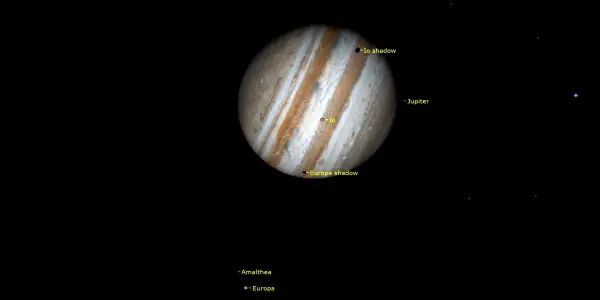
Jupiter's Moons Io and Europa to Cast Shadows...

Astronomers Identify Three Earth-Sized Exoplanets...

Apple Introduces Emergency SOS via Satellite in...
Euclid Space Telescope Discovers Hidden Stars in...
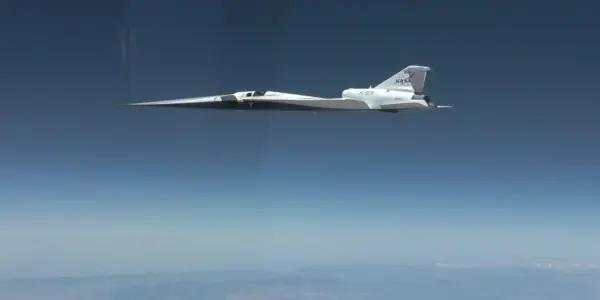
NASA's X-59 Achieves Historic Supersonic Flight
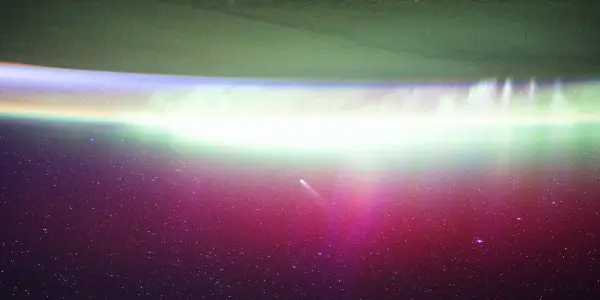
Astronauts aboard the ISS Capture Stunning Images...
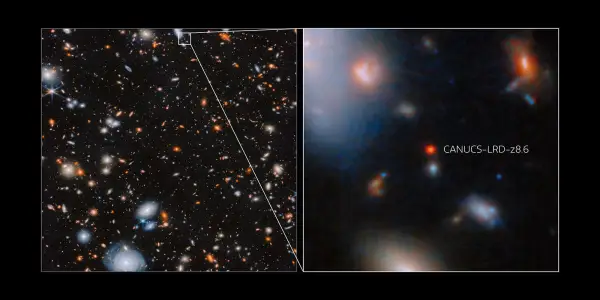
James Webb Telescope Identifies Rapidly Growing...
Young Canadian Astronomer Identifies Two...

X-Men Return to Education in Upcoming Comic...
Intense Solar Storm May Illuminate Skies Across...
Potential Alien Disclosure May Trigger Bitcoin...
Artemis 2 Astronauts Safely Return After Historic...
This Week In Space Podcast: Episode 187 Explores...
European Space Agency Unveils Stunning Radar...

Charlotte: The Lunar 3D Printer Poised to...

Exploring Alternatives to the Meta Quest 3 Elite...
SpaceX Set to Launch NASA's Pandora Exoplanet...
Hubble Telescope Unveils Enigmatic Galaxy NGC 2775