NASA's Fermi Spacecraft May Have Made Historic Detection of Dark Matter
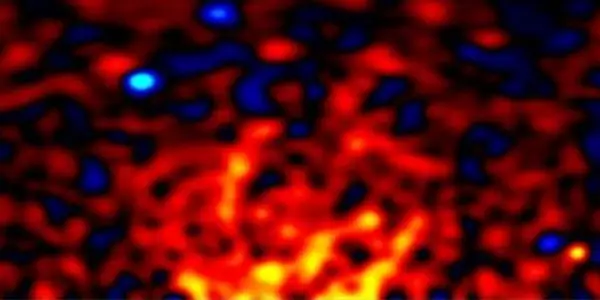
Recent findings from NASA's Fermi gamma-ray space telescope suggest a groundbreaking potential detection of dark matter, the elusive substance that constitutes a significant portion of the universe's mass.
In-depth analysis
New discoveries
Recent observations by NASA's Fermi gamma-ray space telescope may have provided the first direct evidence of dark matter, a long-theorized form of matter that constitutes about 27% of the universe. Researchers detected gamma rays with energy signatures consistent with predictions for weakly interacting massive particles (WIMPs), suggesting a potential breakthrough in understanding this elusive substance.
Mission updates
The Fermi telescope has focused on the Milky Way's galactic center, where dark matter is believed to be concentrated. Researchers have reported promising gamma-ray emissions that align with theoretical models of dark matter annihilation.
Who is affected
This discovery impacts astrophysicists and cosmologists who study the universe's composition and fundamental physics. If confirmed, it could reshape theories about dark matter and influence future research directions, potentially affecting how scientists understand cosmic forces.
Next steps
Further observations and data collection are essential to validate these findings. Researchers emphasize the need for additional evidence to confirm the existence of dark matter particles, which could challenge existing models in particle physics.
Did you know?
Why we should care
The detection of dark matter could redefine our understanding of the universe and our place within it. As it constitutes roughly 27% of the cosmos, unraveling its mysteries may lead to breakthroughs in technology and energy, impacting everything from space exploration to everyday innovations. Imagine a future where the secrets of dark matter unlock clean energy sources or advanced materials, enhancing our quality of life.
The universe's unsolved mystery
Dark matter remains one of the universe's most puzzling enigmas, eluding direct observation for decades. This elusive substance shapes galaxies and influences cosmic structures, yet its true nature is still a mystery. Finding answers could not only illuminate the fundamental workings of the cosmos but also challenge our understanding of physics itself, inviting a reexamination of established theories.
The person who looks at the stars
Meet Sarah Chen, an amateur astronomer who spends her evenings gazing at the night sky from her rooftop in San Francisco. Dark matter fascinates her, not just as a scientific concept, but as a reminder of the universe's vastness and mystery. Each time she peers through her telescope, she reflects on the invisible forces shaping the cosmos. For Sarah, the potential discovery of dark matter signifies hope—hope for answers to questions that have intrigued humanity for centuries. It inspires her to share this passion with local students, igniting curiosity about the universe and the science that explains it. In her eyes, the stars are not just points of light but gateways to understanding our reality.
Blue Origin Faces Major Setback as New Glenn...

The Impact of Space Technology on Everyday Life

NASA's X-59 Achieves Historic Supersonic Flight

Samsung Galaxy S26 Expected to Feature Enhanced...
Discovery of a Planet Formation Zone Beyond...
Collaboration Between Exoplanet Researchers and...
Astronomers Identify Potential Earth-Like...
NASA's ESCAPADE Probes Set for Unique Journey to...
Webb Telescope Reveals Unprecedented Cosmic...
China's Mars Orbiter Captures Image of...

This Week In Space Podcast: Episode 187 Explores...
Astronomers Capture Unprecedented Black Hole...

OnePlus 15 vs. Samsung Galaxy S25 Plus: A Clash...

Jeff Bezos's AI Hardware Venture Takes Aim at...

Daily Roundup: November 10, 2025 – Advancements...

European Space Agency Unveils Stunning Radar...
Study Suggests the Universe's Expansion May Be...

Samsung Unveils Unprecedented Black Friday Deal...
NASA's Campaign to Monitor Interstellar Comet...
Hawaiian Students Honor Gemini North Telescope's...
Ancient Galaxies: A Chaotic Early Universe...
Unusual Wind from Neutron Star Challenges Space...
Astronomers Uncover Evidence of Aging Stars...

Innovative Portable Reflecting Telescope...
Astronauts aboard the ISS Capture Stunning Images...
Rogue Moons: A New Frontier for Life Beyond Stars
James Webb Telescope Identifies Rapidly Growing...
Intense Solar Storms Could Ignite Life on...
The Dwarf III Smart Telescope: A Compact Marvel...
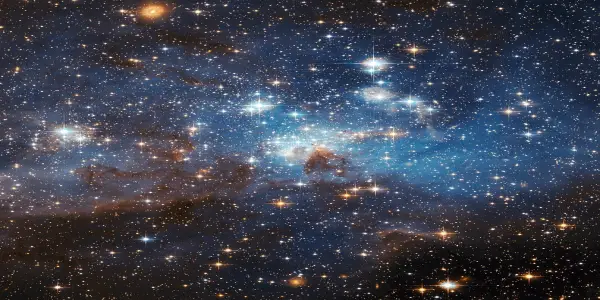
Mapping the Invisible: Astronomers Uncover Dark...

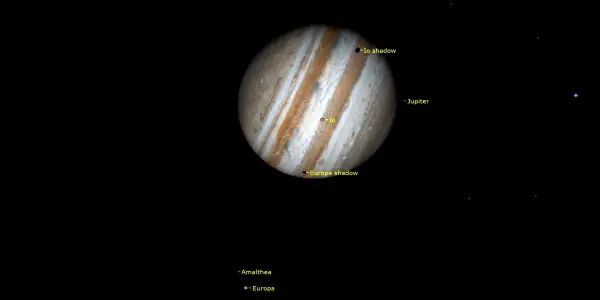
Jupiter's Moons Io and Europa to Cast Shadows...

Boeing's Upcoming Starliner Mission Set for April...
Astrophysicists Unveil Dark Universe Through...
Astronomers Uncover a Rapid Star-Forming Galaxy...
Astronomers Converge in Phoenix for AAS 247: A...
James Webb Space Telescope Sheds Light on Early...

NASA and Blue Origin Successfully Launch Dual...
New Research Suggests Dark Matter Influences...
Andromeda Galaxy's Impact on Its Satellite...