Breakthrough Study Reveals Evidence of 4.5-Billion-Year-Old Proto-Earth Buried Deep Within Our Planet
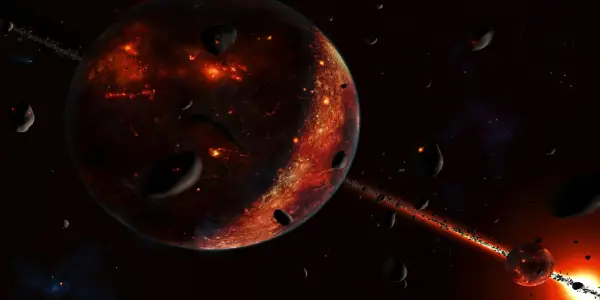
New research identifies ancient rocks from Greenland, Canada, and Hawaii that contain a unique chemical signature potentially linked to the Earth prior to the moon-forming impact, as detailed in a recent study.
In-depth analysis
New discoveries
Recent findings published in Nature Geoscience reveal that remnants of proto-Earth may still exist within Earth's crust. Ancient rocks from Greenland, Canada, and Hawaii show a unique chemical signature, offering vital insights into the early solar system's conditions prior to the Moon's formation, marking a significant advancement in understanding Earth's origins.
Mission updates
The research team, led by MIT's Nicole Nie, successfully identified a subtle imbalance in potassium isotopes from volcanic rocks, suggesting these samples may contain traces of primordial materials from the early Earth.
Who is affected
This study impacts researchers in planetary science and geology, as it challenges existing assumptions about Earth's formation and composition. It also has broader implications for understanding the formation of other rocky planets in our solar system.
Next steps
Future research will focus on further analyzing Earth's deep geological history and exploring additional ancient rock samples to fill gaps in our understanding of the planet's formative materials and processes.
Did you know?
Why we should care
Understanding the early formation of Earth is crucial for unraveling the planet's geological history and the origins of life itself. The findings from ancient rocks can offer insights into our planet's stability and evolution, which directly impacts current climate models and resource management. As we face climate change, recognizing the long-term processes that shaped our environment can inform future sustainability efforts.
The universe's unsolved mystery
The quest to comprehend Earth's formative years reflects a broader cosmic mystery: how do planetary bodies evolve in the chaotic environment of the early solar system? Each discovery not only informs us about our planet's past but also holds clues to the formation of other planets, potentially offering insights into the universe's endless possibilities.
The person who looks at the stars
Meet Clara, a high school science teacher in a small town, who inspires her students to gaze at the night sky with wonder. After learning about the recent findings regarding proto-Earth, she has become fascinated with the idea that pieces of our planet's origin might still exist beneath our feet. Clara often takes her students on stargazing trips, encouraging them to connect their lives to the vastness of space. The prospect that ancient rocks could reveal the history of our planet ignites her passion for science, making her students curious about their own place in the universe. Through Clara's eyes, the study is not just academic; it’s a reminder that we are all part of a greater story, woven into the fabric of the cosmos.
Artemis 2 Astronauts Safely Return After Historic...

Daily Roundup: November 10, 2025 – Advancements...
Unusual Wind from Neutron Star Challenges Space...
Astrophysicists Unveil Dark Universe Through...
Blue Origin Faces Major Setback as New Glenn...
Charlotte: The Lunar 3D Printer Poised to...

Foundation Season 3 Hints at Deeper Asimov Themes...
India Successfully Launches CMS-03 Military...
James Webb Telescope Identifies Rapidly Growing...
Assessing the Financial Impact of NASA's Apollo...
Intense Solar Storm May Illuminate Skies Across...
Enhance Your Weather Preparedness with Weather...
Astrophotographer Captures Stunning Image of...

Samsung Unveils Unprecedented Black Friday Deal...
Meteorite Fragment May Have Impacted Houston Home
Exploring the Composition of Cosmic Voids
Ancient Galaxies: A Chaotic Early Universe...
Astronomers Converge in Phoenix for AAS 247: A...

Samsung's Galaxy S26 Ultra Set for Significant...
The Dwarf III Smart Telescope: A Compact Marvel...
Andromeda Galaxy's Impact on Its Satellite...
Astronomers Capture Unprecedented Black Hole...
Exploring Oregon's Premier Public Telescope...
The Pleiades Star Cluster Reveals Its Extensive...
Intense Solar Storms Could Ignite Life on...
Innovative Portable Reflecting Telescope...
New Simulations Shed Light on the Enigmatic...
ISS Crew Takes Precautions Against Radiation...
Webb Telescope Reveals Unprecedented Cosmic...
Recent Studies Explore Potential Exoplanet in...
Potential Alien Disclosure May Trigger Bitcoin...
NASA's Ambitious Timeline for Human Exploration...
Unraveling the Mysteries of Mars: Recent...
NASA's X-59 Achieves Historic Supersonic Flight
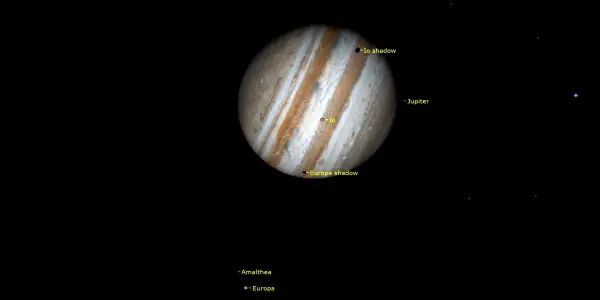
Jupiter's Moons Io and Europa to Cast Shadows...
SpaceX Faces Challenges in Meeting NASA's 2027...
Russian Cosmonauts Conduct Extended Spacewalk to...
Euclid Space Telescope Discovers Hidden Stars in...

Childcare Crisis: Families Struggle as...

This Week In Space Podcast: Episode 187 Explores...